




Cast your mind back a decade or so, and smartphone makers were obsessed with shrinking the bezel on phones. Screens got bigger, the black bars around them got smaller, and for a while it looked like truly edge-to-edge displays were imminent.
Then, progress just stopped. The bezel shrunk down until it was a millimeter or so on every side, on just about every phone, and phone manufacturers seemed to agree as one that this was probably far enough.
Tecno, a budget brand in the same family as Itel and Infinix, has stepped up to see if it could push things just a little further. Its new device, the Bezelless, is strictly a concept phone, never destined to go on sale, but it proves the point: It is possible to remove a smartphone screenâs bezel entirely â so long as you donât mind still having a little frame around the edge.


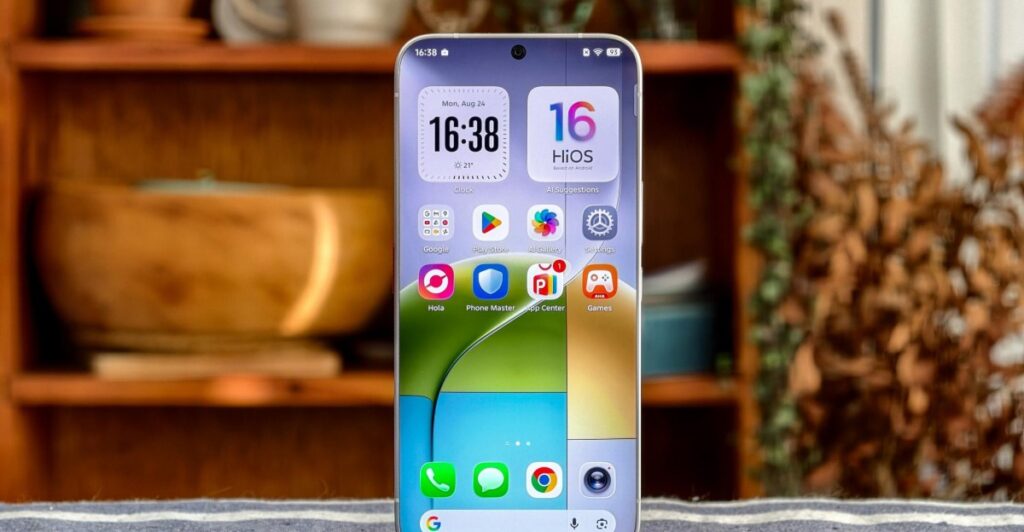
The company sent me a prototype of the Bezelless ahead of its unveiling at the IFA trade show in Berlin, so I could see it in action for myself. There is truly no black border at all around the 144Hz, 1.5K, 6.78-inch screen, except for the tiniest hint of a fraction of a black line I can see just under the frame when I look at the phone at an angle. Looking head-on, the screen ends, then the frame begins, and thatâs that.
There is still an inactive edge to the OLED panel, but Tecno has hidden it beneath the frame. The key to the design is the use of two layers of cover glass: The top layer goes up to the edge of the frame, while the lower glass layer and the OLED panel itself both extend underneath it. Designing the phone this way had knock-on effects. It meant building the phone backwards, mounting the display from the phoneâs rear rather than its front, which in turn requires securing the screen from the front, with a custom adhesive that sits between the frame and the lower piece of glass.

And while I might cynically point out that the frame here is probably a hair thicker than on most other modern smartphones, itâs a fractional thing. Stand the Bezelless side by side with this yearâs flagship Samsung Galaxy S26 Plus, and thereâs clearly a little less material wrapping around the screen â though thereâs not much in it.
Tecno bullishly claims that the Bezelless âredefines how users will interact with their phones in the AI era,â which feels a bit much. Manufacturers stopped shrinking the bezel because it got small enough that most people stopped caring. Removing a strip of black from the screen doesnât make this phone feel dramatically more impressive or useful than any other Iâve tested this year. A functional upgrade, this is not.
Still, it does look good. Helped by the light silver frame, the display feels more expansive without a black bar enclosing it. The Android interface now stretches right to the edge, and photos and videos have no border at all (well, at least on two edges â removing the bezel isnât enough to solve letterboxing). It also allows a fractionally larger display, or a fractionally smaller phone, depending on how you look at it. Itâs welcome, but not a game changer â eliminating the front-facing edge of the frame entirely would feel more dramatic, but thatâs another ask entirely.


As a concept device, the specs of the Bezelless donât matter too much. But for the curious, itâs powered by a MediaTek Dimensity 7400e chipset, bolstered by 8GB of RAM and 256GB of storage. Thereâs a big 6,000mAh battery, though the phone itself is fairly slim and light; I suspect silicon-carbon might be involved. What appear to be three rear cameras are actually two â a 50-megapixel main shooter and 8-megapixel ultrawide â with a single 32-megapixel selfie camera on the front. Iâm a little surprised Tecno didnât go all in and use an under-display selfie camera to complete the all-screen effect.
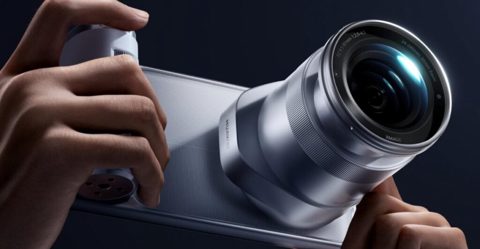
The rear of the phone is fun too, with a red notification LED and a butterfly design created with a 3D effect, so that the wings appear to rise out of the phone as you move it in the light. It brings to mind Tecnoâs other concept devices from MWC this year, which included a phone with a color-changing E Ink rear, and another with neon built in. Most exciting of that set was a magnetic, modular concept with a range of compatible accessories.

None of those concepts have yet become real products, and I doubt the Bezelless will either, and certainly no time soon. But it does prove that itâs possible, which raises the prospect of whether another manufacturer will bring the idea to market. Apple has long been rumored to be developing a bezel-less, âedge-to-edgeâ iPhone for the phoneâs 20th anniversary next year. If nothing else, Tecno just proved that rumor isnât so far-fetched.
Photography by Dominic Preston / The Verge
Read the full article here