






HubSpot has launched a new AEO tool designed to help businesses see how they appear in AI-generated answers and respond with content recommendations inside Marketing Hub.
The launch targets a growing problem for marketers: buyers are increasingly asking AI tools the same questions they once typed into search engines. If a brand is not cited in those answers, it can lose visibility before a prospect ever reaches its website.
HubSpot launches AEO tool for AI visibility tracking
With this release, HubSpot is adding AEO capabilities aimed at showing marketers where their brands are visible in AI responses and where competitors are winning attention instead.
The HubSpot AEO tool includes:
- An AI visibility score
- Prompt-level citation tracking
- Competitor comparison
- Recommended content actions
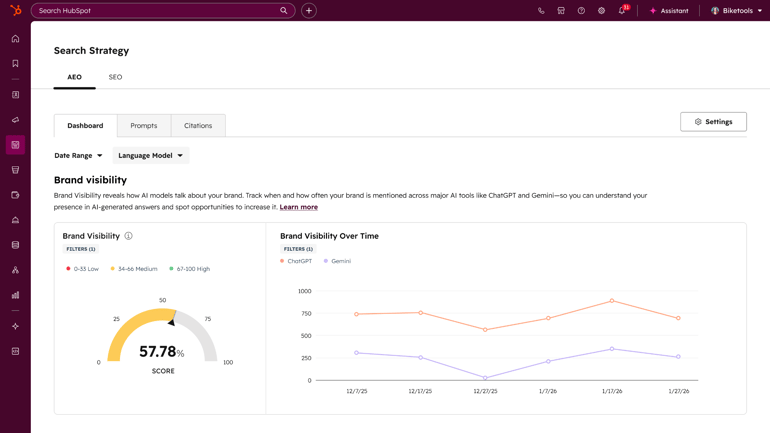
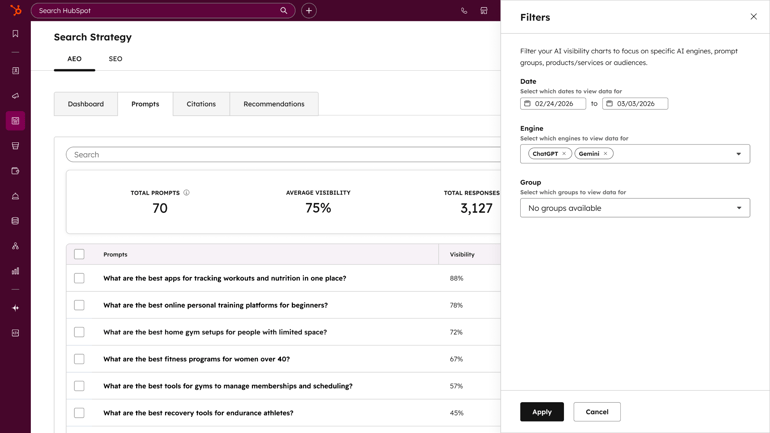
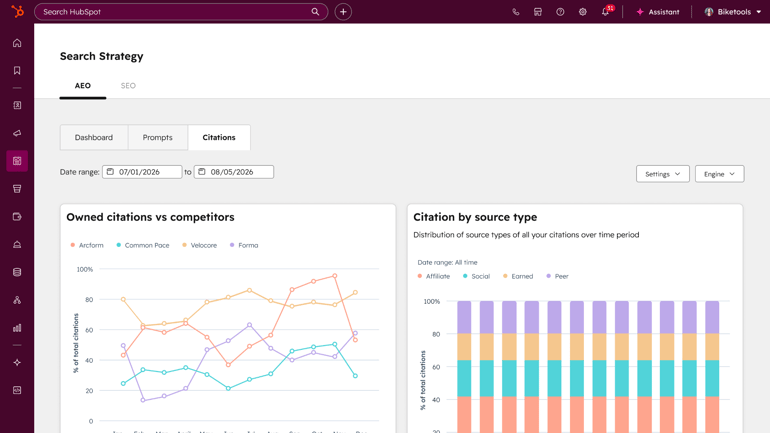
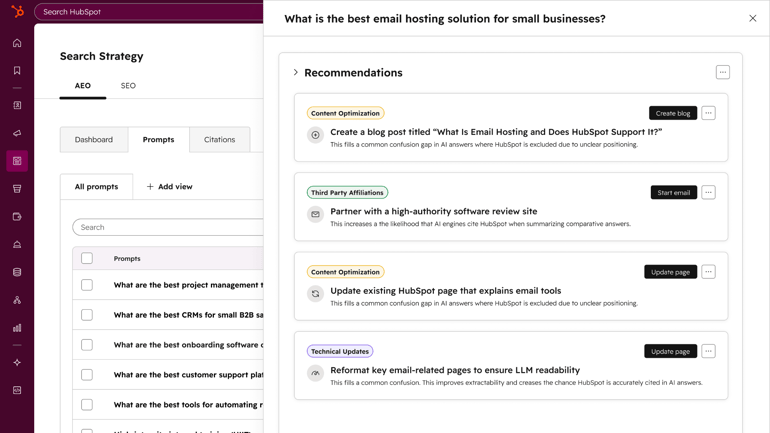
The interface also shows brand visibility over time and compares citation performance against competing domains, giving teams a clearer view into how they appear in AI-generated answers.
How HubSpot builds AEO into Marketing Hub
A key part of the launch is that HubSpot is offering AEO both as a standalone tool and as a native layer built into its broader platform.
The tool is built into Marketing Hub and connects recommendations directly to content workflows. HubSpot says users can identify visibility gaps, get prioritized recommendations, and move from recommendation to drafted or published content in the same system.
In addition, HubSpot uses CRM context to inform recommendations, including prompts tied to a company’s industry, competitors, content library, and customer segments.
Also read: HubSpot CRM Review: Features, Pros & Cons
Why HubSpot is pushing AEO now
This HubSpot news comes as the company frames AI search as a discovery channel. In the positioning materials, HubSpot argues that buyers are increasingly getting direct answers from AI and that brands need to know whether they are being cited, excluded, or outperformed by competitors.
That framing helps explain the emphasis on AEO. Instead of focusing only on rankings and clicks, marketers are being asked to measure whether AI systems mention their brand, which prompts can surface those mentions, and where they are absent.
Also read: Artificial Intelligence Cheat Sheet: AI Guide for Beginners
What the HubSpot AEO launch means for marketers
The HubSpot launch suggests that AEO is becoming a practical product category, not just a new marketing term.
For teams already using HubSpot, the new feature set adds AI visibility measurement, competitor benchmarking, and recommendation-driven content planning inside the existing platform. For the broader market, this HubSpot news signals that vendors increasingly see AI answer visibility as something marketers will need to track alongside traditional search performance.
Read the full article here