



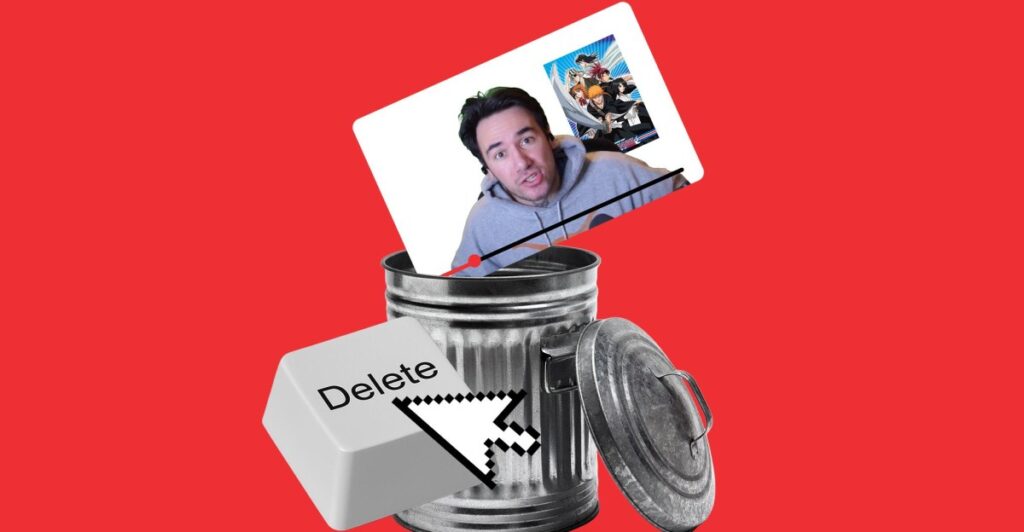

On September 6th, YouTuber Nicholas Light posted a video to one of his channels that made it seem like all of his content was about to be removed from the platform. In the video â ominously titled âMy Channel will be Deleted Todayâ â Light alleges that he was on the receiving end of some of the âthousands upon thousands of false copyright strikesâ recently initiated by a company called Remove Your Media. Light spends much of the 13-minute video accusing Remove Your Media CEO Eric Green of being a troll who systematically targets creators whose content mentions or features clips of popular anime series like Bleach and One Piece.
Itâs not clear how many of Lightâs 1.3 million subscribers made it to the end of the video where he admits that YouTube already removed the copyright strikes against his account and informed him that his channel would not be deleted. But in a follow-up video titled âMy Channel will NOT be deletedâ posted on September 8th, Light thanked himself and âevery single person that contributedâ to the ongoing conversation about Remove Your Media unfairly threatening creatorsâ livelihoods.
When I recently spoke with Light via email, he told me that over 60 of his videos had been temporarily taken down after he was hit with over a dozen copyright strikes stemming from Remove Your Mediaâs Digital Millennium Copyright Act (DMCA) takedown requests. Light said that âhaving a video taken down or struck is almost second natureâ for people running reaction channels. But he insisted that the way Remove Your Media has been going after creators is abusive and unrelated to any legitimate interest in protecting copyrighted IP.
âI think [Remove Your Media is] trying to get the attention of these companies, to hopefully get hired by them,â Light said. âBut because theyâre so sloppy, theyâre damaging themselves. With all the major channels covering this, theyâre doomed.â
While itâs easy to get the sense that Light might have been playing up some of this drama for viewersâ attention, it is clear that a number of other content creators have similarly been hit with an inordinate amount of copyright strikes. Many of these creators specialize in anime and gaming reaction videos that feature blurred-out or otherwise altered pieces of copyrighted footage. The creators superimpose the altered copyrighted footage (like anime opening sequences or full episodes) onto videos of themselves reacting to and/or commenting on it.
Though these types of videos are kind of like an inverse Mystery Science Theater 3000 where the on-camera creators are meant to be the focus, viewers can also use them as a (less-than-ideal) way to watch copyrighted material without having to pay for it. The creators insist that their content is fundamentally transformative and protected by fair use, but that has not kept YouTube from sending them warnings about their accounts potentially being erased.
Remove Your Media feels it does not need to extensively review all of a creatorâs videos to file DMCA takedowns in good faith
Remove Your Media legal representative Evan F. Stone told me that Viz Media and Crunchyroll are two of the companyâs âbiggest anime clients.â Stone explained that Remove Your Media âreports thousands of allegedly infringing links every dayâ â some of which are âforwarded by the copyright owners themselves,â while others are discovered through online searches. Stone also noted that some clients are âvery lenientâ with certain types of content, despite their weak fair use defense. But he was adamant that the content being produced by YouTubers Remove Your Media has gone after is not transformative enough to fall under fair use.
âCommentary, in this context, does not make the use transformative: these videos show the copyrighted work in its entirety, and a great deal of this content sits behind a paywall,â Stone said. âAdd the fact that some viewers are watching these versions rather than the licensed versions, and the effect on the marketplace is real.â
Stone also pointed out that some reaction video creators use their free YouTube channels as a way to encourage viewers to subscribe to their paid Patreon pages. In Remove Your Mediaâs view, when a reaction creatorâs business model âis recording someone watching full episodes and selling those recordings, episode included, behind a Patreon paywall,â the company does not need to extensively review every single one of their uploads to file DMCA takedowns in good faith.
âFor any particular video a creator believes was noticed in error, the counter-notice exists for exactly that situation, and it works,â Stone said. âWhat [Remove Your Media] is seeing instead is channels countering every single video, full episode uploads included, swearing under penalty of perjury that each one was removed by mistake.â
From Lightâs perspective, channels like his are producing a unique kind of entertainment that also benefits copyright holders. âItâs free promotion for them at the end of the day,â he explains. Reaction videos of all genres have been popular on the internet for years, and itâs clear from view counts on YouTube that anime fans in particular are watching this kind of content.
Light feels that because âthe [anime industry] doesnât do the best job promoting their works outside of Japan,â he and his peers have been picking up the advertising slack with their videos. And while Remove Your Media says that it works on behalf of certain anime distribution platforms including Crunchyroll and Viz Media, Light believes that âno company in the industry would want to align with a company so sloppy.â Crunchyroll did not respond to The Vergeâs questions about whether it has hired Remove Your Media to enforce copyright and Viz Media would not comment on record.
Similar to Light, Ron and Michelle Jackson â the couple behind the Rice & Ginger YouTube channel â uploaded a video last week announcing that their account might be deleted within a few days after being flagged hundreds of times for copyright violations. In addition to emphasizing that their video was not meant to be clickbait-y, the Jacksons encouraged viewers to subscribe to their Patreon page, and they said that the larger wave of creator takedowns is being caused by âone individual making hell for basically all of us.â
The Jacksons did not respond to The Vergeâs ask for comment about whether that unnamed individual might be Eric Green or Remove Your Media and how they were able to avoid having their channel deleted on the date (September 6th) listed in their first video addressing the situation. On September 9th, the YouTubers said that their account was now scheduled to be deleted the following day, and they described YouTubeâs approach to enforcing copyright as a broken system that allows for AI-powered mass reporting. By September 10th, the Rice & Ginger YouTube channel was still online, and the Jacksons were back with a new video thanking Light for speaking out on their behalf and âsavingâ their channel.
When I reached out to YouTube asking how it handles DMCA takedown disputes between reaction video creators and IP rightsholders, policy communications manager Jack Malon said that the company âdoes not decide who owns the rights to content.â Rather than mediating the legality of who owns the copyrighted content and whether a creatorâs videos fall under fair use, YouTube brings the two parties together and leaves it to them to work the matter out between themselves.
âWhen we receive valid legal requests, we remove the content to comply with copyright law,â Malon said. âIf uploaders believe they have the right to use the material, including for exceptions like fair use, they can file a counter notification.â
Malon added that YouTube only removes creatorsâ videos âwhen a rightsholder submits a valid and legal takedown requestâ because the company has to comply with copyright law. According to YouTube, creators can solve copyright strikes by submitting counter notifications â a process that involves providing evidence of ownership or permission to use all elements featured in the removed content. In response to my questions about how Remove Your Media selected the creators that were affected by the takedowns, he said that the company prioritized going after YouTube channels that generate âfeeder traffic for paywalled copies of episodes nobody licensed to them.â
âFor any particular video a creator believes was noticed in error, the counter-notice exists for exactly that situation, and it works,â Stone said. âWhat [Remove Your Media] is seeing instead is channels countering every single video, full episode uploads included, swearing under penalty of perjury that each one was removed by mistake.â
This drama highlights how certain dynamics of the creator economy may be changing
Malon told me that, after a creator submits counter notifications, their videos can be restored and the strikes on their accounts can be resolved âif the rightsholder does not respond with proof of legal action to restrain the allegedly infringing content.â But itâs not entirely clear how YouTube confirms the validity of a claimantâs purported ownership of removed content.
On September 10th, Light returned to his channel with another video lambasting both Remove Your Media and YouTube for the way the companies have gone about initiating and handling DMCA disputes. Light said that the Jacksonsâ videos will be restored within 10 business days as a result of âall of the noise that [we] made together,â and he addressed people who have speculated that he might be leaning into this drama for financial gain.
âItâs funny to me I start having problems with my AdSense the 10 days I choose to go after YouTube,â Light said, explaining that his videos have been demonetized during the DMCA fight. âReally makes you think. So maybe we should shut the fuck up when we say stupid shit like âheâs banking on the situation. Heâs only doing this for money.ââ
Though Light and others who have spoken out about the way YouTube handles copyright issues might not be trying to capitalize on being deplatformed, this drama has highlighted how certain dynamics of the content creator economy may be changing. Anime reaction videos probably arenât going away anytime soon, but it does seem like studios and distributors are becoming more aggressive about monitoring how their IP is being repurposed online. And while creators of all kinds still rely on fair use to produce the content that pays their bills, they may need to tread much more carefully if they want to avoid getting caught up in an aggressive purge.
Read the full article here