




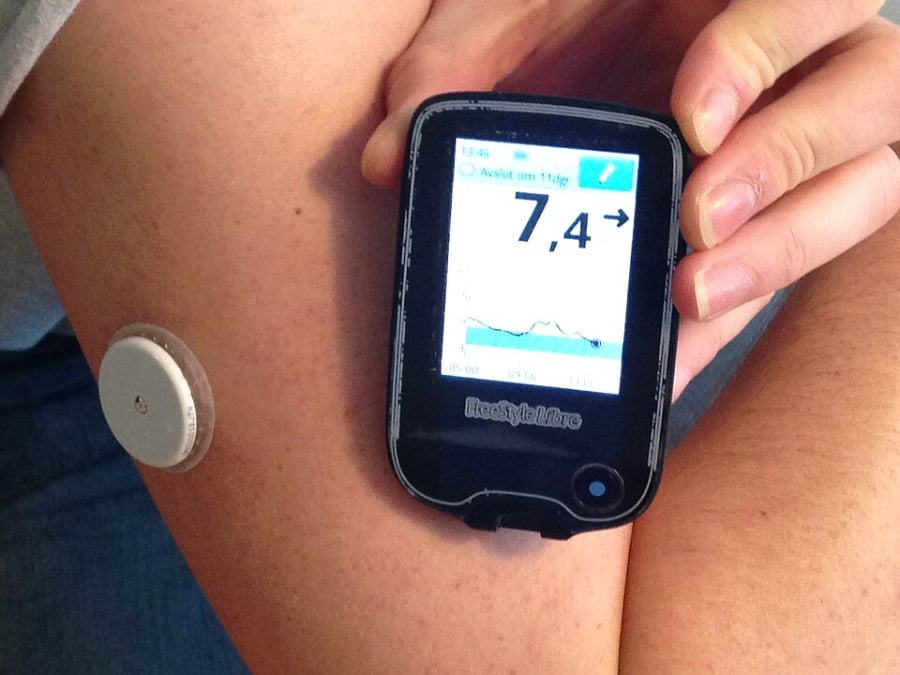

Blood sugar is becoming the next number wellness companies want everyone to watch.
Continuous glucose monitors, better known as CGMs, were created to help people with diabetes track blood sugar levels throughout the day. But the technology is rapidly moving beyond hospitals and endocrinology clinics into the broader wellness market.
Today, wearable glucose-tracking devices are being used by people without diabetes. Athletes, fitness enthusiasts, and health-conscious consumers are increasingly using CGMs to monitor in real time how meals, sleep, stress, and exercise affect their metabolism.
The shift is transforming glucose monitoring from a disease-management tool into a wider wearable data ecosystem powered by artificial intelligence, predictive analytics, and personalized health coaching.
Research firm PatSnap describes the market as a “four-cluster ecosystem spanning subcutaneous CGM, non-invasive optical sensing, sweat and tear biofluid platforms, and AI-driven predictive analytics.”
That evolution is accelerating quickly. According to PatSnap, the industry has moved through three major phases since the 1990s: early glucometer hardware, clinically validated CGMs, and now AI-driven health infrastructure built around wearable data.
Why glucose data suddenly matters to everyone
The growing interest in glucose monitoring is tied to a broader push toward preventive health.
Prediabetes often develops quietly over the years before a person receives a formal diagnosis. Researchers and startups now believe wearable glucose tracking could help identify metabolic problems earlier than traditional annual blood tests.
CGMs continuously measure glucose levels in the fluid beneath the skin, providing minute-by-minute readings rather than a single lab snapshot. Supporters argue that this real-time feedback changes behavior faster than conventional health advice.
The Conversation noted that many users become more aware of how food affects their bodies after seeing glucose spikes immediately after meals. One study participant described the experience this way: “I’m more aware and I’m making the changes.”
Researchers are increasingly exploring whether glucose variability, not just average blood sugar levels, could reveal early warning signs tied to metabolic disease, inflammation, cardiovascular risk, or future type 2 diabetes.
According to the Centers for Disease Control and Prevention figures cited by Stanford University, 38.4 million Americans have diabetes, while another 97.6 million have prediabetes. Globally, the International Diabetes Federation estimates 589 million people are living with diabetes.
That scale has attracted both Silicon Valley and medical device companies.
AI is becoming the real product
The hardware itself may no longer be the main story. Companies are now treating glucose sensors as data-collection systems that feed into massive AI models designed to predict health outcomes, recommend behavioral changes, and personalize nutrition.
Stanford University highlighted how researchers in Professor Michael Snyder’s lab discovered that “different people spike to different foods,” even when eating the same meal. That finding helped inspire personalized glucose prediction platforms such as January AI.
The company uses machine learning models trained on wearable data, demographic information, and CGM readings to create what it calls a “digital twin” that predicts blood sugar responses before someone eats.
“We’ve spent nearly a decade building January AI so people can see how food affects their blood sugar before they eat it,” January AI founder and CEO Noosheen Hashemi said, according to Stanford University. “Our goal isn’t to make health complicated; it’s to give people the clarity and confidence to make better choices in real time, without invasive devices.”
PatSnap’s research suggests the biggest growth area is now AI-powered predictive analytics rather than the sensors themselves.
The firm said Dexcom’s recent patent filings describe machine-learning systems that can forecast glucose levels, classify diabetes risk, and even use wearable data for broader disease surveillance. Some newer platforms also combine glucose readings with sleep patterns, heart rate, stress levels, physical activity, and meal data to build wider metabolic profiles.
The race beyond skin patches
While current CGMs typically use small sensors inserted beneath the skin, companies and researchers are aggressively pursuing less invasive alternatives. PatSnap identified several emerging categories, including sweat-based sensors, tear-monitoring smart contact lenses, and non-invasive optical systems using light-based detection methods.
Researchers in South Korea previously demonstrated smart contact lenses with integrated glucose sensors and wireless circuitry, while other teams are testing wearable sweat-monitoring patches combined with machine-learning systems.
The long-term goal is to turn glucose monitoring into a seamless background technology embedded into everyday wearables like watches, rings, and lenses. But the industry still faces major technical hurdles. According to PatSnap, no fully non-invasive optical glucose monitor had received US regulatory clearance during the period covered by its analysis.
What’s hot at TechRepublic
The anxiety problem
As glucose tracking expands into the wellness market, criticism is growing alongside the hype. Some researchers worry that healthy consumers may begin obsessing over perfectly stable glucose readings even though natural fluctuations are normal.
The Conversation warned that “for healthy people no guidelines exist to interpret the numbers.” That uncertainty matters because glucose levels naturally fluctuate after meals, during exercise, under stress, and with poor sleep. Without proper clinical guidance, users may misinterpret ordinary spikes as signs of disease.
Researchers have also raised concerns about health anxiety and disordered eating. Diabetes In Control noted that some users begin to avoid otherwise healthy foods because they fear modest increases in blood glucose, while others become fixated on achieving unrealistically “flat” glucose curves.
There is also limited long-term evidence showing that CGM use among healthy people actually prevents diabetes.
The National Library of Medicine recently reviewed 60 studies examining AI and wearable technology in diabetes management. Researchers found promising progress in glucose prediction and personalized interventions, but also identified major gaps involving demographic diversity, transparency, data quality, and clinical validation.
The review warned that many AI systems still operate as “black-box” models that remain difficult for clinicians and patients to fully interpret.
A new wearable economy
Despite the debate, the business momentum behind wearable metabolic tracking continues to grow. PatSnap described the wellness and prediabetes segment as “an addressable market far larger than the diagnosed diabetes population.”
That expansion is already reshaping the competitive landscape. Traditional diabetes companies like Dexcom and Abbott are increasingly competing alongside AI startups, digital health platforms, and consumer wellness brands. Chinese companies are also expanding aggressively into the US and European patent markets, according to PatSnap’s analysis.
Meanwhile, healthcare researchers believe wearable data could eventually support more personalized preventive medicine. The Conversation reported that researchers are studying whether nighttime glucose patterns might help predict risks tied to heart disease, fatty liver disease, and metabolic disorders before symptoms appear.
Stanford researchers also see wearable ecosystems moving beyond glucose alone. “Health coaches don’t scale very well. You can’t get millions and millions of people to have health coaches,” Michael Snyder said, according to Stanford University.
In the coming years, glucose monitoring may become less about diabetes management alone and more about building a continuous digital map of how the human body responds to daily life.
Also read: Garmin watches can display Dexcom glucose data during workouts, but the CGM still supplies the blood sugar readings.
Read the full article here