





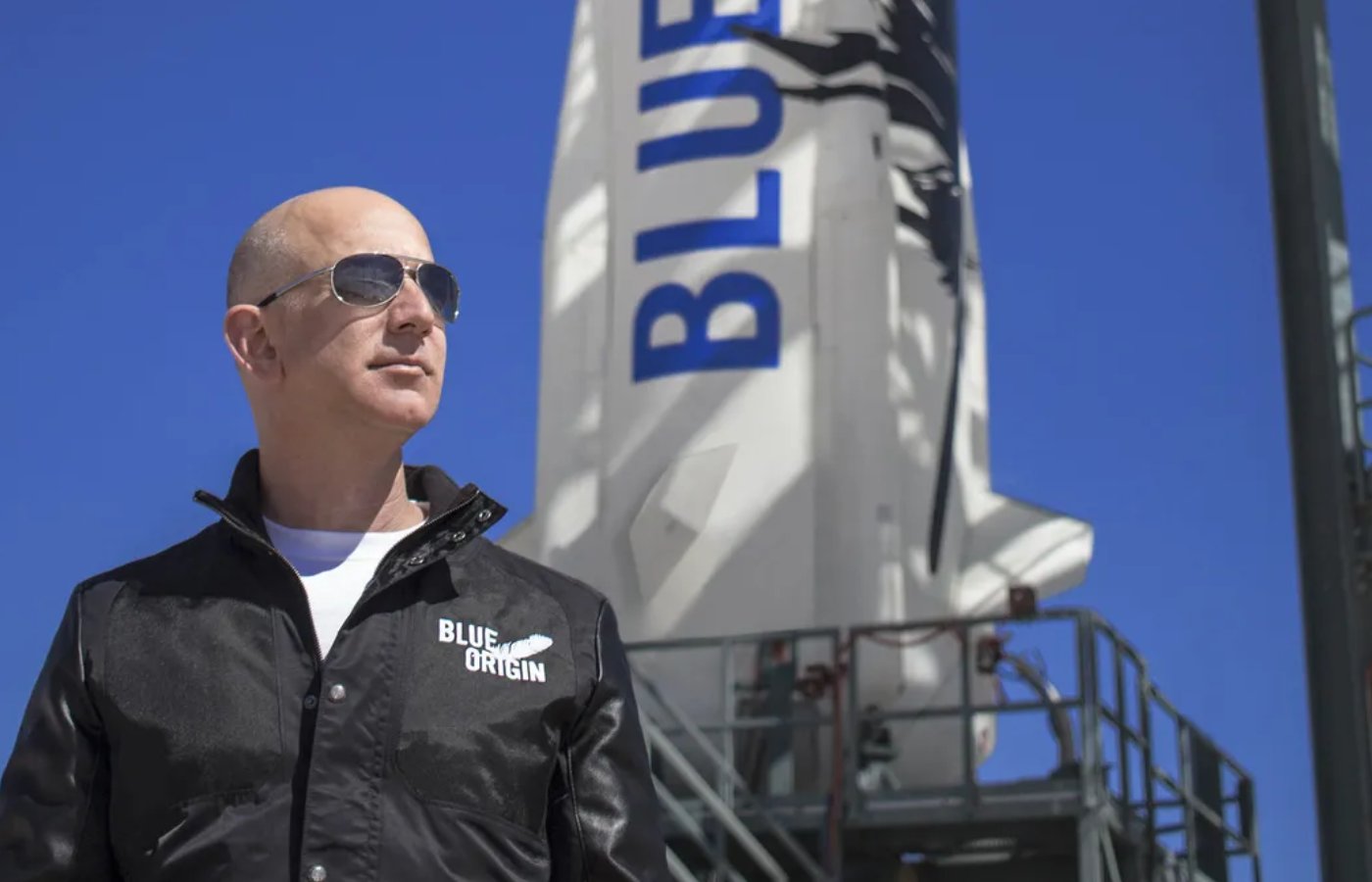

Blue Origin is reportedly looking into raising external funding for the first time in its 25-year history, as part of a push to better compete against its larger rival SpaceX.
The aerospace company, founded by Jeff Bezos, has been self-funded throughout that time, but apparently sees this as an opportune moment to raise capital. Increased investor interest in space companies in the lead-up to a potential SpaceX IPO, expected sometime this year, may provide Blue Origin with more capital and reduce its reliance on Bezos.
Blue Origin CEO Dave Limp told employees at an all-hands meeting that external fundraising would be necessary to ramp up the company’s launches and better compete for contracts, according to the Financial Times. It is planning eight to 12 launches in 2026, but reportedly has a long-term goal of reaching more than 100 launches a year. SpaceX has 140 to 145 launches planned this year.
Competing with SpaceX for NASA contracts
The company has been restructuring over the past few years to become more competitive in the space launch market, while also building out its satellite services. It recently postponed its space tourism venture to focus more heavily on its lunar lander contract with NASA. This is a $3.6 billion contract tied to a future Artemis mission that would land US astronauts on the Moon.
Rival SpaceX is contracted for the two Artemis missions before that, the first of which will be an Earth-orbit test mission next year, followed by the first crewed lunar landing, scheduled for early 2028. As NASA has a goal of returning to the Moon each year afterwards, the success of these first missions could pay huge dividends for both SpaceX and Blue Origin.
Blue Origin has shown some promise recently, with the launch of its New Glenn rocket sending two NASA satellites towards Mars and landing the booster on return. This made Blue Origin the second company to land an orbital-class booster after a space launch, narrowing the potential cost gap between the two companies for future launches.
SpaceX still has a few years advantage on Blue Origin, already having its own satellite networking system and now an AI research firm. According to SpaceX CEO Elon Musk, the space company will launch orbital data centers to train xAI models and others, potentially another funding mechanism.
Building out other segments of the space economy
Bezos has been willing to spend billions on his space venture, but costs have ramped up considerably over the past few years. Costs will reportedly reach $4.8 billion this year, about 15 percent of the total $28 billion spent so far. With these increased costs, it may be impossible to keep Blue Origin as a one-man show.
To that end, Blue Origin is trying to expand its operations beyond launches. Even though it has put its space tourism venture on hold for a few years, it plans to launch a satellite network for enterprise customers. This is different from SpaceX’s Starlink, as it will offer very high-capacity connectivity to enterprises, data centers, and governments.
But it remains difficult to see a time in the near future when Blue Origin will be anywhere close to profitable, aside from a huge ramp-up in available NASA contracts. The American company is unlikely to find much volume elsewhere, given the smaller scope of contracts in Europe, South America, and Asia, and the fact that many of these programs use domestic companies or state-backed organizations.
Also read: The latest funding push also comes as Bezos backs other capital-intensive ventures, including Slate Auto’s recently unveiled $650 million electric pickup project.
Read the full article here