





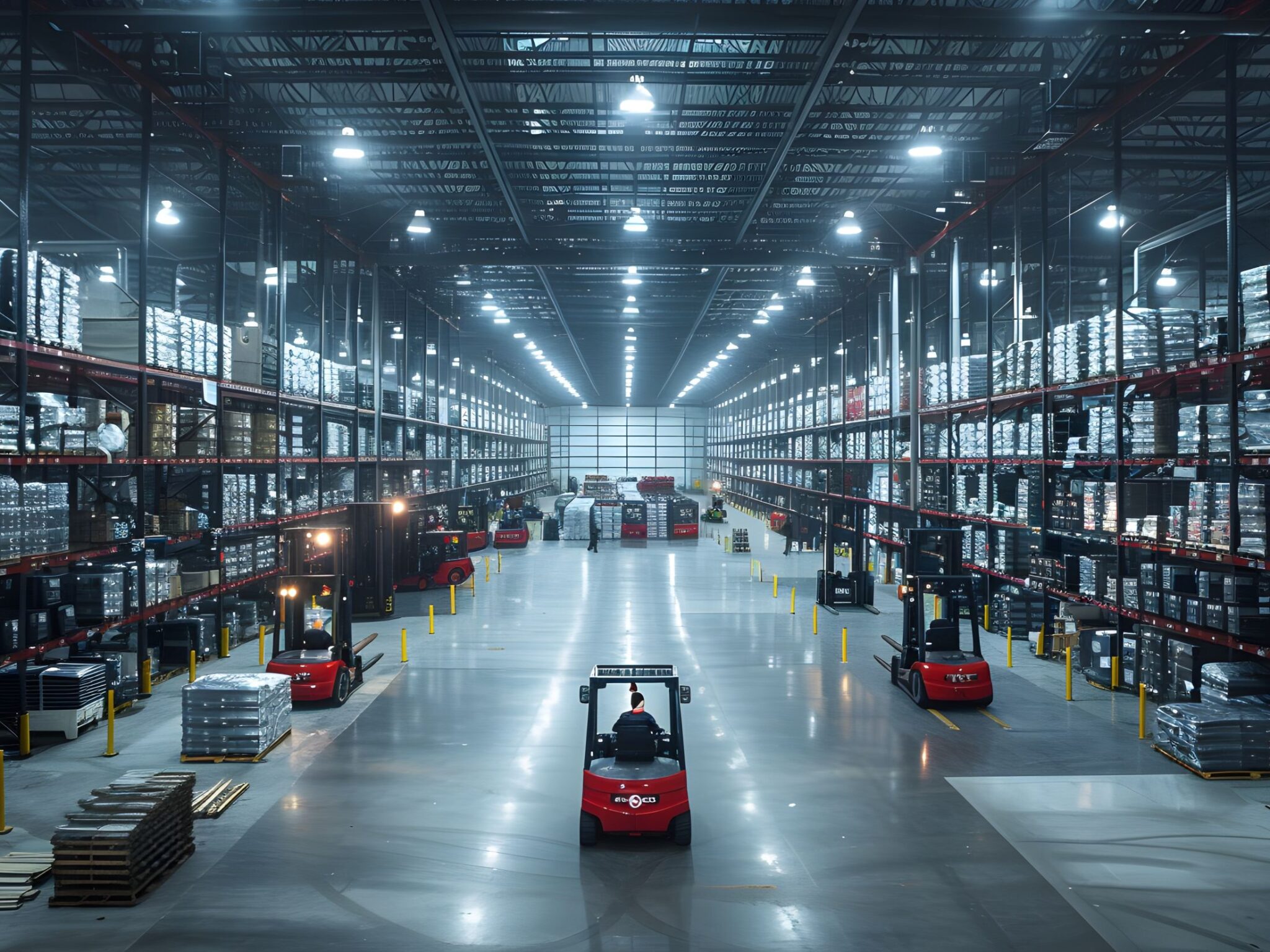

Gartner reports that warehouse automation now spans four operational AI tiers as logistics operators transition from software trials to live facility deployments.
In an analysis released this month, the research firm concludes that logistics infrastructure has reached a clear adoption threshold. Three pressures are driving this change across the sector.
Persistent worker deficits make automated systems mandatory for logistics facilities. Concurrently, software commercial models now feature lower initial capital requirements. Underlying algorithms and autonomous machinery have simultaneously reached production-grade reliability.
Gartner evaluates these systems across two primary performance axes: intelligence sophistication and operational action orientation.
Federica Stufano, Senior Principal Analyst in Gartner’s Supply Chain practice, said: “These four AI trends are interconnected and reflect the evolution of a more intelligent, adaptive, and resilient warehouse environment.”
Stufano stated that enterprise deployment requires clear system visibility so supervisors understand automated reasoning on the warehouse floor. Human staff must work alongside automated tools to solve specific facility pressures.
Enhanced optimisation models and generative planning
Traditional mathematical models have advanced past rigid heuristics. Instead of relying on static spreadsheets or simple decision trees, modern calculation engines intake live floor telemetry to direct facility operations.
Warehouse management suites apply these refined algorithms to four main workflows: demand forecasting, shift planning, travel routing, and stock placement. Systems recalculate inventory movements as order profiles fluctuate during a shift.
This dynamic adjustment curbs operational expenditure and lifts physical asset productivity. The underlying logic preserves the deterministic audit trails that logistics directors require for regulatory compliance.
Machine learning models now interpret unstructured facility data alongside tabular logs. Operational generative systems read equipment maintenance records, vendor delivery receipts, and incident tickets to compile dynamic documentation.
Software agents produce instant standard operating procedures and updated picking instructions when unexpected supplier delays disrupt standard warehouse schedules.
Floor supervisors receive real-time exception-handling guides directly on handheld terminals. Rather than searching static manuals during equipment faults, technicians review context-specific repair instructions generated from historical maintenance archives.
Semi-autonomous AI agents and physical warehouse automation
Autonomous software agents handle complex workflows by pairing analytical evaluation with human validation. These systems inspect active floor queues, reassign picking tasks, and redistribute warehouse machinery across loading bays.
Human managers retain manual override authority over high-value decisions. The software presents recommended operational sequences, but floor supervisors confirm the dispatch order before execution begins. This shared supervisory framework prevents workflow interruptions while accelerating response times to dock congestion.
Physical automation integrates machine learning algorithms directly with industrial robotics and spatial sensors. Autonomous systems execute picking, packing, parcel sorting, and pallet transit across loading bays. These robotic platforms maintain high positional accuracy across multi-shift schedules.
Deployment teams report steadier item velocity and fewer physical injuries in palletising zones. The automated equipment helps logistics directors maintain volume commitments despite severe regional hiring deficits.
“Supply chain leaders should take a pragmatic approach to AI in warehousing by tackling proven use cases, such as labour forecasting and slotting, and expanding into generative AI and agents where it can improve decision-making and workforce productivity,” Stufano explained.
Distribution centres can establish steady operational baselines by deploying proven inventory optimisation tools first. Operations teams can subsequently introduce agentic assistants and autonomous lift trucks as workforce familiarity with algorithmic systems matures.
Learn more about physical AI during the Physical AI Expo held in Amsterdam, London, and North America.
See also: Lidl deploys driverless truck for store deliveries in Germany
Want to learn more about AI and big data from industry leaders? Check out AI & Big Data Expo taking place in Amsterdam, California, and London. The comprehensive event is part of TechEx and is co-located with other leading technology events including the Cyber Security & Cloud Expo. Click here for more information.
AI News is powered by TechForge Media. Explore other upcoming enterprise technology events and webinars here.
Read the full article here