





HubSpot has introduced a new answer engine optimization (AEO) tool as businesses grapple with a shift in how users search for and discover information online.
Instead of relying solely on traditional search engines, users are increasingly turning to AI platforms such as ChatGPT, Google’s AI Overviews, and Gemini to get direct answers. This shift is driving interest in AEO SEO, an emerging approach focused on visibility within AI-generated responses rather than just rankings.
What is answer engine optimization and how does AEO SEO differ from traditional SEO?
Answer engine optimization is the practice of optimizing content so it can be surfaced, cited, or recommended within AI-generated responses.
Unlike traditional top SEO tools, which focus on ranking links, AEO focuses on being included directly in the answer. As AI-generated results reduce the need for users to click through to websites, AEO is becoming a critical extension of existing search strategies.
Why answer engine optimization is gaining traction
For years, SEO has been built around rankings, impressions, and clicks. But AI search changes that model.
Users can now ask complex, conversational questions and receive synthesized responses that combine multiple sources. In many cases, those interactions result in fewer clicks, shifting value away from rankings and toward visibility within AI-generated outputs.
This is where AEO SEO becomes relevant. By applying answer engine optimization, brands can ensure they are represented when AI systems generate responses — not just when users browse search results.
Also read: ChatGPT Cheat Sheet: A Complete Guide
HubSpot’s approach to AEO SEO
HubSpot’s new tool is designed to help marketers measure and improve their performance in AEO.
The platform evaluates brand presence across AI systems and applies AEO principles to surface insights such as:
- A visibility score across platforms like ChatGPT and Gemini
- Which prompts mention a brand
- Where competitors are cited instead
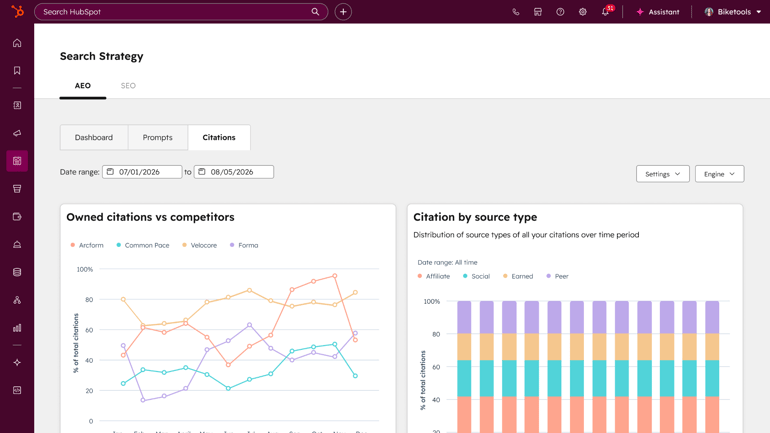
This addresses a growing blind spot. While AI-driven discovery is already influencing customer behavior, many organizations lack tools to track how they appear in AI-generated answers.
Also read: HubSpot CRM Review: Features, Pros & Cons
Turning AEO insights into action
One of the key differentiators in HubSpot’s approach to AEO is its integration with its broader marketing platform. Rather than acting as a standalone monitoring tool, the system connects insights directly to content workflows. Marketers can identify gaps, receive recommendations, and act on them without leaving the platform.
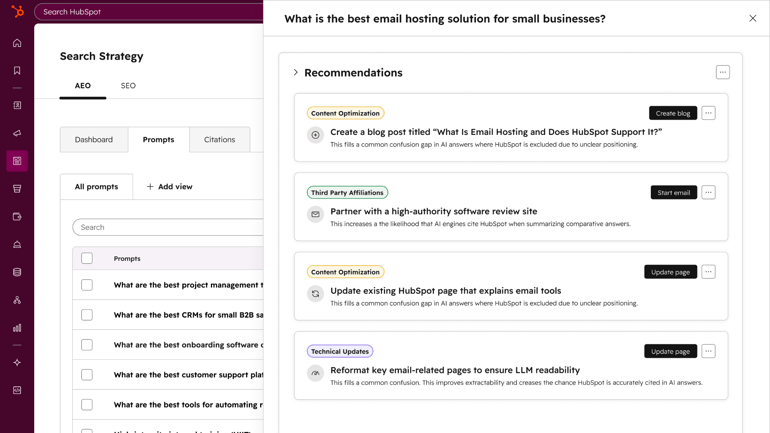
The tool also incorporates CRM data to tailor recommendations based on audience, industry, and existing content — a capability HubSpot positions as a way to improve the effectiveness of AEO SEO strategies over time.
Also read: The 8 Best ActiveCampaign Alternatives
Measuring success in AEO
AEO introduces new performance metrics that differ from traditional SEO benchmarks.
Instead of focusing primarily on rankings and traffic, teams must evaluate:
- Whether their brand appears in AI-generated answers
- Which queries trigger those mentions
- How competitors are positioned in the same responses
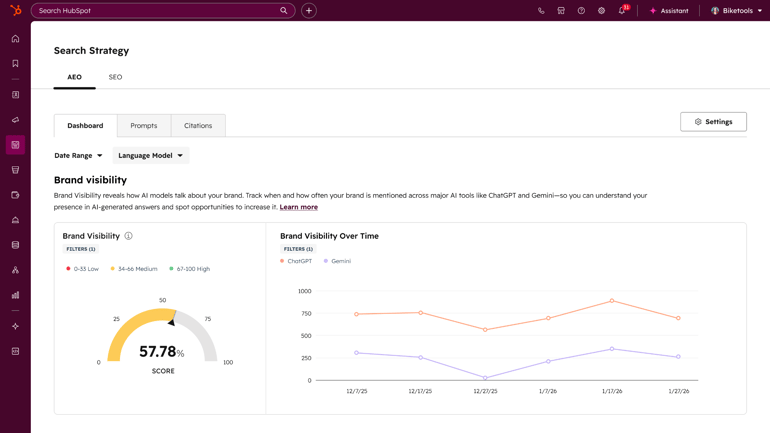
HubSpot consolidates these signals into a single dashboard, helping translate answer engine optimization data into actionable insights.
Why AEO matters for businesses
AI-generated answers are increasingly shaping how users research products and services. As a result, visibility is shifting earlier in the discovery process.
AEO also requires a broader approach than traditional SEO. Factors such as brand authority, consistency, third-party mentions, and content quality all play a role in whether a company is cited in AI responses.
As AEO evolves, businesses may need to rethink how they create and distribute content to remain visible.
Watch: AI is vital for business but it’s no magic bullet
AEO signals a shift in search strategy
HubSpot’s launch reflects a broader transition in digital marketing.SEO is unlikely to disappear, but it is no longer sufficient on its own. AEO, supported by SEO strategies, represents a shift toward optimizing for how AI systems interpret and present information.
For marketing teams, the focus is expanding from ranking pages to influencing how AI systems generate answers — and ensuring their brand is included in those results.
Also read: The Next Billion Users Won’t Be Human: Securing the Agentic Enterprise
Read the full article here