




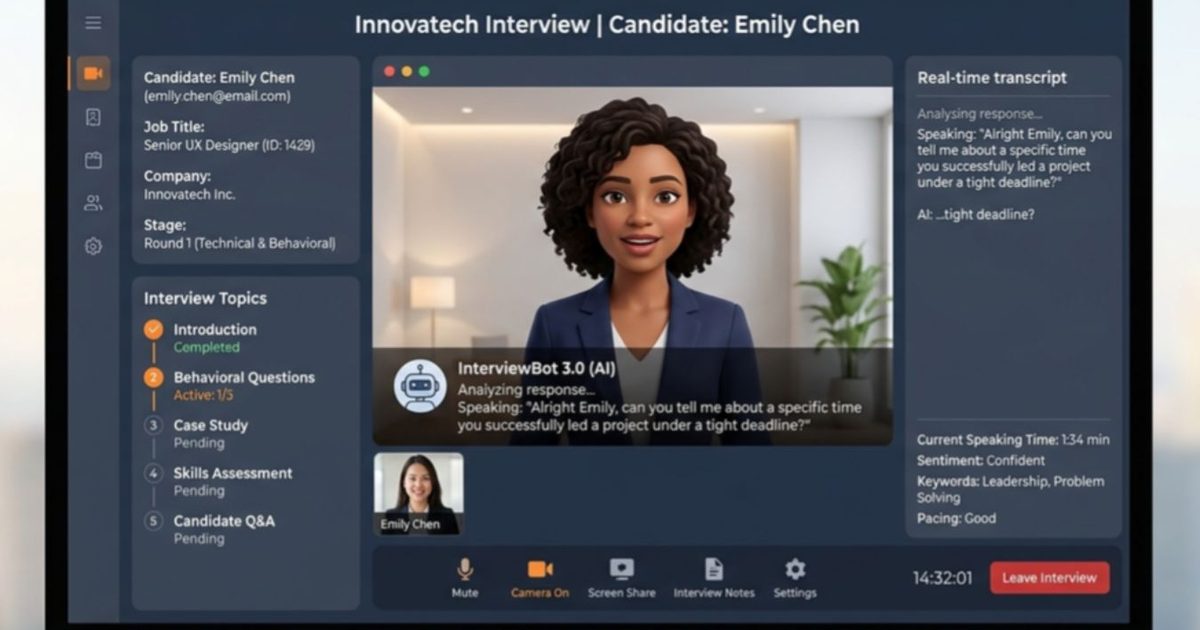

An AI hiring system can treat every applicant the same and still leave some people feeling targeted. Researchers found that rejected candidates judged an automated interview differently depending on the race and gender of the avatar delivering the result.
Around 220 participants completed a simulated interview for a fictional customer support role with one of four photorealistic AI avatars. Everyone was rejected, yet perceptions of fairness shifted with the interviewer’s appearance. An algorithm audit could miss that reaction because candidates don’t experience the system as raw code. They experience a face asking questions and judging their answers.
Why partial matching felt worse
Candidates who matched the avatar in only one characteristic, either gender or skin color, rated the process as less fair than those who matched in both traits or neither.
The study didn’t establish why partial matching produced the strongest response. Limited resemblance may have changed what candidates expected from the interaction, making the rejection feel more personal. Whatever the explanation, giving an AI interviewer a familiar face doesn’t guarantee that applicants will see it as neutral.
What changed after the rejection
Before the decision, trust in the AI remained consistently high across the different avatar combinations. Eye tracking revealed one notable difference, with participants looking more closely at faces whose skin color differed from their own.
Once the rejection arrived, candidates became more skeptical of the process. A racial mismatch also made them more likely to attribute the result to bias. The automated outcome stayed identical, but the person on screen shaped how candidates interpreted it.
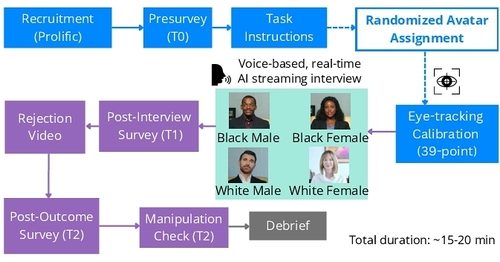
The experiment involved a fictional job and a standardized rejection, so it doesn’t prove that real hiring avatars produce the same response. It does show how quickly perceived fairness can change once an automated decision becomes personal.
What companies should test next
Companies using AI interviewers need to examine the interface alongside the model making the decision. Consistent scoring won’t stop candidates from reading social meaning into an avatar’s appearance.
Fairness testing should include applicants from different demographic groups and compare their reactions before and after an unfavorable result. Companies should also test whether a less human-looking interface creates fewer concerns than a photorealistic interviewer. The safest choice may be the design that sets the clearest expectations, rather than the one trying hardest to look relatable.
Read the full article here