


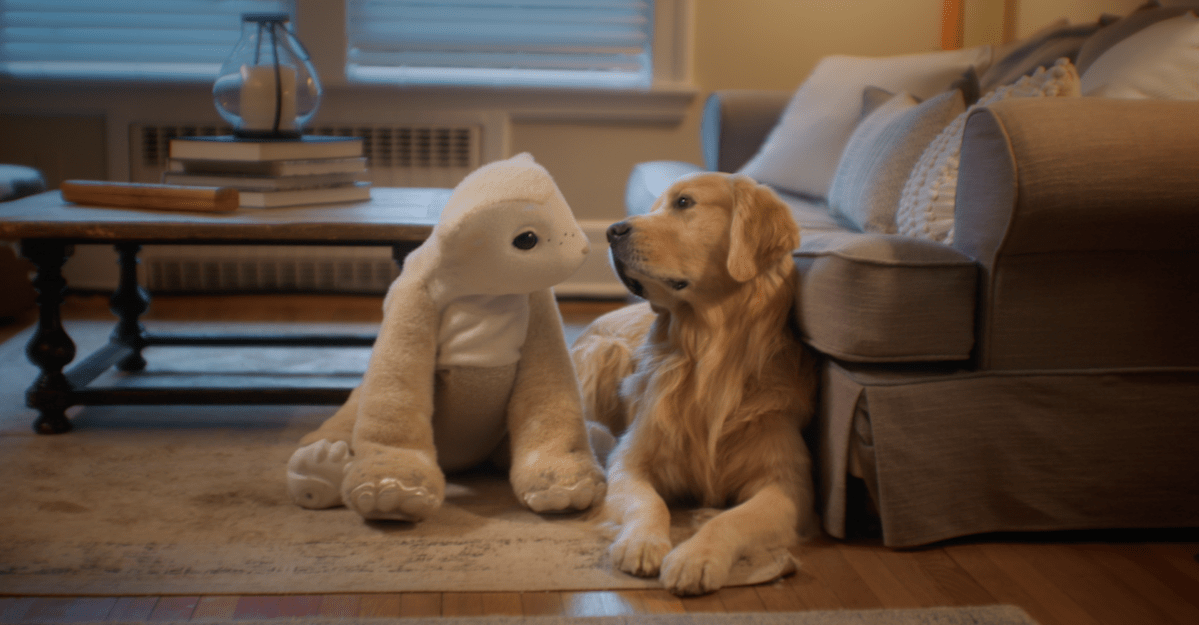

Colin Angle, the maker of the Roomba and the man who helped put 50 million household robots into people’s homes, is back with a new robot. But this one is designed as a companion, not a cleaner.
The first robot from Angle’s new company, Familiar Machines & Magic, is a dog-sized robotic pet that resembles a cross between a bear, a barn owl, and a golden retriever. It has an expressive face, with movable eyebrows, ears, and eyes, and the company calls it a “Familiar,” a name meant to evoke folklore around the idea of a supernatural companion. Based on a demo video I saw ahead of its appearance at the WSJ Future of Everything conference this week, the quadruped robot can move around your home on all fours independently, like a pet.
The Familiar is a “physically embodied AI system” that will use generative AI, via an on-device model, to engage with its owner with the intent of forming an emotional connection and develop “a distinct personality,” Angle told me in an interview. Robots that can react and respond to humans should, in theory, be more effective serving in what Angle calls “high human connection roles,” such as companionship, entertainment, hospitality, smart home, eldercare, and parental support. “The next era of robotics is not just about dexterity or humanoid form — it’s about machines that can build and sustain human connection,” says Angle.
Internally codenamed Ami, the first Familiar won’t be available to buy until next year at the earliest, and will cost “around the same as pet ownership,” Angle said. Its exact features are also still under wraps, but Angle says initial use cases are focused on families with young children, companionship for the elderly, and addressing the global loneliness epidemic. It’s a bold move for a man who built a career on robots that clean floors.
Angle says his entire three-decade career in robotics has led to this moment. The original name for iRobot, founded in 1990, was Artificial Creatures Inc. But back then, the tech to create artificial life didn’t exist. “Finally, I get to do what I originally set out to do. It’s not just about building cool animatronics. Now is finally the time where the tech exists — if properly and responsibly used — to start creating Familiars.”
After iRobot’s failed sale to Amazon, Angle stepped down as CEO in 2024. In the time since, he and Familiar Machines cofounders Angle, along with cofounders (and iRobot veterans) Ira Renfrew and Chris Jones, have assembled a team of roboticists and engineers from Disney, MIT, Boston Dynamics, Amazon, Bose, and Sonos. Their goal is to create a robot that is not just a toy or a chatbot slapped into a piece of plastic, as we saw everywhere at CES this year.
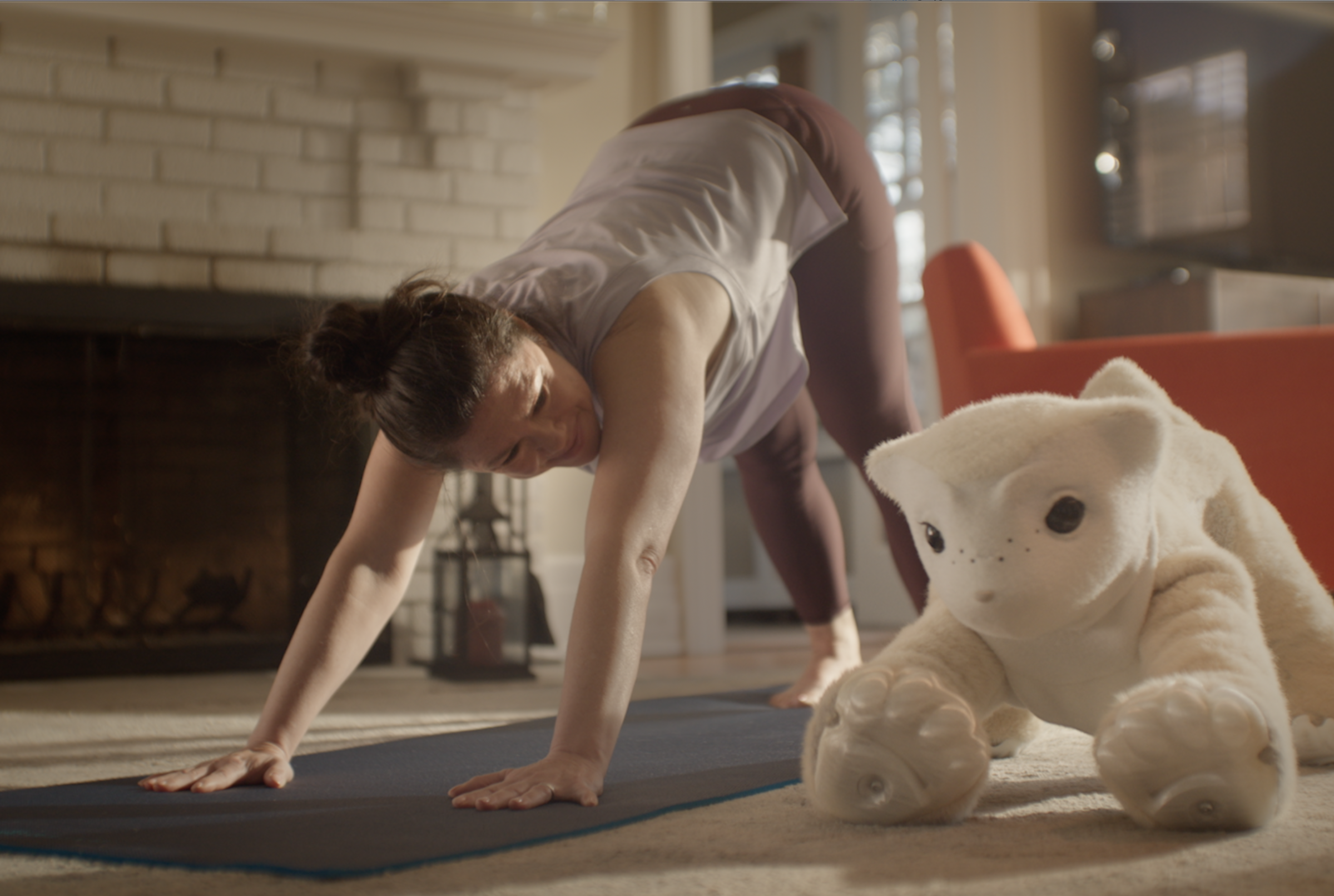
From the get-go, the team dismissed the idea of a humanoid robot, believing it unnecessarily complicated for their purpose. Ami is a deliberately unidentifiable creature because, Angle says, if you create a specific animal or form-factor, people will have preconceived ideas about its abilities.
They also decided not to have the Familiar talk. Instead, it will make nonverbal sounds — the two units shown off at WSJ Future of Everything made meowing and purring noises. “By design, it will avoid giving factual advice about things that maybe it shouldn’t be giving factual advice about,” says Angle, with a nod toward the hot water LLM-powered chatbots keep getting themselves in.
“If this is a toy, we’ve failed. If this is a creature that you want in your world, then we’ve knocked it out of the park.”
— Colin Angle
Primary communication will be through expression and body language, aided by a camera-based vision system and microphone array. With 23 degrees of freedom, the robot can move its head, neck, ears, eyes, and eyebrows, and walk at a slow human pace, but it can’t grip things or climb stairs. Its four legs provide stability, which should help with concerns around the robot falling and damaging property or injuring people.
Familiar Machines’ goal is to use AI to create a robot that can learn from its owners, remember patterns, and adapt to their routines, with the aim of fostering long-term engagement, says Angle. They want to avoid being stuck in a closet or falling victim to the fate of dozens of earlier home robots (see Jibo, Aibo, Vector, Astro, etc.). “If this is a toy, we’ve failed,” says Angle. “If this is a creature that you want in your world, then we’ve knocked it out of the park. It’s kind of one way or the other.”
The Familiar is powered by Nvidia’s Jetson Orin chip. “Its onboard edge AI stack is powered by a custom small multimodal model optimized for social reasoning, combining vision, audio, language, and memory to create socially responsive behaviors in real time,” says Angle. It doesn’t require an internet connection, although it can be connected, and it doesn’t stream audio or video to the cloud, a purposeful design decision to protect privacy and improve latency. However, it’s still a device with cameras and mics in your family space.
Physical AI for human connections?
So, why would anyone want this robot in their home? While Angle is coy about specifics, since the robot is still in development, he says an AI-powered companion could help address the growing problem of loneliness and provide an alternative to technology that keeps us glued to screens.
“If your Familiar gets you up and out of your room and walking around — that’s a real way to try to address isolation and loneliness,” he says. Most attempts at companion robots so far fail the “plate of glass” test, says Angle. “If a sheet of glass between you and the device wouldn’t change the experience, it should just be a screen.” This is why Ami is designed to interact with you, including nudging you and hugging you. It also has a “luxurious” touch-sensitive coat, says Angle.
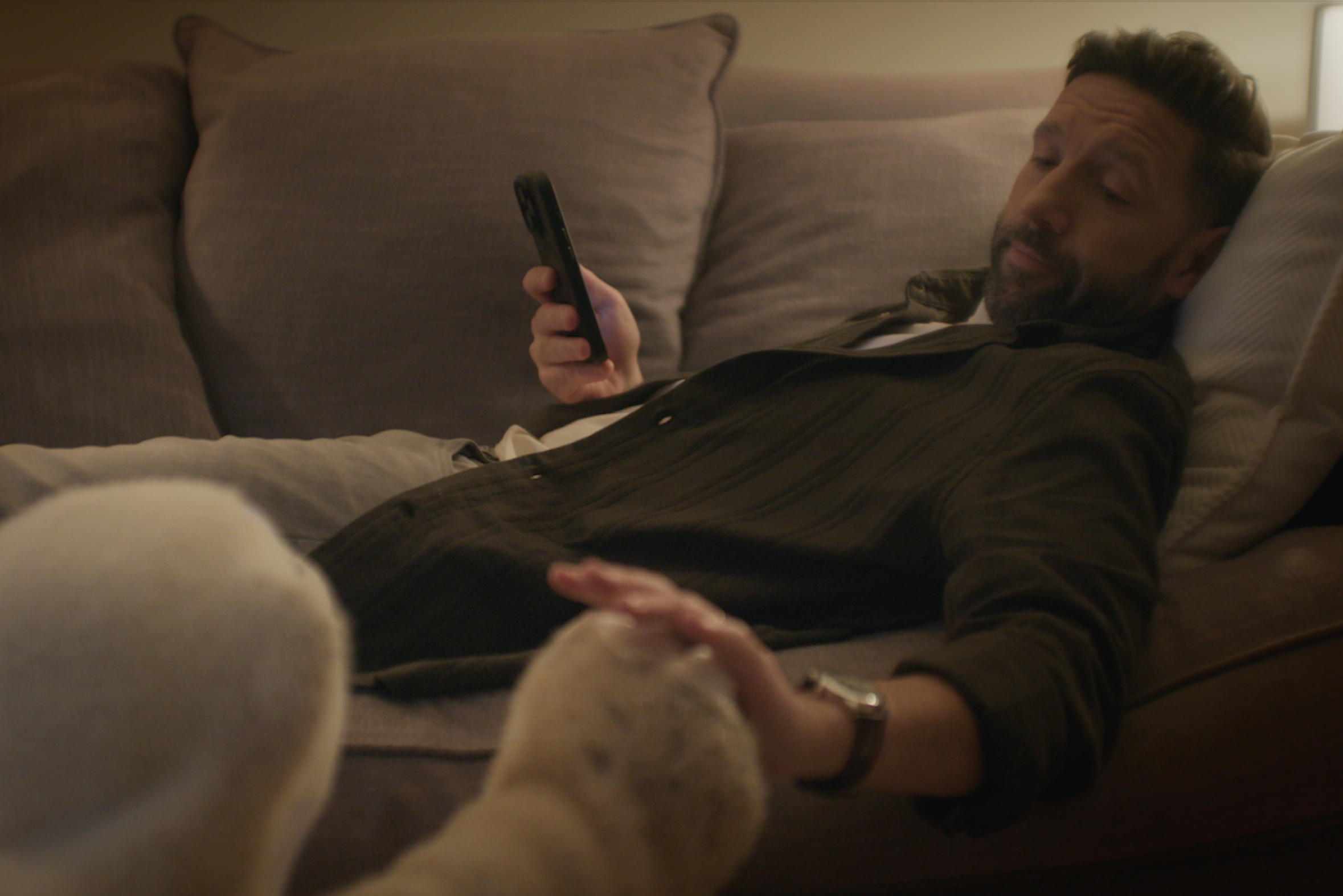
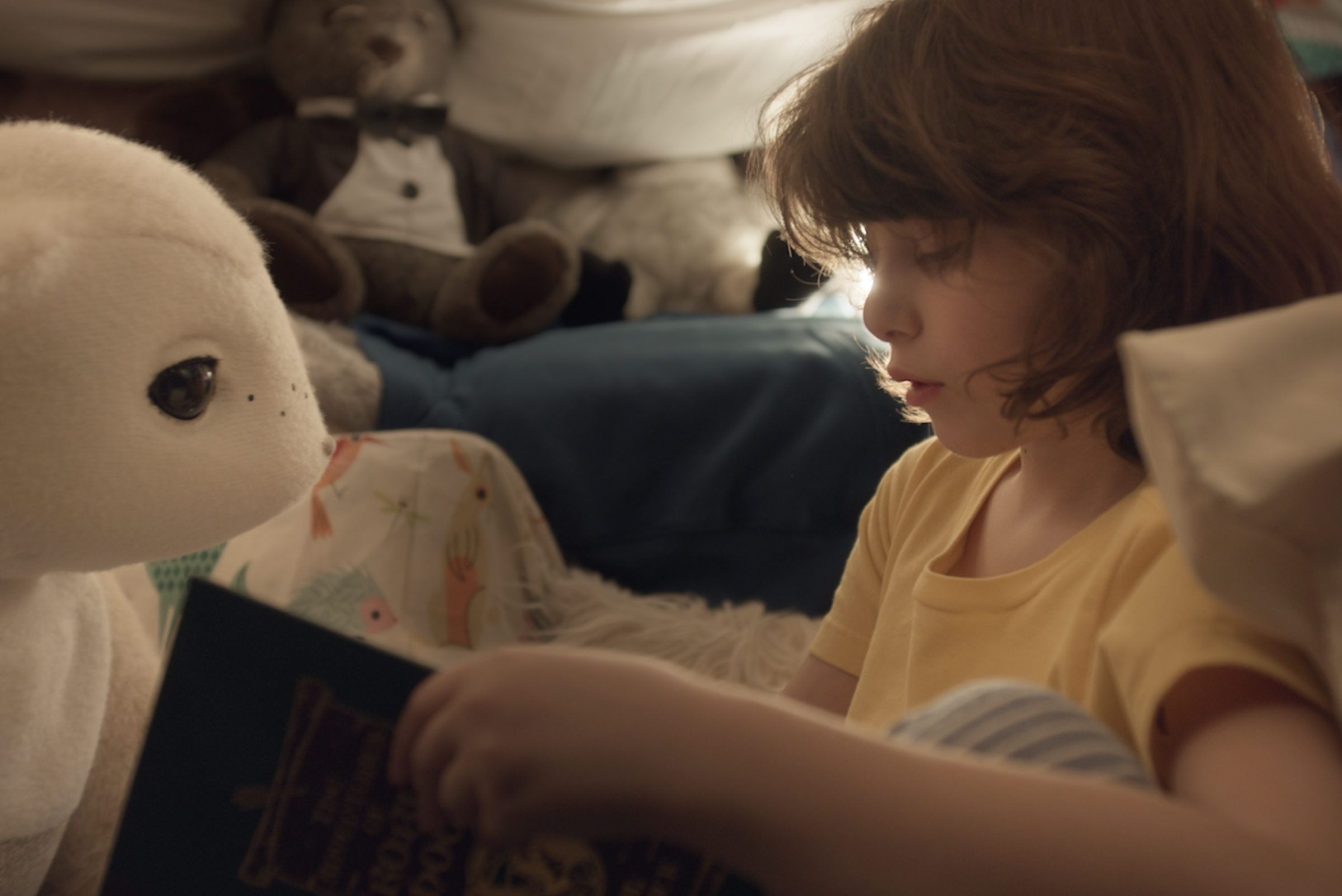
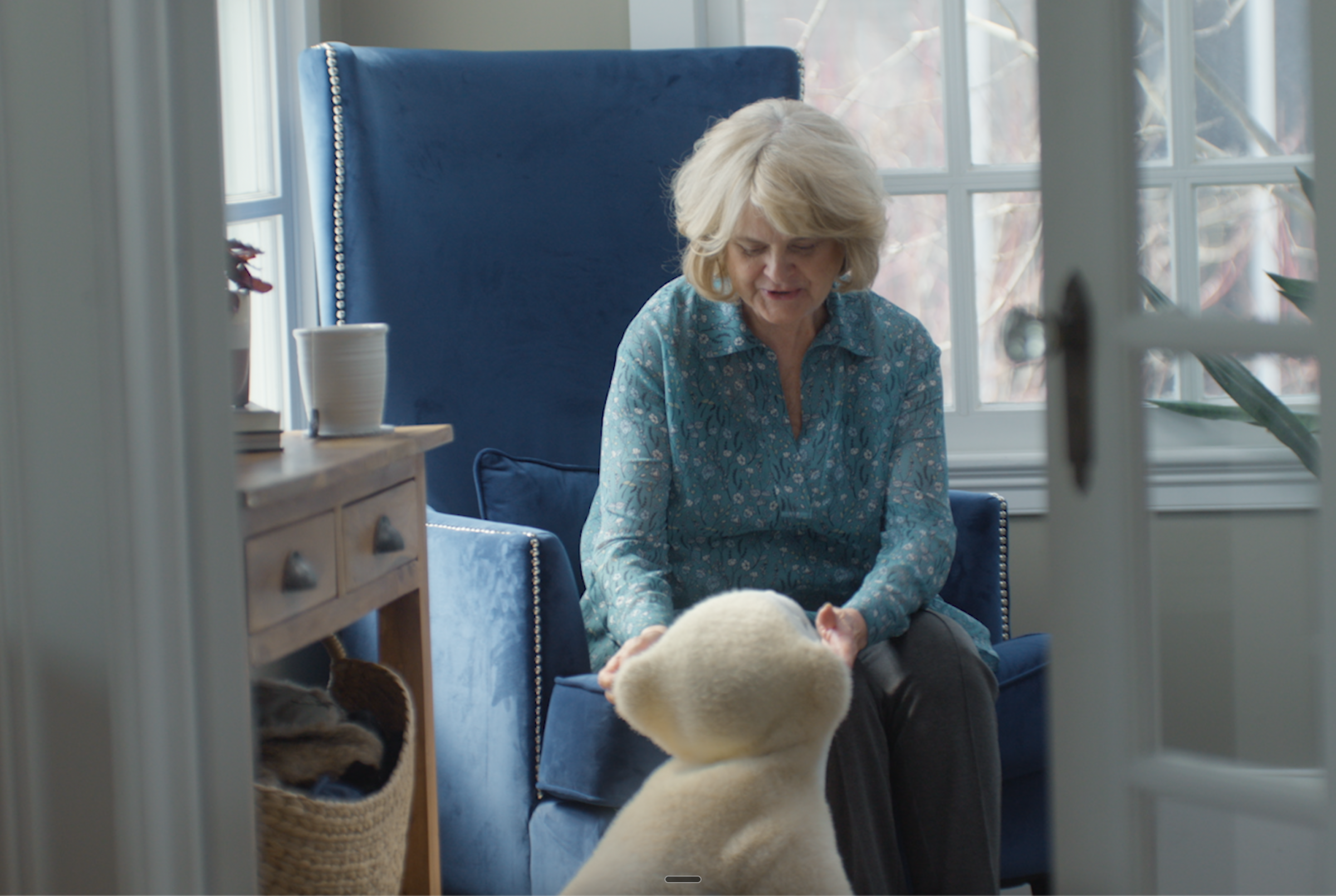
The video demo I saw of Ami showed a boy putting down his tablet to pet it, a man deciding to stop doomscrolling and go to bed after a nudge from the robot, an elderly woman walking Ami, and a younger woman doing yoga next to it. The idea is that if it encourages you to do things other than being on a screen or sitting alone at home, you’re more likely to engage with other people.
It’s going to take a lot more than a robotic pet to unglue my teenager from TikTok.
While more non-screen-based interactive technology could be an antidote to our screen-obsessed society, it’s an extremely tenuous link to more human interaction. It’s going to take a lot more than a robotic pet to unglue my teenager from TikTok. And it is still a robot, not a human you are interacting with. By offering a substitute for some aspects of human companionship, it could just as easily become as big a barrier to real social interaction as screens are.
Assuming Angle and his team can pull off the robotic and personality parts, success will still depend heavily on how consumers respond to bringing a robot into their homes. And how much it costs. The first Roomba was a hit because it cost under $200 and vacuumed the floor. “Pet ownership costs” is a dizzyingly broad range. While Angle claims interest in the Familiar is “higher than what we saw with Roomba,” the lack of a clear purpose feels like a problem.

The strongest use cases Angle hinted at are as a parent support tool — a device that interacts with your children when you can’t and is better than a tablet or TV screen — and as elder support, helping alleviate loneliness and managing routines for medication and movement. The latter is similar to one of the few successful companion robots so far, Intuition Robotics’ ElliQ. (Angle is on the company’s board).
Many people will look at this Familiar concept and say, “I’d rather have a real dog or a cat.” As a devoted pet owner, I know I would prefer to give my cat snuggles, walk my dog, or hang out with my chickens than spend time with a machine. Angle points out that there are many reasons people can’t have pets, sharing a statistic that claims pet ownership declines to just 9 percent after age 68, when it can become harder for someone to care for an animal. For those who want an animal companion but for whatever reason can’t have one, the Familiar could be an interesting alternative.
Angle demoed two Familiars on stage at the WSJ conference, showing them moving around, walking, and interacting with people, and making meowing and purring noises. The units were partially operator-controlled. Angle didn’t say to what extent, but he says the Familiar will be fully autonomous by the time it launches next year. “This is a demo, but it’s a demo on its way to a product; we’re already in factories,” he told the audience.
Even then, it’s not clear how close it will be to Angle’s vision. These are very big promises in a field filled with failures and sky-high expectations, and all we’ve seen so far are tightly controlled demos. What is clear is that Angle believes his team has already made significant strides towards their vision of creating artificial life. “It’s not a toy. It’s a real robot,” he says. “There is enough to it that it’s beautiful, wonderful to pet and give a hug to, and it can keep up with you. It’s the agency. For some definition of alive, it’s alive.”
Read the full article here