



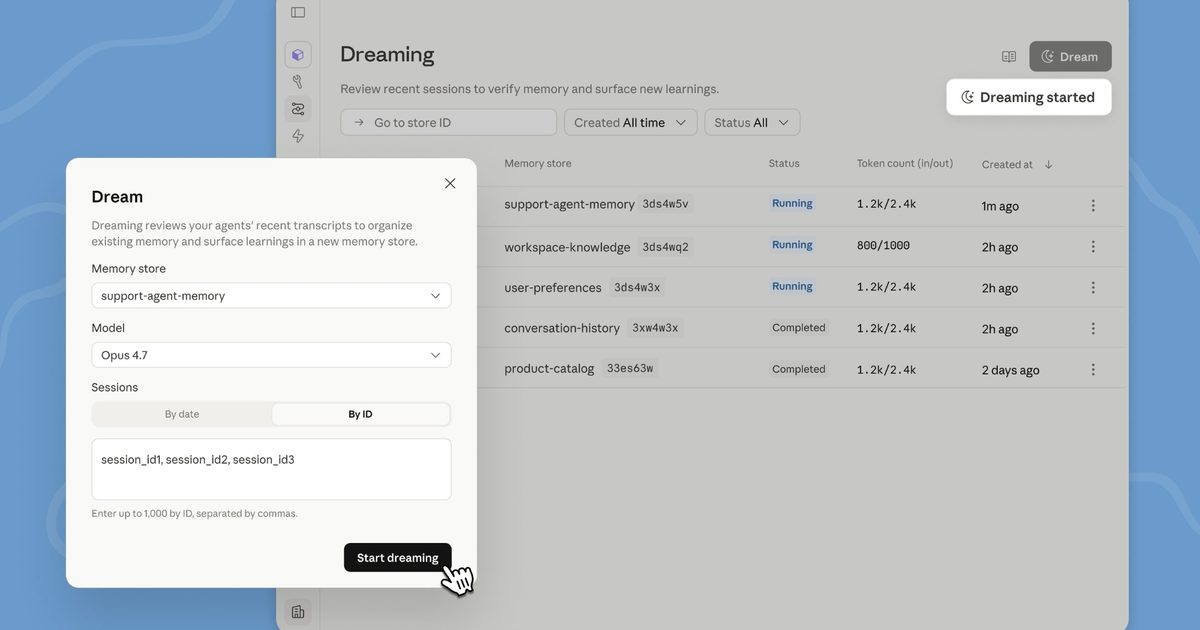

Anthropic just gave Claude something that sounds like a perfect science fiction plot: the ability to dream. The company has announced three upgrades to Claude Managed Agents: Dreaming, Outcomes, and Multiagent Orchestration.
While I agree that the Dreaming clearly has the most evocative name, it’s also the one with the most practical implications for developers building AI agents that can handle complex, long-running work.
What is Claude’s Dreaming feature?
Despite the poetic name, Dreaming is a scheduled background process that takes place between active sessions. Its purpose is to review everything that an agent has previously done, including past conversations, logged memory, completed tasks, and look for patterns between them.
Dreaming scans all the tasks performed by the agent, spots the mistakes it keeps repeating, the approaches it naturally prefers (built over sessions), and shares the insights across multiple agents working in parallel (when multiple Claude agents are working simultaneously).
Once the agent figures everything out, it then locks those learnings into its memory, so that every new session starts with the same context of what worked and what didn’t the last time. Developers can either let Dreaming update memory automatically or keep reviewing the changes before they are applied.
What do Outcomes and Multiagent Orchestration add?
Currently, the Dreaming feature is available in research preview on the Claude Platform. The feature is a self-improvement mechanism that will help the agent compound its usefulness over time, particularly by acknowledging the mistakes it committed in the previous sessions.
Outcomes, as the name suggests, let developers define a set of parameters, requirements, or a standard against which the agent’s output is evaluated. The evaluation is conducted by a separate grading system that makes sure isn’t influenced by the agent’s own reasoning. If the agent’s response doesn’t meet the criteria, the grader demands another attempt.
Multiagent Orchestration allows multiple Claude agents to work in tandem on different parts of a complex task. This reduces the time and expands the scope of responses in a single workflow. Webhooks round out the update by enabling event-driven triggers for agents without constant manual prompting.
Read the full article here