


We’ve crossed yet another one of Elon Musk’s self-driving thresholds. Tesla’s fleet of vehicles using the company’s Full Self-Driving (Supervised) system has driven over 10 billion miles, according to the company’s updated safety page. That means the company has crossed the line Musk set earlier this year for “safe unsupervised” driving.
But Tesla owners did not suddenly wake up today to find their FSD (Supervised) vehicles transformed into FSD (Unsupervised) ones. FSD is still just a Level 2 system that requires a fully attentive human driver behind the wheel to monitor the road and be prepared to take over at any moment.
In January, Musk said on X that “roughly 10 billion miles of training data is needed to achieve safe unsupervised self-driving” — the implication being that once Tesla reached that milestone, the company would flip the switch and all its customers would suddenly have access to an unsupervised driving system.
In January, Musk said on X that “roughly 10 billion miles of training data is needed to achieve safe unsupervised self-driving.”
Of course, that would have been an enormously risky move by Tesla, especially when there are still so many questions about the company’s willingness to accept legal responsibility for over a million vehicles with FSD. When a Waymo vehicle is responsible for a crash, Waymo assumes liability because it owns the tech and the fleet. But Tesla’s terms of service put the liability on the owner, based mostly on its characterization of FSD as a Level 2 supervised system. What happens when FSD goes unsupervised? Who assumes responsibility for a crash then?
It’s not clear that Tesla has figured that out yet. Over the years, there have been hundreds of crashes involving Tesla’s partially autonomous features and dozens of fatalities. But the company has been able to avoid liability, either by settling with victims or convincing courts to dismiss the lawsuits. On its website, Tesla maintains that FSD (Supervised) “requires active driver supervision and does not make the vehicle autonomous.”
A federal jury in Florida last year found Tesla partly liable for a deadly 2019 crash involving the company’s Autopilot driver assist software, and ordered the company to pay the victims’ families $243 million. Tesla appealed the ruling, but a judge rejected that effort.
Still, it’s worth acknowledging the incredible accomplishment of 10 billion miles driven in FSD (Supervised). Tesla claims that its FSD-equipped vehicles drive 5.5 million miles on average before a major collision, as compared to 660,000 miles for the average US driver. Tesla touts this as evidence that FSD is safer than human driving.
What happens when FSD goes unsupervised? Who assumes responsibility for a crash then?
Experts have long questioned Tesla’s methodology. Studies have shown that the company’s safety reports fail to take into account basic facts about traffic statistics, such as that crashes are more common on city roads and undivided roads than on the highway, where Autopilot is most often used. Some researchers believe that Tesla may be miscounting crashes in order to make Autopilot and FSD seem safer than it actually is.
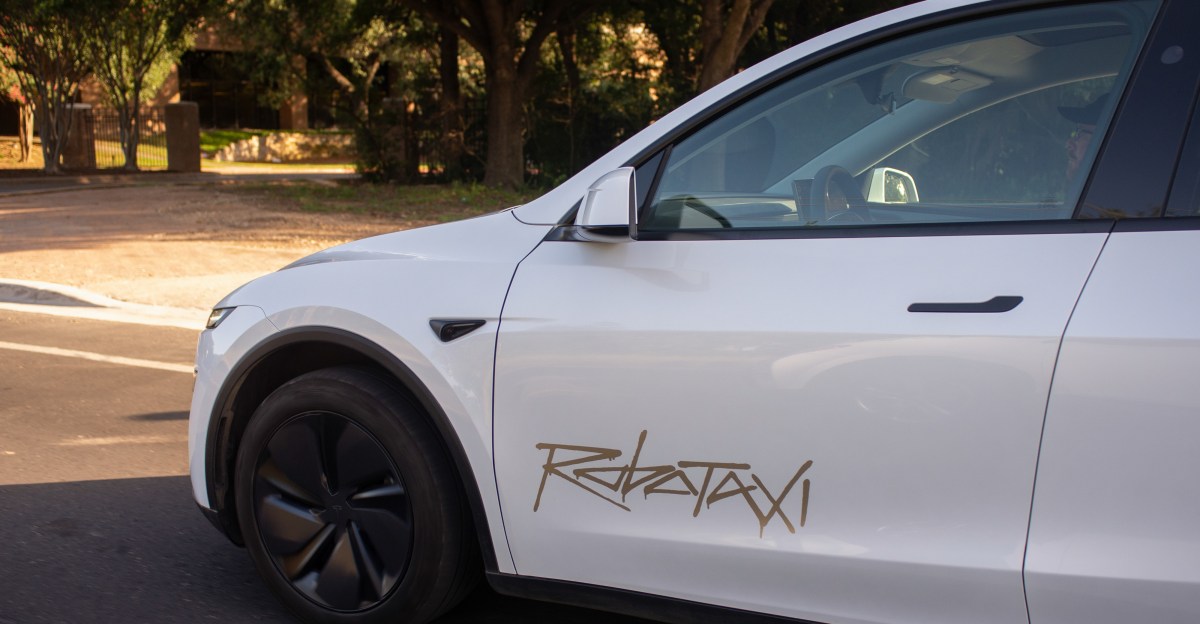
Unsupervised driving may still be elusive to Tesla’s customers, but the company is ramping up its use of unsupervised vehicles in its robotaxi fleet. After launching in Dallas and Houston with just a pair of vehicles, Tesla has since added more vehicles to its fleet. Dallas now has five unsupervised robotaxis, while Houston has six, according to the Robotaxi Tracker. Austin, where Tesla first launched its robotaxi service, now has 29 supervised vehicles (employees in the front passenger seat) and 22 unsupervised ones.
Naturally, this makes many Tesla owners feel like they are tantalizingly close to getting access to unsupervised driving. But questions around liability are likely to continue to delay their access. In an earnings call last month, Musk said that unsupervised driving was coming when “it is legal to do so.” Asked specifically about unsupervised FSD in customer cars, he predicted it would arrive in the fourth quarter of the year.
Another threshold, or another goalpost that will inevitably move?
Read the full article here