

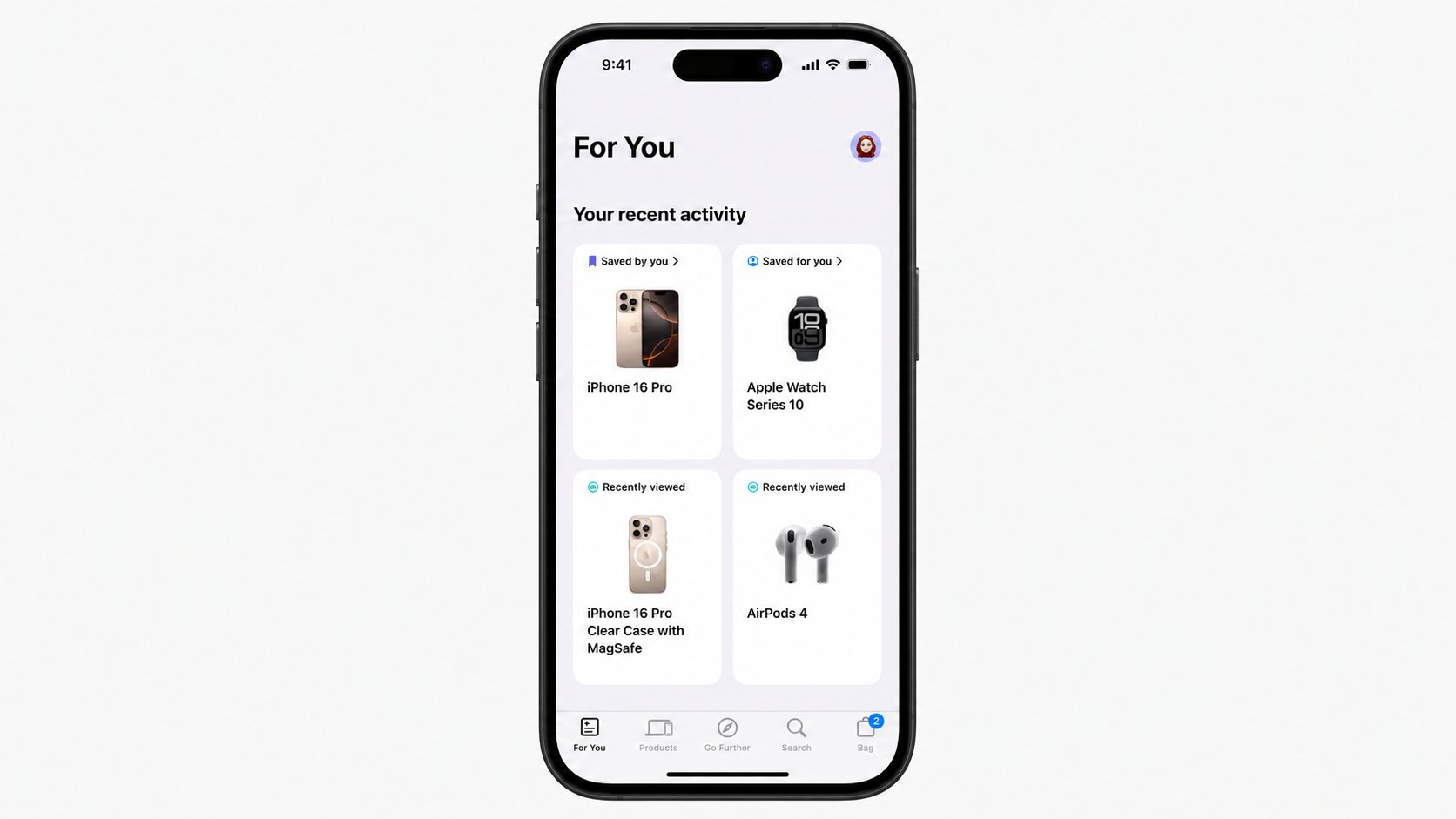

Apple is putting conversational AI directly into its shopping experience. Select iPhone users began seeing an “Early Preview” of a Virtual Shopping Assistant in the Apple Store app on Aug. 24, giving them a new way to ask about products, orders, trade-ins, and payment options.
Apple has not formally announced the feature or said when it will become widely available. The limited test moves AI closer to Apple’s purchase flow, while the company’s privacy disclosure shows what customer information can be used to personalize those conversations.
The assistant tackles product and purchase questions
Access remains limited. MacRumors reported that many of its staff members could not access the assistant on Aug. 24, and Apple has not disclosed eligibility requirements, supported regions, or a wider rollout date.
Users with access can enter their own questions or choose suggested prompts. Those prompts cover trade-in values, carrier offers, iPad comparisons, iPhone monthly payments, new Apple products, and Apple Watch recommendations, according to 9to5Mac’s look at the interface.
The assistant can also answer questions about existing orders and connect shoppers with an Apple Specialist. Apple warns that AI-generated responses can contain inaccuracies, a notable risk when answers involve pricing, payment terms, or trade-in values.
The company raised trade-in estimates across several product lines in August, underscoring why a shopping assistant needs current pricing and upgrade information. Apple is also expanding AI elsewhere in its ecosystem, including efforts to bring current information into Siri.
It remains unclear whether the shopping assistant can complete transactions, such as placing an order or starting a trade-in, rather than simply explaining the options. Apple also has not identified the AI model powering the feature.
Apple disclosed the Virtual Shopping Assistant in its privacy documentation on July 22. Under Apple’s current privacy notice, the company collects and stores account information, device identifiers, carrier information, chat information, and location data where enabled to personalize conversations and provide relevant responses.
Apple saves transcripts so users can return to previous chats and for business analytics. Using conversations to improve the assistant is opt-in and can be controlled under Account > Settings > Chat Improvements in the Apple Store app.
Chats may also be sent to partners that help Apple generate conversational responses. Apple says it removes personal identifiers before sharing them and restricts partners to using the information to help provide a response, but it does not identify those partners.
The data model puts Apple’s test within a broader shift toward AI-assisted commerce, where retailers are weighing the benefits of conversational recommendations against questions over who controls customer relationships and shopping data.
The Virtual Shopping Assistant remains a limited preview. A wider rollout — and any ability to move from answering purchase questions to completing transactions — would determine how deeply Apple ultimately integrates conversational AI into its retail experience.
Read more: Apple is also changing how customers acquire its hardware through the new Apple Upgrade leasing program, which offers eligible US customers another route to iPhones, Macs, iPads, and Apple Watches.
Read the full article here