


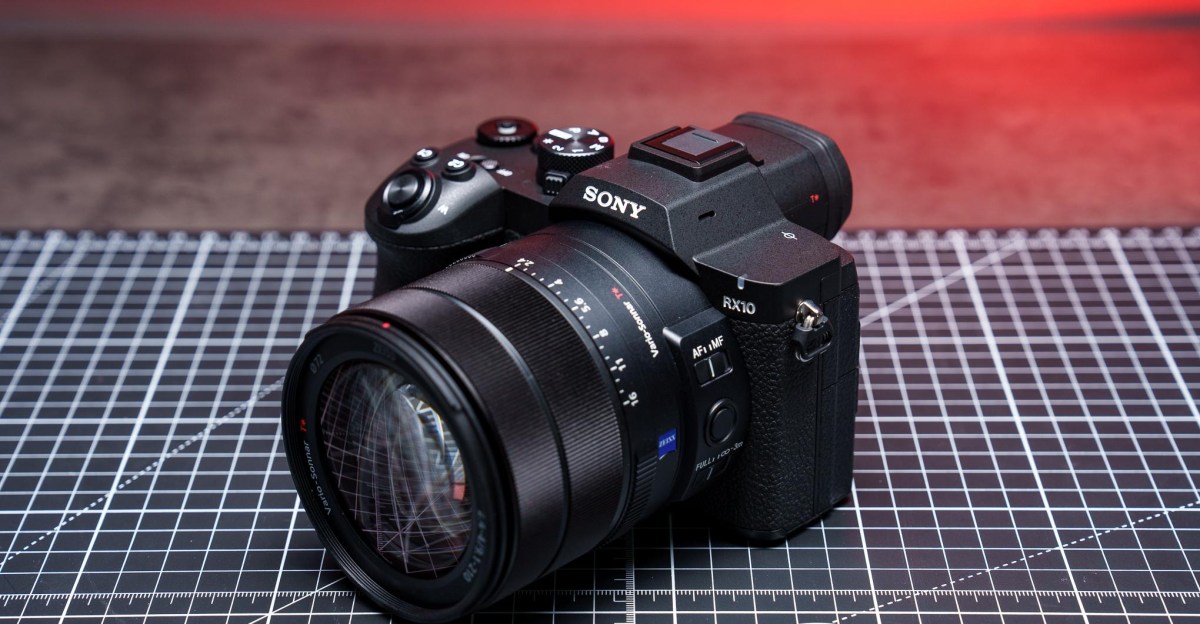

Sony is bringing back the RX10 superzoom camera after a nearly nine-year gap between models. The newly announced RX10 V retains the same 24-600mm equivalent f/2.4-4 Zeiss Vario-Sonnar 25x zoom lens of its last two predecessors, but it has lots of upgrades elsewhere. The new 20.1-megapixel 1-inch-type sensor is a stacked design, allowing up to 30fps continuous burst shooting without any blackout (up from the last-gen’s 24fps). That’s a nice improvement for a camera aimed at action, sports, and wildlife photography, but it will come at a steep cost of $2,299.99 when the camera launches in early August.
The RX10 IV launched at $1,700 in 2017. And, to be fair to the RX10 V, the pricing for the new model isn’t completely off the mark if you adjust for inflation. But what you get with the RX10 V isn’t just a sensor upgrade — the body has been revised to look and feel like Sony’s larger Alpha mirrorless cameras. It uses the same NP-FZ100 battery found in most current A-series models, offering over 50 percent more battery capacity.
The new RX10 V also inherits many noteworthy features and specs from its larger Alpha cousins, like an OLED electronic viewfinder, 4K 60p full-width video recording (4K 120p when cropped) with S-Log3 and S-Cinetone color options, and Sony’s top-notch real-time autofocus tracking system. Like larger Sony Alphas, the RX10 V has 575 autofocus points and can detect subjects as well as the human form — to better locate and latch onto faces and eyes during fast movement. It even has the Speed Boost function that debuted in the pro A9 III camera, allowing you to shoot at faster burst rates for short stints when you need it.
Since the RX10 IV came well before using a large camera as a webcam was a thing, the RX10 V now supports livestreaming at up to 4K 30p via a USB-C connection (with simultaneous recording) — which is ideal because its video-out port is still a flimsy Micro HDMI connector. While most of what’s new about the RX10 V is an upgrade over the last gen, the new model sadly lost a couple features: The lens no longer has a built-in ND filter and there’s no pop-up flash. Bummer.
I got to briefly test the RX10 V for a few days, and despite the reused lens, I came away impressed. It really does feel like a Sony Alpha camera with a big built-in telephoto zoom — though much smaller and lighter than attaching a huge lens to a full-frame mirrorless Alpha. I’m no birder or nature photographer (the longest lens I personally own is a 135mm), but Sony’s excellent autofocus and 30fps blackout-free burst shooting made it pretty easy to photograph birds in trees around my backyard or macro shots of bees moving from flower to flower. There’s a lot this lens and fast-shooting sensor can do. Of course, if you’re like me and used to full-frame cameras, you have to slightly dial down your expectations when it comes to sharpness and resolution — a 1-inch-type sensor is versatile, but it doesn’t hold up to the same pixel-peeping scrutiny.
The RX10 V seems aimed at deep-pocketed casual shooters who want a camera to take traveling without lugging around a bag full of lenses. In my years spent behind a counter selling superzoom cameras just like it (even the original RX10), the demographic was almost always parents photographing their kids’ sporting events or looking to take a versatile camera on vacation. But at $2,300, it might be more for a recently retired grandma or grandpa than it is for a couple 30-somethings with a kindergartener.
Photography by Antonio G. Di Benedetto / The Verge
Read the full article here