





Across New York City, London, and Washington, DC, ads for Meta’s smart glasses have been plastered over with satirical posters from activist groups. One guerrilla ad calls these “the biggest advancement in pervert technology since the trenchcoat.” Another transposes the words “mass surveillance predator glasses” over influencer Kylie Jenner’s face, calling her out for partnering with the company as a glasses ambassador.
The message of these ads is clear. These glasses may violate your privacy — and would you trust Meta?
Meta seems spooked. For so long, the company’s privacy efforts for smart glasses have essentially relied on a single LED light and a policy that could be summed up as “don’t be a jerk.” Unfortunately, plenty of Meta glassholes have emerged over the last three years, filming often-sexualized videos of others without their consent, sometimes with the LED disabled. In a recent conversation with The Verge, Meta’s VP of wearables, Alex Himel, acknowledged that the company has become aware that an increasing number of people have tampered with the devices.
This explains why the company recently announced a mandatory software update that will disable the camera on all its glasses if the privacy light is physically tampered with. Last week, Instagram head Adam Mosseri said that the social media platform will take down videos taken with Meta’s glasses that depict harassment. Instagram might have opened a can of worms concerning content moderation, but attempts to curtail misuse are good. The problem is Meta could have been doing this all along.
We can’t talk about the current era of smart glasses without acknowledging that Meta has made a series of savvy decisions. Where Google Glass was loud, the Ray-Ban Meta glasses were normal and discreet. Bose beat Meta to the idea of audio glasses by a few years, and Snap was first to the idea of glasses recording POV content for social platforms. But Meta was the one that executed on making affordable, name-brand, and genuinely stylish glasses by partnering with EssilorLuxottica. It’s a model that Google and Samsung are now emulating by partnering with Warby Parker and Gentle Monster. Other companies may have been first to the concept of smart glasses, but Meta notably has been the closest to making these genuinely mainstream.
Except, in recent months, Meta’s been playing its cards all wrong. First there was the NYT report that Meta was looking to roll out facial recognition tech for the glasses while privacy advocates were distracted. Then there was the Wired report that said Meta had silently shipped — but not activated — that tech to existing glasses. Now, there’s a Financial Times report that alleges Meta wants these glasses to record 24/7. Outside these larger beats, Meta has done things like remove the ability to opt out of voice recordings training its AI. Its executives occasionally say tone-deaf things like those who eschew smart glasses will be at a “cognitive disadvantage.” And amid legitimate privacy concerns following bad actors misusing the tech, the company has seeded these glasses to content creators alongside a splashy campaign with Kylie Jenner — one of the most visible but polarizing celebrities.
In a vacuum, a gaffe or two happens. When you screw up this many times, it starts to look like you’re purposefully missing the point.

“You cannot hinge your entire privacy policy on a single light. You can’t expect everyone in the world to know that and react to that,” says Uttara Ananthakrishnan, a technology professor at the University of Washington who specializes in how online interactions affect platforms, markets, and social behaviors. “It puts a lot of pressure on the person who isn’t even wearing the glasses to be aware of what another person is going to do.”
Ananthakrishnan is skeptical that smart glasses will take off outside specific workplaces, not just because of social stigma, but because societal attitudes toward Big Tech companies and what’s shared online have shifted. Case in point, Meta’s executives have often pointed to the early days of the smartphone in defense of smart glasses. Back then, the public was unsure about these devices, but eventually, everyone figured out what the acceptable social norms ought to be. Ananthakrishnan disagrees.
“You cannot hinge your entire privacy policy on a single light. ”
“Tech companies are not at all looked upon with favor right now. Compounded with the fact that we live in an age of social media, where anything that we say and everything that we do — we could be liable for it. There’s a lot more awareness that there are bad people on the internet who could do really terrible things compared to the smartphone era,” says Ananthakrishnan. She also points out how people feel about individual privacy is different than when you are responsible for others’ privacy.
Take smartwatches. Ananthakrishnan notes that people are willing to risk their own health data privacy because there’s a clear benefit to their goals. However, if there are negative outcomes — for example, your health data getting leaked to your employer — you’re the only one who suffers, and you’re the only victim. With smart glasses, the privacy calculus changes. You’re the person risking others’ privacy, possibly without consent — the perpetrator.

So is it even possible for Meta — or any other smart glasses company — to reassure a skittish public? Or are its recent attempts simply too little, too late?
“There’s not much Meta can do to convince me they genuinely care about user privacy when their whole business model is built on invading it,” says Kendall Schrohe, executive director of the Attention Sphere, one of the advocacy groups affiliated with the anti-Meta glasses ads in DC and New York City. “At the end of the day, there is nothing privacy-preserving about sunglasses with a built-in camera. This is surveillance technology and no amount of tweaking changes that.”
Schrohe says that Meta’s credibility is further undermined by the fact that it, along with other tech companies, reportedly lobbied to weaken state privacy bills.
“I think this moment has passed for them,” agrees Ananthakrishnan, noting that Meta isn’t known as a company that effectively communicates privacy policies. “Maybe Apple can, but I don’t think either Google or Meta could pull this off given their history. It’s not going to be reassuring if they put out a statement that says, ‘Hey we are doing everything we can; this is our privacy policy.’ People are still not going to believe that.”
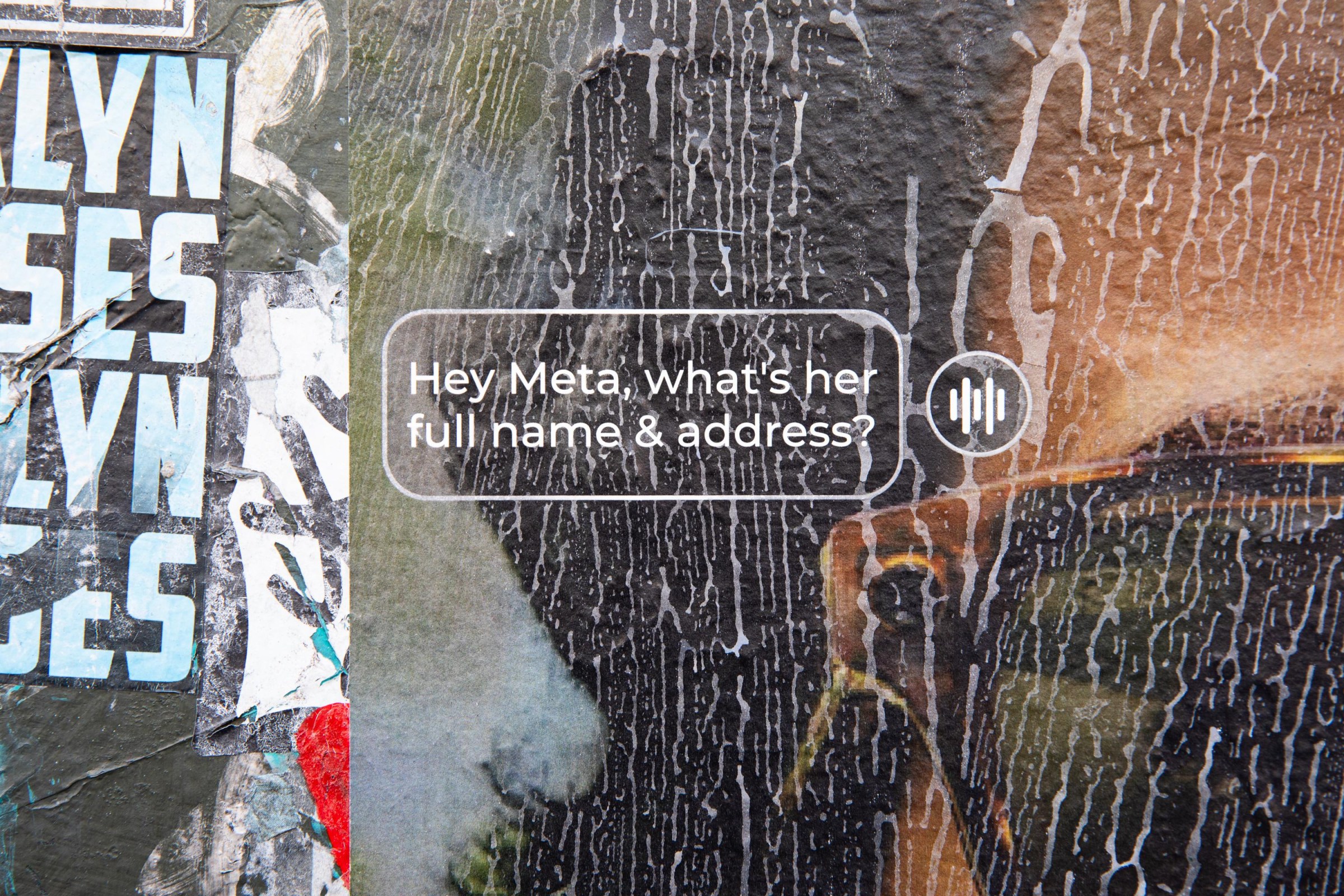
Barring a dramatic overhaul, it’s going to be hard for Meta and Big Tech at large to change the current narrative. And it’s tempting to think that, perhaps, some tech execs might throw up their hands and give up on pursuing proactive privacy at all. To lean into the surveillance dystopia until external actors, like legislators and private businesses, force their privacy hand.
But the reality is that we’re all watching to see what card Meta — the current leader in this space — plays next. Continuing to run the same strategy all but ensures the company will either hand the mantle to Google or Apple, or tank smart glasses as a whole. If Meta wants even the smallest chance of succeeding, it simply has to do something different.
Read the full article here