





Android security is becoming less about one date and more about what is actually patched.
Google has released stable versions of its AndroidX Security State 1.1.0 and Security State Provider 1.0.0 libraries, providing developers and enterprise administrators with a granular way to inspect device security.
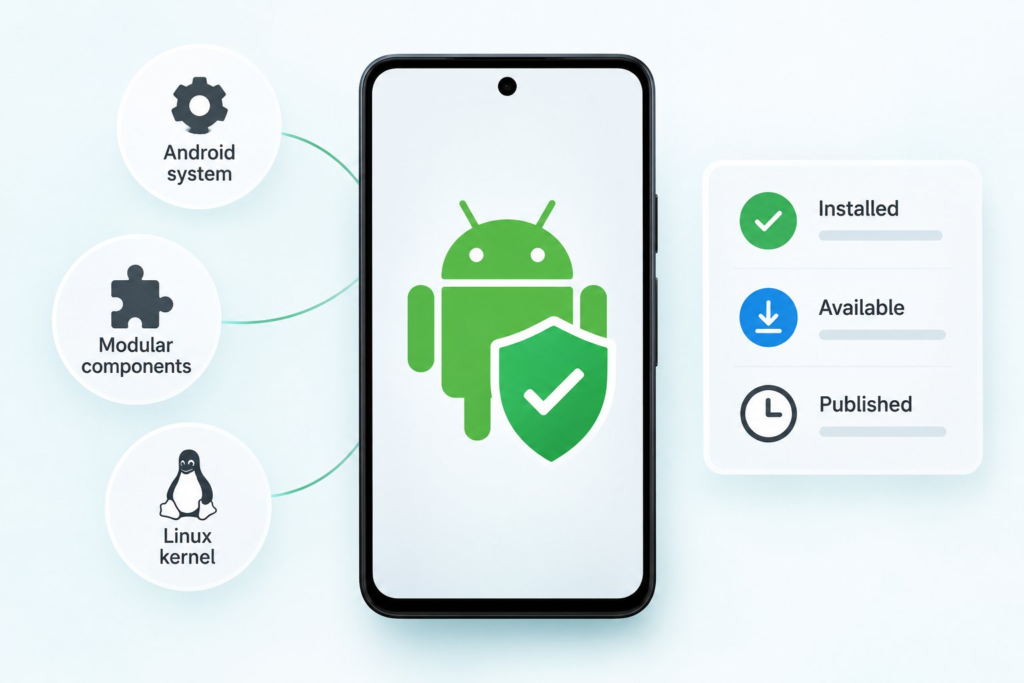
Instead of relying only on a single Security Patch Level, the tools can distinguish the core Android system, modular components delivered through systems such as Google Play updates, and the Linux kernel. That could let apps and administrators make security decisions based on the specific components and vulnerabilities that matter to them.
Beyond the calendar date
Modern Android updates arrive through several paths, including manufacturer over-the-air (OTA) updates and background Google Play system updates. Because of this multi-channel delivery, a single calendar date fails to capture the true security state of a device.
âAs Android has evolved to deliver rapid, independent component updates through modular systems like Google Play system updates, relying on a single SPL build property is no longer the best way to determine a deviceâs true security posture,â Google engineers explained.
- Image: Google
According to Google, the new libraries track three distinct indicators:
- Device SPL (DSPL): The patch level currently installed and active on the device.
- Published SPL (PSPL): The latest patch published in the official Android Security Bulletin.
- Available SPL (ASPL): Updates staged, downloaded, or waiting to be installed on that specific hardware.
Together, the three indicators show not only what is installed today, but also what Google has published and what updates may already be available for that specific device.
By pulling data from the Open Source Vulnerabilities database, apps can also query the status of specific CVEs. That could allow security-sensitive software to check whether a vulnerability affecting a component such as Bluetooth or NFC has been resolved before enabling certain features.
Furthermore, an upcoming Android 17 feature called Supplemental Patches XML will also let hardware makers report backported fixes separately, allowing those fixes to be reflected without waiting for a broader monthly platform update.
What changes for Android users
Most users will not see a new security control in Android settings. The biggest changes will happen behind the scenes as apps gain access to more precise security information.
That could eventually mean fewer situations where an app treats an entire device as outdated simply because its headline patch date is old. An app could instead determine whether the specific vulnerability or component relevant to a sensitive operation has actually been fixed.
There are limits, however. The usefulness of ASPL depends on update clients exposing that information, and Googleâs framework will only become broadly consistent as more OEMs adopt the provider system. That means the transition to granular security checks will not happen uniformly across the Android ecosystem.
Why this matters for Android security
The bigger shift is that Android security decisions no longer have to hinge on one calendar date.
For enterprise administrators and developers, that could enable policies based on specific vulnerabilities, components, and available fixes instead of a single patch-level threshold. A device with an older headline date may still have the fix that matters, while another device with a newer date could still be waiting on a relevant component update.
The usefulness of that model will depend on OEM adoption and how consistently update information is exposed across Android devices, so the transition is likely to be gradual rather than uniform.
Other news: Microsoft warns that attackers are posing as IT staff and using passkey, MFA, and single sign-on update requests to trick employees into approving malicious logins, hijacking sessions, and accessing Microsoft 365 data.Â
Read the full article here