

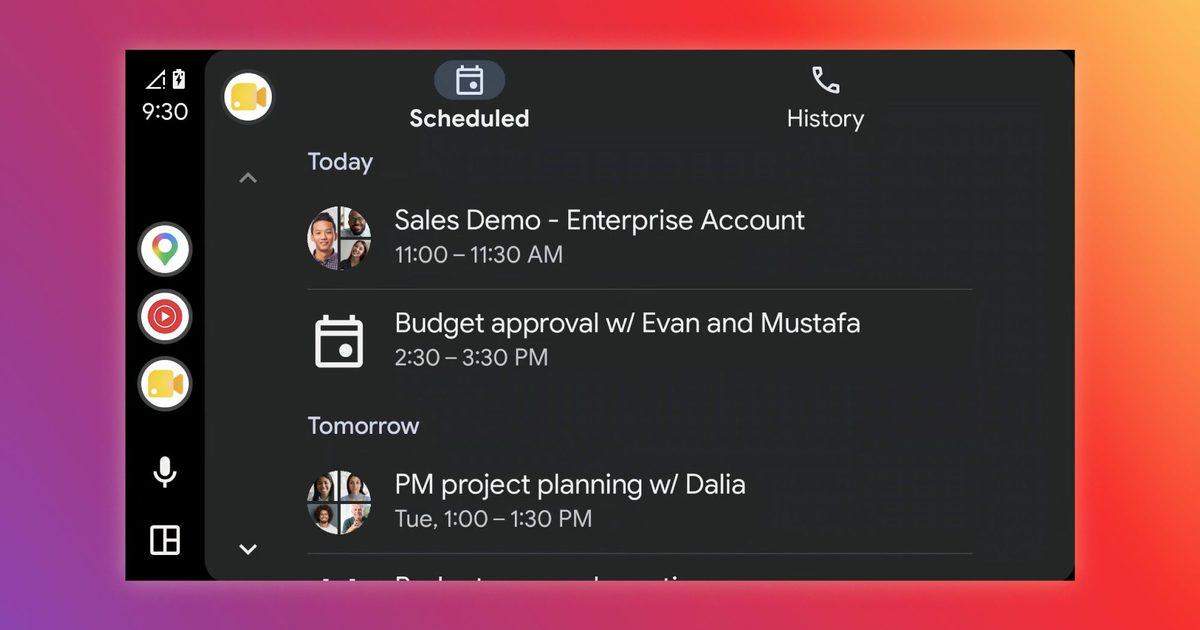

Android Auto is finally getting Google Meet, months after the video conferencing app made its debut on Apple CarPlay. Android users can now pull up scheduled meetings and dial recent contacts straight from their car’s display instead of reaching for their phone.
How it works behind the wheel
In a Workspace Updates blog, Google explains that Android Auto users who already have Google Meet installed on their phone will receive the feature automatically, and the only setup involved is a one-time restart of the app on the device itself. Once the phone connects to a supported head unit, Meet will display two tabs, one for scheduled meetings and another listing recent calls that can be redialed with a single tap.
Joining a call switches the phone into Meet’s “on the go” mode, which disables the camera and strips away features like chat, hand raise, polls, and Q&A, leaving drivers with an audio-only experience where the available controls are limited to muting, connecting to other Bluetooth accessories, and ending the call. Instant meeting links that haven’t already been added to a calendar reportedly don’t appear in the scheduled tab, which could make it difficult to jump into an unscheduled call from the dashboard.
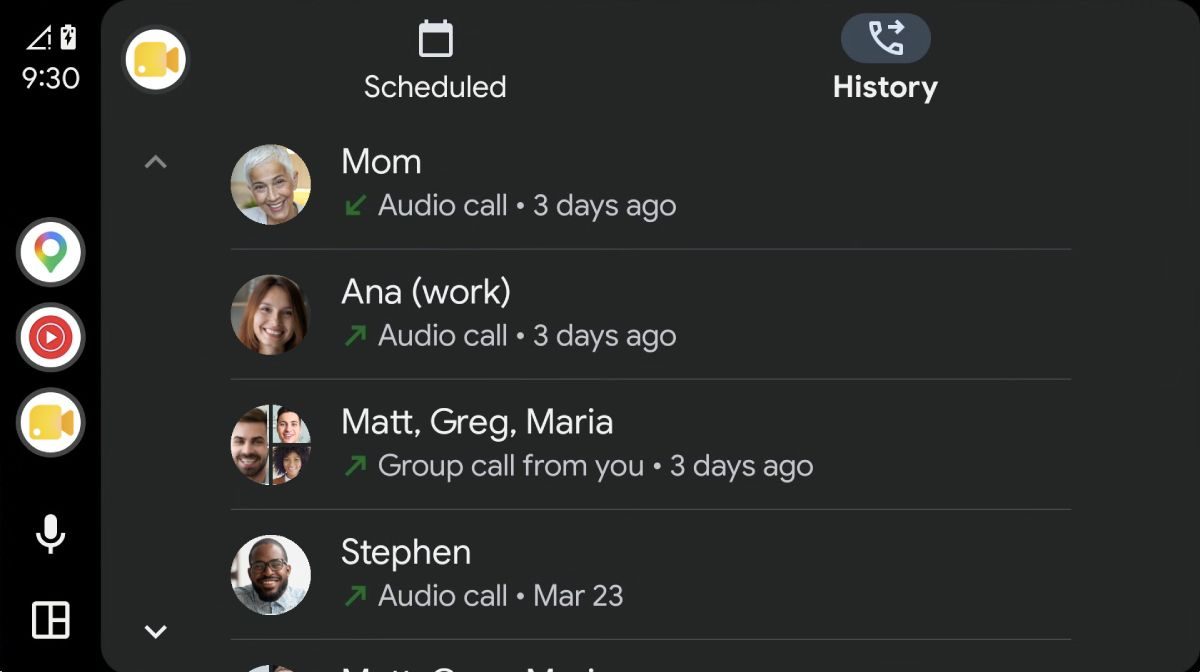
The feature is on by default for anyone with the Meet app installed on an Android phone, and Google hasn’t introduced any admin controls that would let organizations turn it off. The rollout is underway now for Rapid Release domains, while Scheduled Release domains are expected to receive it by June 26, with availability extending to Google Workspace customers, Workspace Individual subscribers, and personal Google accounts.
Catching up to the iPhone
Google brought the same audio-only Meet experience to Apple CarPlay back in April, leaving Android Auto waiting for months despite being Google’s own platform. Microsoft Teams already supports audio calls on Android Auto, so Meet’s arrival brings Google’s app in line with what the rival service has offered for quite some time.
For commuters who rely on scheduled calls, the rollout finally closes a gap that had Google’s own service trailing Apple’s in-car experience for nearly three months.
Read the full article here