
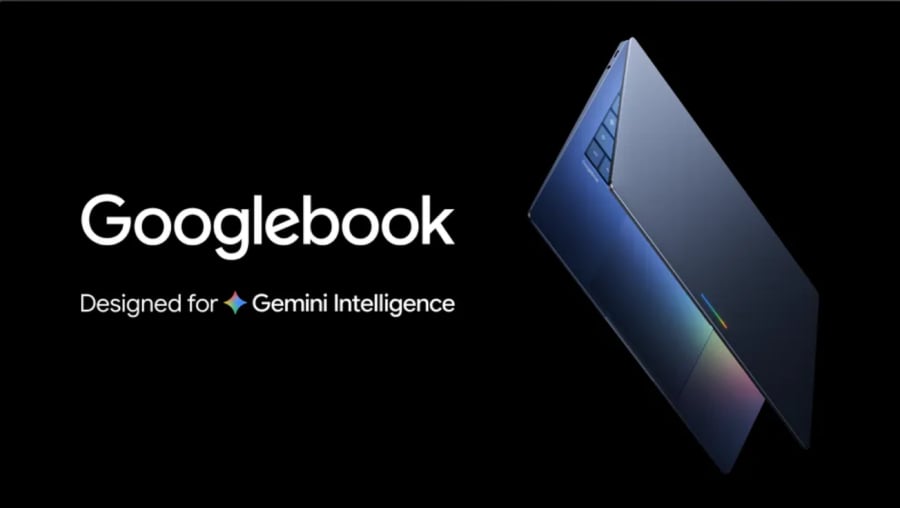

During its virtual event called The Android Show, Google announced a brand-new category of personal computers called the Googlebook.
Positioned as a major evolutionary step beyond the web-first Chromebooks that debuted back in 2011, these new machines are built to place AI at the center of the daily user experience.
According to a Google blog post by Senior Director Alex Kuscher, the company is looking to move past traditional setups. “Over 15 years ago, we introduced the Chromebook, a laptop built for a cloud-first world,” Kuscher noted, adding that as computing shifts toward AI, “we see an opportunity to rethink laptops again.”
Rather than relying purely on ChromeOS, Googlebooks will run on a modern operating system that blends elements of ChromeOS with the Android tech stack. Google said the devices are “the first laptops designed from the ground up for Gemini Intelligence.”
The magic pointer and custom dashboards
The standout software feature of the Googlebook is a reimagined cursor experience called the Magic Pointer. Developed in collaboration with the Google DeepMind team, the feature activates a full-screen Gemini AI experience when a user wiggles their mouse cursor.
The AI analyzes what is currently displayed on the screen to offer context-aware suggestions. For instance, pointing the cursor at a date in an email lets users instantly schedule a calendar appointment. Technical demonstrations also showed the Magic Pointer selecting multiple images and instantly visualizing them together.
The laptops will also feature “Magic Cue,” a tool transitioned from Pixel smartphones that suggests actions based on the context of messages and emails. Additionally, users can leverage a “Create your Widget” tool, which uses natural language prompts to assemble a personalized desktop dashboard drawing from the live web and connected Google accounts like Gmail and Calendar.
More must-read AI coverage
Deep Android integration
By utilizing an underlying Android-based software architecture, Googlebooks aim to deliver a highly interconnected multi-device ecosystem. Users will be able to access the Google Play Store to run Android apps natively on their laptops.
For apps that aren’t installed locally, a dedicated taskbar button will allow users to stream applications directly from a nearby Android smartphone into a floating window on the laptop screen. Sharing files across devices has also been streamlined via a feature called Quick Access.
Kuscher highlighted the convenience of the tool, writing, “We’re also making it incredibly easy to access files from your phone right from your Googlebook’s file browser.” He added, “With Quick Access, you can easily view, search or insert your phone’s files on your laptop — no transfers needed.”
Premium hardware and the mystery glowbar
While Google has not announced plans to manufacture its own first-party Googlebook hardware, the company is partnering with major industry manufacturers, including Acer, ASUS, Dell, HP, and Lenovo.
To differentiate the devices from traditional laptops, every Googlebook will feature a distinct, illuminated LED strip on its lid known as a “glowbar.” While reminiscent of the battery-indicator light bars found on older Google hardware, Google has only stated that the new glowbar is “functional and beautiful” without yet disclosing its specific day-to-day capabilities.
Googlebook is still in the preview stage, with more details coming closer to launch later this year. No official pricing or specifications have been released yet, but early indications suggest the devices will sit in the mid-to-premium laptop category rather than the budget Chromebook segment.
Also read: Google recently said hackers used AI to help build a zero-day exploit, showing how quickly AI tools are changing both products and security risks.
Read the full article here