



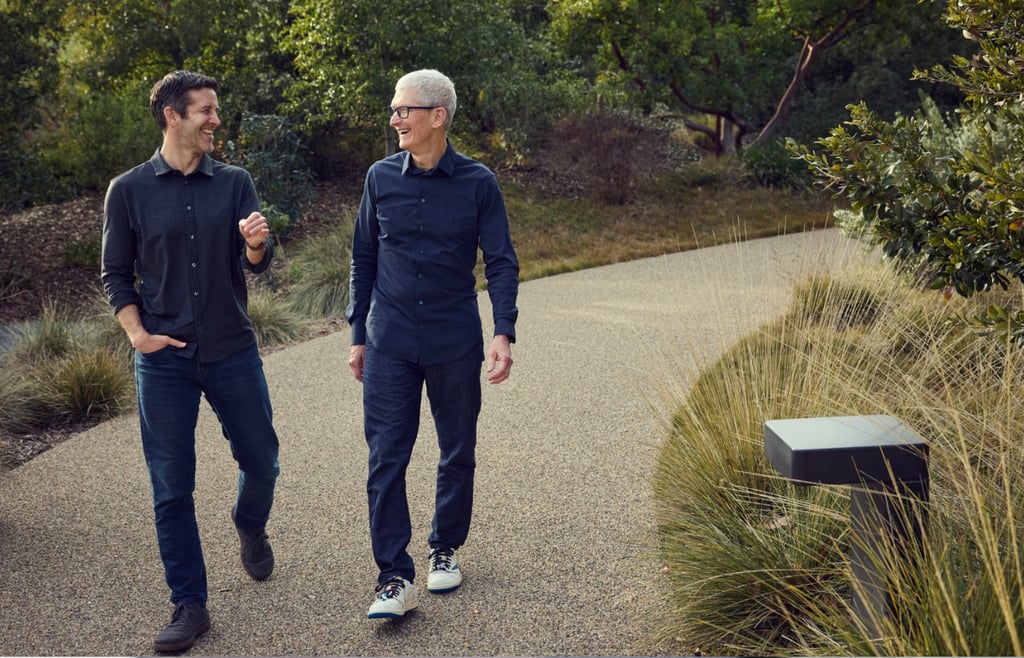

Apple’s biggest reveal this year is not a device. It’s the man taking Tim Cook’s seat.
The tech giant announced on April 20 that Tim Cook is stepping down as CEO and will become executive chairman on Sept. 1, 2026. John Ternus, the company’s senior vice president of Hardware Engineering, is set to take over the top job. The announcement marks one of the most significant leadership transitions in Apple’s modern history.
“It has been the greatest privilege of my life to be the CEO of Apple and to have been trusted to lead such an extraordinary company,” Cook said in the announcement.
He added: “I love Apple with all of my being, and I am so grateful to have had the opportunity to work with a team of such ingenious, innovative, creative, and deeply caring people who have been unwavering in their dedication to enriching the lives of our customers and creating the best products and services in the world.”
The move closes a defining chapter of the post-Steve Jobs era and opens a new one centered on a longtime product leader. More than a routine succession plan, it signals where Apple may be headed next: deeper into its hardware roots, with one of its most seasoned engineering executives now at the helm.
Why Apple picked John Ternus
Ternus may not be a household name. But inside Apple, he is hardly new.
He joined Apple’s product design team in 2001 and became a vice president of Hardware Engineering in 2013. He later moved onto Apple’s executive team and now oversees hardware engineering across major product lines, including the iPhone, iPad, Mac, Apple Watch, AirPods, and Apple Vision Pro.
Apple’s announcement made the board’s thinking clear. Cook said Ternus is “the right person to lead Apple into the future,” while the company framed him as a steady, deeply technical insider ready to take over.
That choice suggests Apple wanted continuity, product fluency, and a leader already steeped in the company’s culture. That makes sense for a company whose identity is still tightly tied to the devices it ships and the discipline behind them. This is less a dramatic pivot than a deliberate handoff.
What Tim Cook leaves behind
Cook is not disappearing from the picture.
Apple said he will remain CEO through the summer to help manage the transition, then stay on as executive chairman. That gives Apple something investors usually want during a leadership handoff: stability without disruption.
And Cook’s legacy is enormous. Under his leadership, Apple grew from a company valued at roughly $350 billion into one worth about $4 trillion, while expanding far beyond the iPhone into services, wearables, and Apple silicon.
That matters because Cook did more than keep Apple running after Steve Jobs. He turned it into a broader, more durable empire.
Why this matters beyond Apple
Leadership changes at Apple are never just internal company news. When Apple changes course, the rest of the tech industry usually feels it.
That is why Cook stepping down as CEO matters far beyond succession drama. Apple is still one of the world’s most influential tech companies, and decisions at the top can shape everything from investor confidence to product strategy across the industry.
Ternus’ appointment also sends a message about what Apple values right now. The company did not turn to a flashy outsider or a dealmaker. It chose a hardware leader.
That choice hints that Apple believes its next chapter will still be won through products, execution, and the kind of tight integration that has long defined the company. It’s an early signal about how Apple plans to compete in the years ahead, and what kind of innovation it thinks will define the next era of personal technology.
Cook helped steer Apple into a new era of scale, stability, and expansion. Ternus now has the harder job: proving the company can still surprise the world.
For more on Apple’s next hardware gamble, read our coverage of the rumored iPhone Ultra, which could bring a passport-style foldable design and a price tag north of $2,000.
Read the full article here