





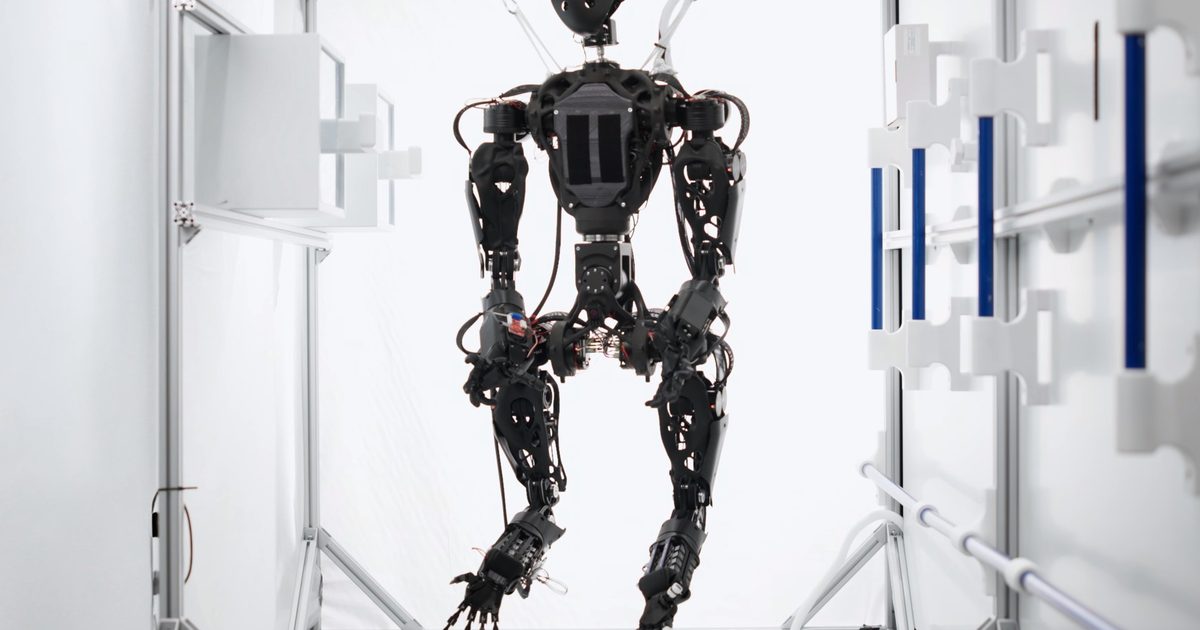

China has launched a national programme that will assign every humanoid robot manufactured in the country a unique digital identity code, effectively a citizen ID, but for bipedal machines (those that can balance and walk/run on two legs).
The initiative, called the Humanoid Full Lifecycle Management Service Platform, was announced on Friday. It is led by the Humanoid Robotics and Embodied Intelligence Standardization committee, which is under China’s Ministry of Industry and Information Technology (via South China Morning Post).
What does a robot ID actually look like?
The machine codes are structured in four parts. While a two-digit national code tracks international shipments and sales, a four-digit manufacturer code keeps a record of the firm that manufactured it.
Then there’s a six-digit product model code that identifies the robot type, along with a 17-digit serial code distinguishing individual units from one another. The purpose is to follow the humanoid robots from the production through its entire working life, all the way to recycling.
The guidelines cover everyone involved in the supply chain, from manufacturers, service providers, sellers, end users, to the recycling facilities. The new system should also accelerate the deployment of humanoid robots in a regulated manner, wherein the manufacturing firm could be held accountable for any malfunctions.

Why is China doing this now?
According to January research from IDC (as mentioned in the report), the global humanoid robot market expanded 508% just last year, with around 18,000 units shipped globally, with the Chinese vendors leading that growth.
China already has over 100 humanoid manufacturers, and more than 28,000 robots across 200 models have already been assigned a digital ID before the public announcement of the Humanoid Full Lifecycle Management Service Platform.
Yu Xiuming, deputy head at the China Electronics Standardization Institute, said the system is designed to address core issues around safety, oversight, and governance. China’s humanoid industry is moving faster than the regulation framework, and the ID system is less a surveillance move and more an industrial infrastructure play, the kind of standardisation required before global scaling.
Read the full article here