






If you’re running a small business and tracking inventory by hand or in spreadsheets, you might wonder whether inventory software is worth the investment, or if you’re too small to need it at all. The good news? There are free inventory software solutions designed specifically for small business needs.
I evaluated a variety of inventory management software in the market that offer free-forever access. The scores are a result of an extensive comparison of the quality of free inventory features, customization options, scalability, and integration capabilities to help determine which best suits your business needs:
Top free inventory management software compared
How I chose the best free inventory management software
I researched and evaluated a variety of free inventory management software. Using a weighted rubric in my methodology, I compared core inventory capabilities, integrations, customization, analytics, reporting, forecasting, scalability, security, reliability, total value for functionality, and my own personal evaluation.
Why you can trust TechRepublic
I evaluated 14 inventory management solutions that offer free plans using a rubric with 26 data points, focusing on what matters most to SMBs: flexibility, scalability, and real-world usability.
My analysis prioritized integrations, analytics, core inventory features, and system reliability, along with overall value for functionality.
Recommendations are based on hands-on testing (when available), vendor documentation, and verified user feedback to reflect real business use.
Odoo: Best for overall flexibility
Our rating: 4.46 out of 5
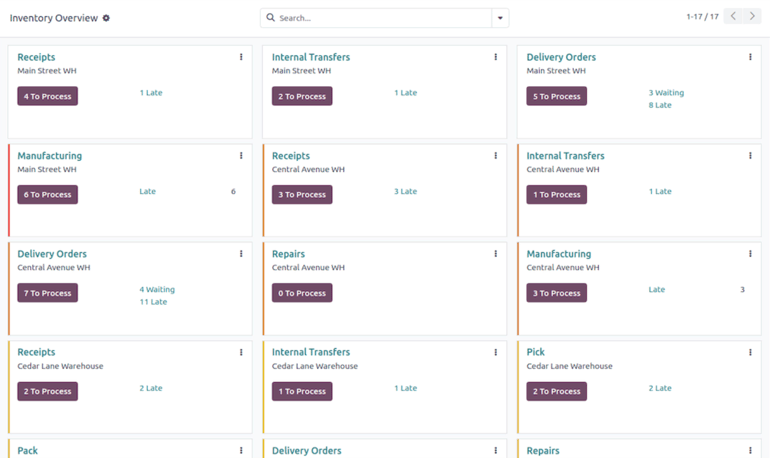
Odoo Inventory is an open-source solution packed with enterprise features, including multi-warehouse routing, barcode scanning, putaway strategies, and detailed traceability — all available for free when using a single app. It’s best for mid-size or growing companies that want control, configurability, and the ability to scale across departments without switching platforms.
Why I chose Odoo
What sets Odoo apart is its developer accessibility. With Odoo, users can extend functionality through plugins, write custom Python modules, and use its full-featured REST API. I particularly like how Odoo Inventory takes a modular approach, enabling businesses to scale horizontally by adding more apps and customizing workflows. Even in its free Community edition, Odoo supports multi-warehouse management, inventory routing, cycle counting, and barcode scanning.
The system is also highly configurable and integrates directly with related modules like purchase, manufacturing, and accounting, making it especially powerful for businesses with layered inventory needs. With no limit on data volume or users in the self-hosted version, it can grow alongside a complex organization.
What’s in an Odoo free plan?
Odoo does not charge for any of its inventory tools. As an open-source ERP, Odoo offers full access to its Python-based backend, a powerful API, and plugin/custom module capabilities.
- Granular inventory tracking: Track every item with precision using serial numbers, lot tracking, and detailed stock movement histories.
- Smart replenishment tools: Automate restocking with dynamic reordering rules, minimum stock thresholds, and demand forecasting.
- Customizable stock processing: Design tailored workflows for receiving, putaway, picking, and delivery using routes and rules.
- Multi-warehouse management: Manage multiple warehouses with full control over transfers, stock locations, and inventory zones.
Scalability
- Native add-on features: Included free
- Third-party business tools: Via API
- POS compatibility: Via API
- E-commerce compatibility: Via API
- Hardware compatibility: Excellent
Paid inventory features
The free Odoo Online (cloud-based) plan restricts you to a single app, meaning you must upgrade to a paid plan to access full ERP integration, like for accounting or manufacturing. That said, using the cloud-based version lets you leave the security concerns to Odoo, which can be expensive to set up on your own.
Pros & Cons
| Pros | Cons |
|---|---|
| Free, full access to inventory tools | Requires coding skills for integration |
| Compatible with most hardware | Security depends on user for open-source version |
| Self-hosted OR cloud-based | Limited features in free online version |
SEE: 10 Best Free Project Management Software
Zoho Inventory: Best for cloud-based customization

Our rating: 4.44 out of 5
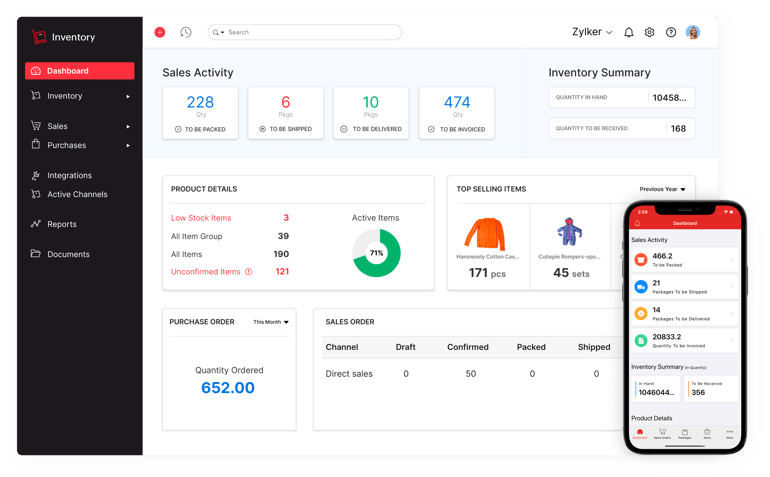
Zoho Inventory is best known for enabling multichannel inventory and order management across platforms like Amazon, Shopify, and eBay — all from the free plan. It includes order and shipment tracking, CRM integration (via Zoho CRM), and seamless syncing with Zoho Books for accounting. Granular inventory tools like batch tracking, barcoding, and warehouse assignments add to its enterprise appeal.
Why I chose Zoho Inventory
Zoho is easier to use compared to Odoo’s cloud-based system, with automation rules and native e-commerce support that makes it a more user-friendly option, particularly to online sellers. Its inventory functionalities scale through a tiered SaaS model, allowing businesses to gradually expand from its free plan into more robust paid tiers. This enables small businesses to grow steadily without needing technical expertise.
I also compared Zoho’s developer-based customization capabilities against Odoo. While you cannot deeply customize workflow logic or UI/UX, ultimately limiting scalability for specific operational needs, Zoho does offer a well-documented API using OAuth 2.0. This allows developers to create or pull inventory data into other systems and support other functions, such as audit logs, role-based user access, and secure data centers. So, while it offers less backend flexibility, I find Zoho’s system a well-rounded option for growing businesses that need more than basic stock control.
What’s in a Zoho Inventory free plan?
- Centralized management dashboard: Monitor orders, inventory, and shipments across channels in one unified, real-time dashboard.
- Smart automation tools: Streamline operations with automated workflows for reordering, invoicing, and shipping updates.
- Multi-warehouse management: Track stock levels, transfers, and fulfillment across multiple warehouses from a single platform.
- Integrated sales and inventory tracking: Link every sale, purchase, and return directly to your inventory for accurate, real-time stock visibility.
Scalability
- Native add-on features: Option to add users, orders (in batches of 500), locations, advanced warehousing, and more
- Third-party business tools: Excellent
- POS compatibility: Limited but includes payment gateways
- E-commerce compatibility: Limited
- Hardware compatibility: Excellent
Paid inventory features
- Additional transactions
- Access to more users and more locations
- Vendor management and fulfillment
- Barcode generation
- Batch processing
- Analytics
Pros & Cons
| Pros | Cons |
|---|---|
| Integrated sales tracking features | Limited to 1 user and 2 locations |
| Access to vendor management | No bin/location management |
| Multi-warehouse tracking | Lacks serial number tracking |
SEE: Best Retail CRM: Features, Prices, Pros and Cons
Square Inventory: Best for scalability with a POS system

Our rating: 4.32 out of 5
Square is a powerful inventory and POS solution designed for small retailers and service businesses. Its free plan includes unlimited users and items, real-time inventory tracking, low-stock alerts, and integrated mobile apps. Square’s sleek UX and intuitive dashboard make it especially appealing for small retail shops looking for scalability without a complex learning curve.
Why I chose Square
Square happens to be my top recommended software for small businesses. It offers one of the most feature-rich, all-in-one free plans, which includes access to basic inventory management features. However, what impressed me lately is Square’s system upgrades to improve scalability. It offers an enterprise-grade developer ecosystem, robust inventory API, and other developer tools that allow businesses to integrate and automate processes across inventory, customers, orders, and payments.
So, for retailers who want flexibility and room to grow, with the option to build their own custom integrations, Square is one of the most developer-friendly platforms on the free tier.
What’s in a Square free plan?
- Composite products: Bundle multiple items into a single sellable product while tracking individual component stock levels.
- Auto-create items: Automatically generate new inventory items from sales activity, saving time on manual entry.
- Refunds and exchanges: Easily process item-based refunds and exchanges directly from the POS with inventory updates in real-time.
- Integrated POS and payments: Seamlessly connect your inventory with Square’s built-in payment system and POS for end-to-end sales tracking.
Scalability
- Native add-on features: Advanced invoicing and e-commerce tools, payroll, team management, marketing, loyalty, business banking
- Third-party business tools: Excellent; includes third-party inventory management for restaurants
- POS compatibility: Integrated Square POS and payment processing
- E-commerce compatibility: Native e-commerce platform
- Hardware compatibility: Wide variety of Square hardware
Paid inventory features
- Barcode label printing
- Purchase order and vendor management
- Aging inventory tracking
- Subscription management integration
- Advanced analytics

Pros & Cons
| Pros | Cons |
|---|---|
| Free integrated all-in-one POS and e-commerce | Exclusive to Square ecosystem |
| Fast set up and easy to use | Advanced inventory tools require paid plan |
| Bulk inventory upload and management | Inventory alerts require plan upgrade |
SEE: 5 Best Retail POS Systems
Toast Inventory: Best for restaurants and food-based retail

Our rating: 4.19 out of 5
Toast POS is a comprehensive, restaurant-focused platform offering robust inventory management features. The platform’s user-friendly interface simplifies the ordering process for staff members, minimizing training time and enhancing operational efficiency during busy service hours. Toast stands out as a reliable and secure solution for restaurants seeking to enhance their inventory management and overall operational efficiency.
Why I chose Toast Inventory
Toast POS is in this list because it offers a pay-as-you-go plan that requires no upfront or monthly fee except for accepting payments. This includes basic inventory management that allows restaurants to monitor stock levels, receive low-stock alerts, and manage item availability directly through the POS interface. While the cost to accept payments is significantly higher, it also means smaller restaurants only pay Toast when they make a sale.
For more advanced inventory management functions, xtraCHEF by Toast is an optional add-on that integrates seamlessly with the core POS system to provide comprehensive inventory solutions for restaurants seeking deeper operational insights. It also offers a robust API program that allows developers to integrate their own applications or third-party solutions with the Toast POS system.
What’s in a Toast Inventory free plan?
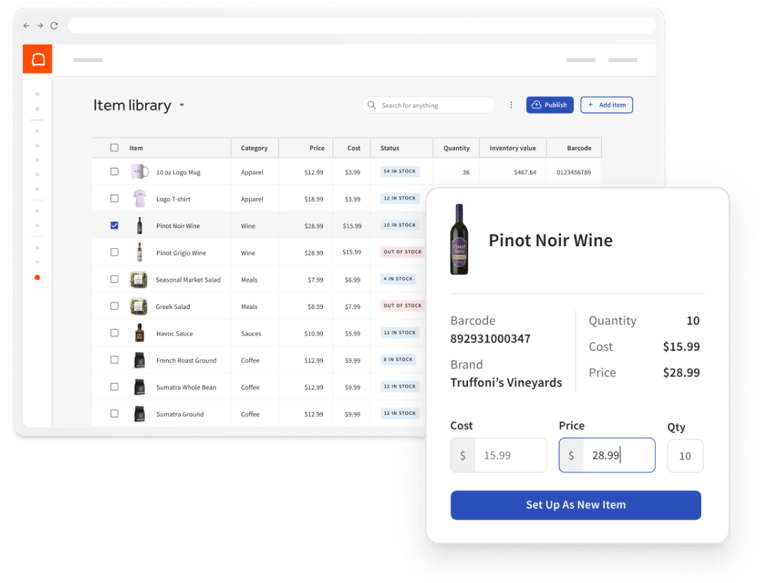
- Stock level alert and monitoring: Track on-hand stock levels in real time and receive low-inventory alerts to prevent menu outages.
- Item availability tracking: Easily mark items as out-of-stock from the POS to keep staff informed and avoid overselling.
- Menu management: Update item details, prices, and modifiers across all ordering channels from a centralized menu editor.
- Reporting and analytics: Access sales and inventory performance reports to monitor usage trends and make informed purchasing decisions.
Scalability
- Native add-on features: Advanced inventory (xtraCHEF), kitchen display system (KDS), digital ordering, delivery services, loyalty, marketing, payroll, and scheduling.
- Third party business tools: Excellent
- POS compatibility: Exclusive to Toast
- E-commerce compatibility: Via API
- Hardware compatibility: Exclusive to Toast
Paid inventory features
- xtraCHEF tools (recipe costing, ingredient tracking, inventory counts, and more)
- Lower payment processing fees
- E-commerce website builder
- Mobile order and pay
- Accounting and delivery integration
- Invoicing and advanced marketing
- Multilocation management
Pros & Cons
| Pros | Cons |
|---|---|
| Access for 2 users and unlimited inventory | 2-year contract |
| Integrated free, all-in-one POS | Expensive payment processing rates |
| Zero upfront cost including hardware | Exclusive to Toast ecosystem |
Loyverse Inventory: Best for basic, all-in-one inventory with POS

Our rating: 4.10 out of 5
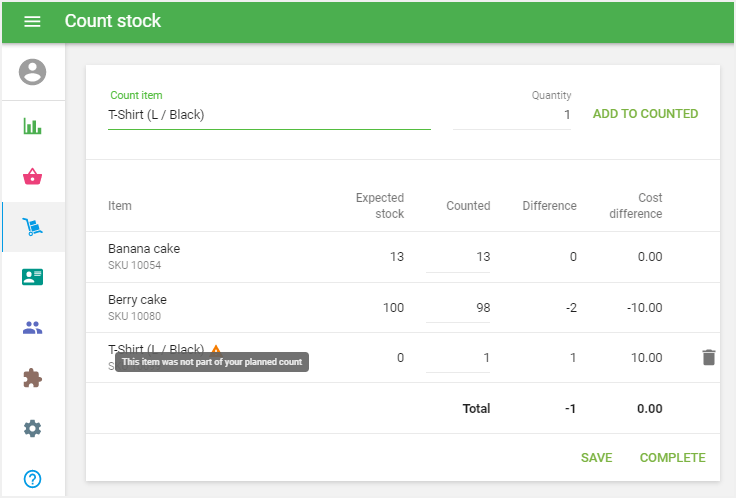
Loyverse delivers a compelling free POS and inventory experience tailored for small retailers and cafés. It offers real-time inventory tracking, sales analytics, and customer loyalty features in a mobile-first package. Loyverse is ideal for boutiques, salons, and food-service businesses seeking simplicity and essential inventory management features without a price tag.
Why I chose Loyverse Inventory
Loyverse’s free plan offers unlimited items and users, with intuitive stock tracking tied directly into its mobile POS system. And while more POS-centric than others on this list, Loyverse bridges the gap between register, stockroom, and customer retention without needing a separate inventory tool. Compared to Square, Loyverse wins on simplicity and flexibility, especially for smaller or mobile-first retailers.
For developers, Loyverse provides a REST API (available via request) that allows integrations with accounting, eCommerce, or ERP platforms. The API uses token-based access and communicates securely via HTTPS. Though more limited than some open platforms, Loyverse excels at unifying front-of-house and back-office needs under one system.
What’s in a Loyverse Inventory free plan?
- Item variant tracking: Manage inventory by tracking variations of products such as size, flavor, or packaging under a single parent item.
- Menu item modifiers: Customize menu offerings with optional or required modifiers like toppings, sides, or preparation styles, while linking them to inventory.
- Returns management: Easily process customer returns and voids with real-time inventory adjustments to maintain accurate stock counts.
- Weight barcodes: Scan barcodes embedded with weight information to quickly sell and track items priced by weight, such as produce or deli meats.
Scalability
- Native add-on features: Free kitchen display and customer display system, advanced inventory, employee management, advanced reporting
- Third-party business tools: Limited
- POS compatibility: Exclusive to Loyverse
- E-commerce compatibility: Limited
- Hardware compatibility: Excellent
Paid inventory features
- Multi-warehouse management
- Purchase and vendor management
- Inventory counts and valuation
- Inventory history
- Ingredient and production tracking
- Label printing
Pros & Cons
| Pros | Cons |
|---|---|
| Compatible with third-party POS hardware | Limited scalability |
| Integrates with multiple payment processors | Low stock alerts require a paid plan |
| Restaurant-specific features | Add-on fees to access third-party integrations |
SalesBinder: Best for multi-warehouse tracking

Our rating: 4.08 out of 5
SalesBinder is a platform that allows businesses to centralize customer communication, inventory levels, and fulfillment all in one place. That said, the free plan is limited to 100 products, so it’s ideal for wholesalers and small distributors who need detailed stock and client oversight without juggling multiple platforms.
Why I chose SalesBinder
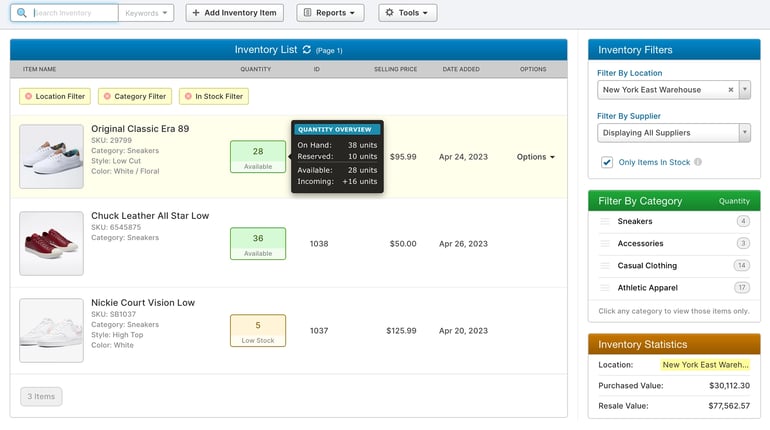
While Loyverse supports unlimited products, SalesBinder’s free plan supports multi-warehouse management, enabling users to track stock levels per location and transfer inventory between them. Its free plan is also remarkably feature-rich, offering integrated CRM, purchase and sales order management, and vendor controls. This makes SalesBinder a better free-tier choice for businesses needing to manage inventory across multiple physical locations.
For growing businesses, SalesBinder also offers developer access via a RESTful API, allowing users to automate inventory updates, order creation, or CRM syncing with external systems. API security uses key-based authentication, and the entire application runs over HTTPS. The system feels less polished than others, but its workflow-driven approach and customization flexibility make it a strong competitor. It’s one of the few truly “ERP-lite” platforms available for free.
What’s in a SalesBinder free plan?
- Invoice and purchase order management: Create, send, and track invoices and purchase orders directly within the system to streamline sales and procurement.
- Customer and vendor management: Maintain detailed records of customers and suppliers, including contact history, account status, and transaction history.
- Warehouse and shipment tracking: Monitor inventory across multiple warehouses and track outgoing shipments for accurate fulfillment and stock control.
- Barcoding tools: Generate and scan barcodes to quickly identify, update, and manage inventory items throughout your workflow.
Scalability:
- Native add-on features: Kitting and bundling
- Third-party business tools: Via API
- POS compatibility: Via API
- E-commerce compatibility: Via API
- Hardware compatibility: Excellent
Paid inventory features
- Additional active records
- More user accounts
- Seamless access to third-party integrations
- Kitting and bundling tools
Pros & Cons
| Pros | Cons |
|---|---|
| iOS App | Email support only |
| Advanced reporting and analytics | Native integrations in paid plans |
| Unlimited location | Single user access |
Methodology
To build this guide, I put together an initial list of 14 popular free inventory management software. From there, I evaluated each software against four criteria and 25 data points, focusing on pricing, free features, and scalability.
- Pricing (40%): This criterion evaluates how accessible and flexible the platform is from a cost perspective. It includes whether a free plan exists, the number of users and inventory items supported for free, and the software’s ability to scale affordably through additional plans or customizations. Customizability is also factored in as part of how pricing reflects value.
- Free inventory features (25%): This section measures the breadth and depth of inventory management functionality. It covers critical operational needs like real-time stock tracking, multi-location support, mobile access, and low-stock alerts. Advanced tools like ingredient-level tracking, purchase ordering, reporting, CRM, and multichannel capabilities ensure the platform can support complex inventory workflows.
- Ease of use (15%): This criterion focuses on how intuitive and approachable the platform is for everyday users. It considers visual design, setup complexity, cloud access, and availability of online help resources. Integration ease with accounting and e-commerce tools and the quality of customer support also influence this category.
- Scalability (20%): Scalability assesses the platform’s ability to grow with a business. It includes standout features, technical flexibility (like developer customization), built-in upgrade options through native tools, and extensibility via third-party integrations. The more scalable a platform, the better it can adapt to evolving operational needs without needing a complete replacement.
The scores were based on my personal experience exploring and testing each platform (when possible), plus feedback from real-life users that I gathered from reputable review sites. I then created my list of the top six that stood out for a variety of business needs.
Is your business too small for inventory software? Think again.
In today’s market, the decision of whether or not to use an inventory management software is not a question of size but of strategy. But are they suitable for small businesses? Absolutely. Even the smallest business, especially solopreneurs, startups, and retailers with limited SKUs or budget constraints, can benefit from streamlined inventory processes.
The hidden costs of manual inventory management
Relying on spreadsheets or manual tracking methods may seem cost-effective, but they often lead to significant inefficiencies. Studies show that 41% of small businesses in 2025 still manually track their inventory, increasing the risk of errors and stock discrepancies. These inaccuracies can result in stockouts or overstocking, both of which tie up capital and can lead to lost sales. Fixing this issue with inventory software reduces inventory cost by 10%.
Additionally, manual processes consume valuable time that could be better spent on strategic activities. Even the simple adoption of barcode technology to manage stock counts can reduce human error.
There’s a common belief that inventory software is prohibitively expensive for small businesses. However, many solutions offer tiered pricing models, allowing businesses to select features that align with their needs and budgets. By reducing errors and optimizing stock levels, businesses can see a significant impact on their bottom line.
What is a free inventory management software?
There’s a common belief that inventory software is prohibitively expensive for small businesses. However, many solutions offer tiered pricing models, allowing businesses to select features that align with their needs and budgets.
Free inventory management systems offer basic inventory tracking and management features at no cost, often with optional paid upgrades for more advanced capabilities. Businesses can enhance accuracy, reduce costs, and improve customer satisfaction by automating the tedious task of managing inventory flow.
At a minimum, these tools should include essential features like real-time stock tracking, low-inventory alerts, sales and purchase history, and basic reporting. Some even offer barcode scanning, multi-location support, and user-friendly dashboards.
Some advantages of using free inventory tracking and management software are:
- Access to technical features that make it simple for small teams: Modern inventory management solutions are designed with user-friendliness in mind, making them accessible to businesses without dedicated IT teams.
- Cloud-based platforms eliminate the need for extensive hardware investments and allow for remote access, facilitating flexibility.
- Mobile compatibility ensures that inventory can be managed on the go, a crucial feature for businesses with dynamic operations.
- Integration capabilities with e-commerce platforms, accounting software, and point-of-sale systems streamline processes and reduce manual data entry.
- User-friendly dashboards and customizable reports provide actionable insights, enabling informed decision-making.
- Scalability that allows businesses to start small and grow seamlessly: As your business grows, these systems can adapt to increased product lines, multiple locations, and higher transaction volumes. This flexibility ensures that operational efficiency is maintained without the need for overhauling systems.
Also read: How AI Drives Supply Chain Automation for Retailers Worldwide
How to choose free inventory management software
The best free inventory management software should fit your current operations and give you room to grow. Before choosing a platform, shortlist three to five options and test each one using real workflows, such as adding products, syncing sales, creating purchase orders, and checking stock levels.
1. Match the software to your business size
Consider how complex your inventory is today and how quickly it may change.
Look for software that fits your:
- Number of SKUs: Small catalogs may only need basic stock tracking. Larger or fast-changing inventories may need automation, alerts, and stronger reporting.
- Sales volume: Higher transaction volume requires faster syncing and fewer manual updates.
- Number of locations: Businesses with multiple stores, warehouses, or storage areas should look for multi-location tracking.
2. Check the integrations you need
Your inventory software should connect with the tools you already use.
Prioritize integrations with:
- E-commerce platforms: Shopify, WooCommerce, Etsy, Amazon, and other online marketplaces.
- POS systems: Real-time POS syncing helps prevent overselling and keeps inventory counts accurate.
- Accounting software: QuickBooks, Xero, or similar tools can reduce manual data entry and simplify reporting.
3. Prioritize must-have inventory features
Focus on features that solve your biggest inventory problems.
Key features to look for include:
- Real-time inventory tracking: Useful for multichannel sellers and fast-moving products.
- Barcode scanning: Speeds up stock counts and reduces human error.
- Automated purchase orders: Helps prevent stockouts and overstocking.
- Reporting and analytics: Shows sales trends, stock turnover, low-stock items, and demand patterns.
4. Test ease of use
The software should be simple enough for your team to use every day.
During a demo or free trial, test:
- Adding and editing products.
- Adjusting stock levels.
- Creating purchase orders.
- Running inventory reports.
- Checking inventory from a mobile device.
- Setting user permissions for employees.
A complicated system can lead to inconsistent data entry, missed updates, and lower adoption.
5. Make sure it can scale
A free plan may work now, but check whether the software can support your business as it grows.
Review whether paid plans allow you to add:
- More SKUs.
- More users.
- More locations.
- More sales channels.
- More integrations.
- Advanced automation or reporting.
Choosing scalable software upfront can help you avoid a difficult migration later.
6. Compare support and upgrade costs
Free inventory software often comes with limited support, so check what help is available before committing.
Look for:
- Setup guides.
- Help documentation.
- Email or chat support.
- Community forums.
- Onboarding resources.
Also, review pricing carefully. Watch for limits or extra fees tied to users, orders, integrations, locations, or advanced reports. The best option is not always the cheapest — it is the one that saves time, reduces errors, and supports better inventory decisions.
Frequently asked questions about free inventory management software (FAQs)
What is the best free inventory management software?
Odoo is the best free inventory management software overall because it offers strong flexibility, open-source access, multi-warehouse tools, barcode scanning, and inventory routing. Zoho Inventory, Square, Toast, Loyverse, and SalesBinder may be better fits depending on your business type.
Is free inventory management software really free?
Yes, but free plans usually have limits on users, products, locations, orders, integrations, or advanced features. You may need a paid plan for tools like barcode label printing, purchase orders, vendor management, or advanced reporting.
What should free inventory management software include?
At minimum, look for real-time stock tracking, low-stock alerts, sales and purchase history, product management, inventory adjustments, and basic reporting. Some free plans also include barcode scanning, mobile access, POS tools, or ecommerce integrations.
Is free inventory software good enough for small businesses?
Yes. Free inventory software can work well for small businesses with limited SKUs, simple workflows, or lower order volume. As your business grows, you may need to upgrade for more users, automation, reporting, or integrations.
What is the easiest free inventory management software to use?
Square Inventory and Loyverse Inventory are two of the easiest options. Both are built around simple POS and inventory workflows, making them good fits for small retailers, cafés, salons, and mobile-first businesses.
What is the best free inventory software for restaurants?
Toast Inventory is the best free option for restaurants in this list. It includes POS-based stock monitoring, item availability tracking, menu management, and reporting. Advanced tools like ingredient tracking and recipe costing require xtraCHEF by Toast.
Can I use Excel or Google Sheets instead of inventory software?
Yes, but spreadsheets are best for very small inventories. Inventory software is better when you need real-time tracking, low-stock alerts, barcode scanning, sales syncing, or fewer manual errors.
When should I upgrade from free inventory software?
Upgrade when the free plan limits your workflow. Common signs include needing more users, locations, SKUs, integrations, purchase orders, vendor management, barcode label printing, or advanced reporting.
Read the full article here