



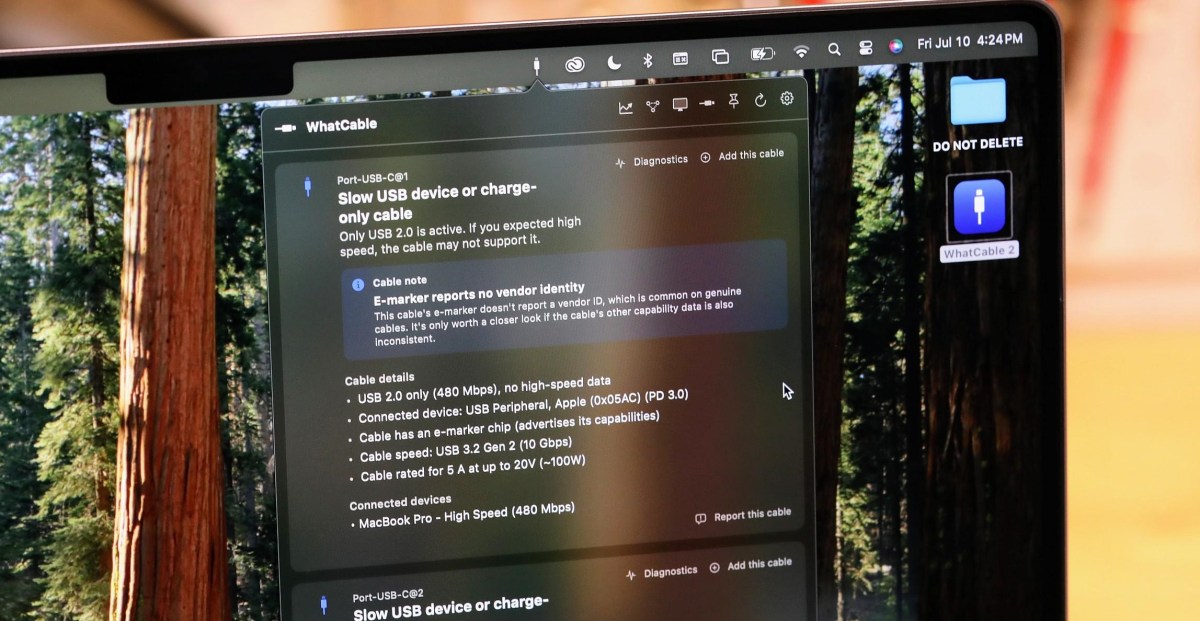

Nearly three years ago, I showed you an awesome $8 cable tester that quickly tells you if your USB-C cable is likely fast, slow, powerful, or weak. Sadly, that gadget got discontinued, and I’ve never found anything as intuitive or inexpensive since. But if you’ve got a Mac with Apple Silicon chips, you can simply download an even more impressive tester for free.
It’s called WhatCable, and it works by reading the data your Mac already collects about attached USB devices, data that Apple doesn’t normally pass along to you. Just click a little widget that lives in the menu bar atop your Mac, and you can see every USB-C cable and device attached to your computer.
Here’s how creator Darryl Morley explained it to me:
Every Apple Silicon Mac has a port controller chip that handles USB Power Delivery negotiation. When you plug in a cable with an e-marker, the port controller sends a “Discover Identity” message to the chip in the cable and gets back a structured message: vendor ID, speed rating, current rating, voltage limits, whether it’s active or passive, and so on.
macOS writes that response into the IOKit registry. WhatCable reads it using Apple’s public APIs. No root access, no private entitlements. The data isn’t hidden, Apple’s firmware does the negotiation and publishes the result. It’s just not surfaced anywhere in standard macOS tooling. WhatCable reads what’s already there.
The e-marker is one source. WhatCable also reads from the Mac’s own hardware, the actual negotiated connection speed, Thunderbolt link speed, and live voltage and current at each port. The connected device tells us what it is, who made it, and what it supports. Put all three together, cable, device, and Mac, and WhatCable can tell you not just what everything claims to support, but what’s actually happening on the connection right now, and which part is the bottleneck if something isn’t performing as expected.
Want to see it in action? I took photos while testing some of my favorite cables this week. It’s not a perfect solution, as cables can lie about their capabilities, but WhatCable genuinely helped me find a bad cable along the way.
When I plugged in the short, lightweight Satechi cable you see above into two ports on my MacBook Pro, I got this:
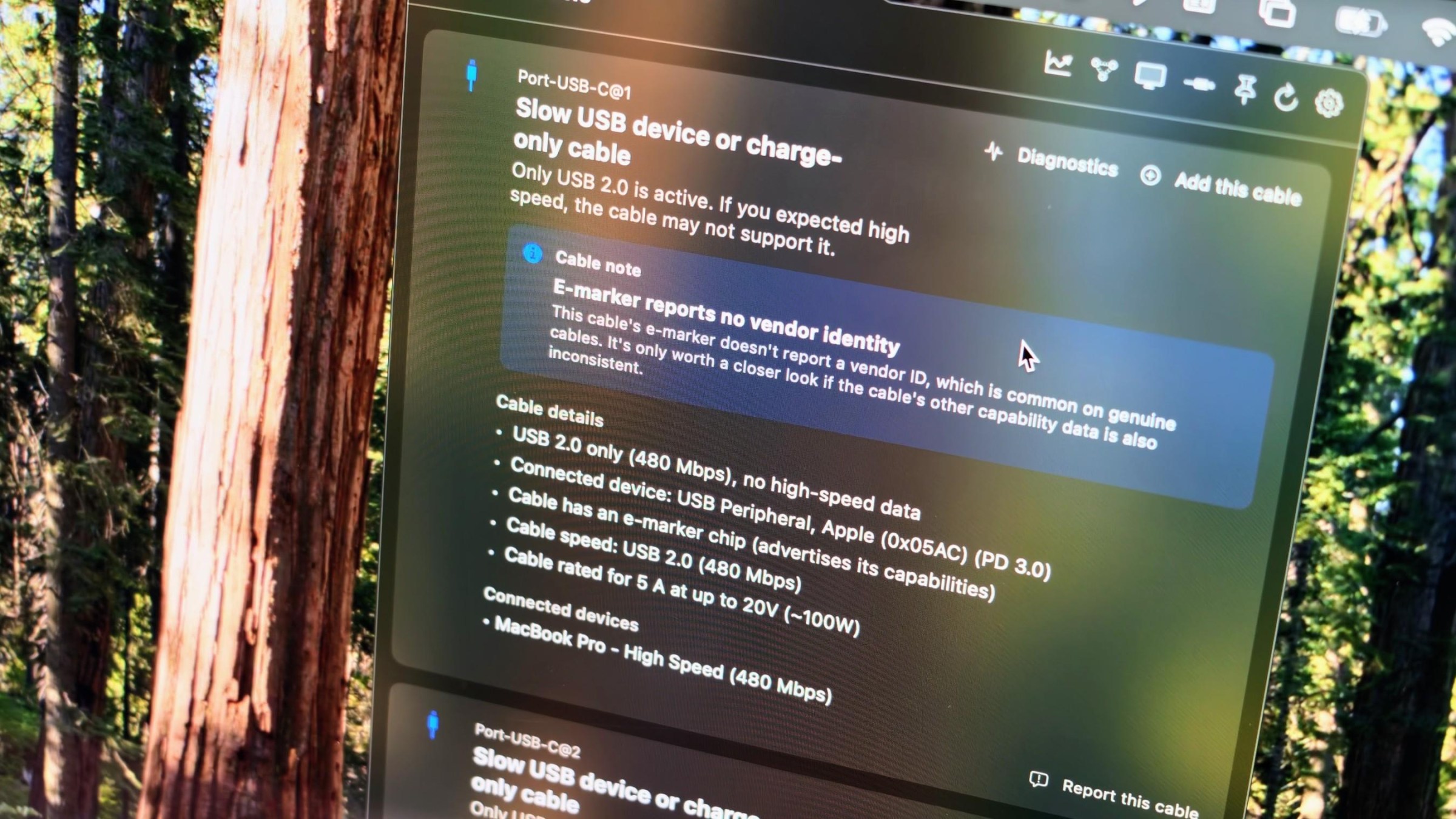
I know from experience that this info is correct, and that means it’s still a valuable cable. 480Mbps USB 2.0 is very slow, but the cable is self-reporting it can charge at 100 watts, nearly as fast as my Mac can charge.
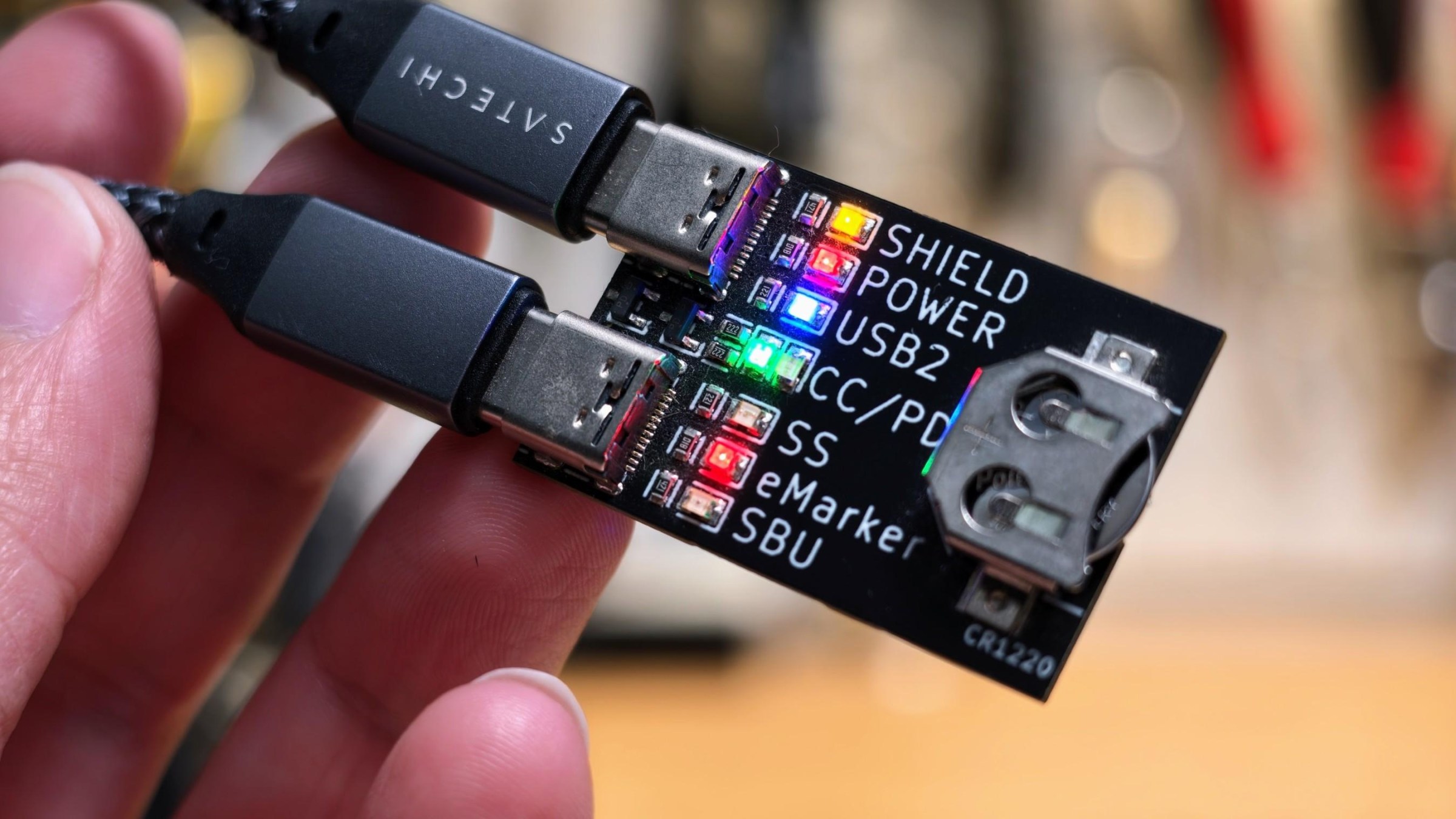
That’s slightly more useful info than my $8 tester can provide. It, too, shows that the cable only offers USB 2.0 speeds and probably offers 60W or better charging because an e-marker exists. But it can’t read e-marker data to tell that this cable supports 100W charging speeds.
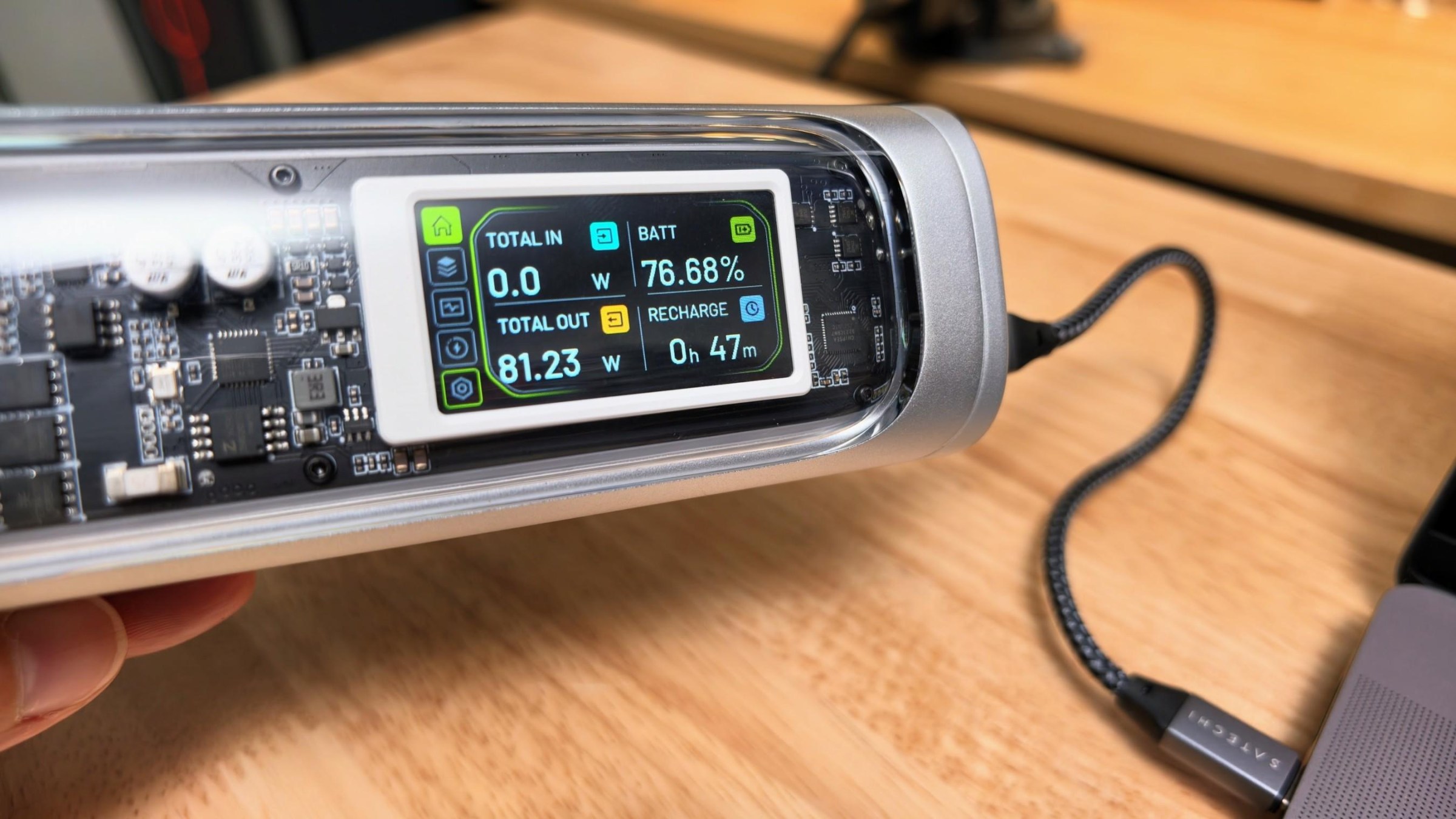
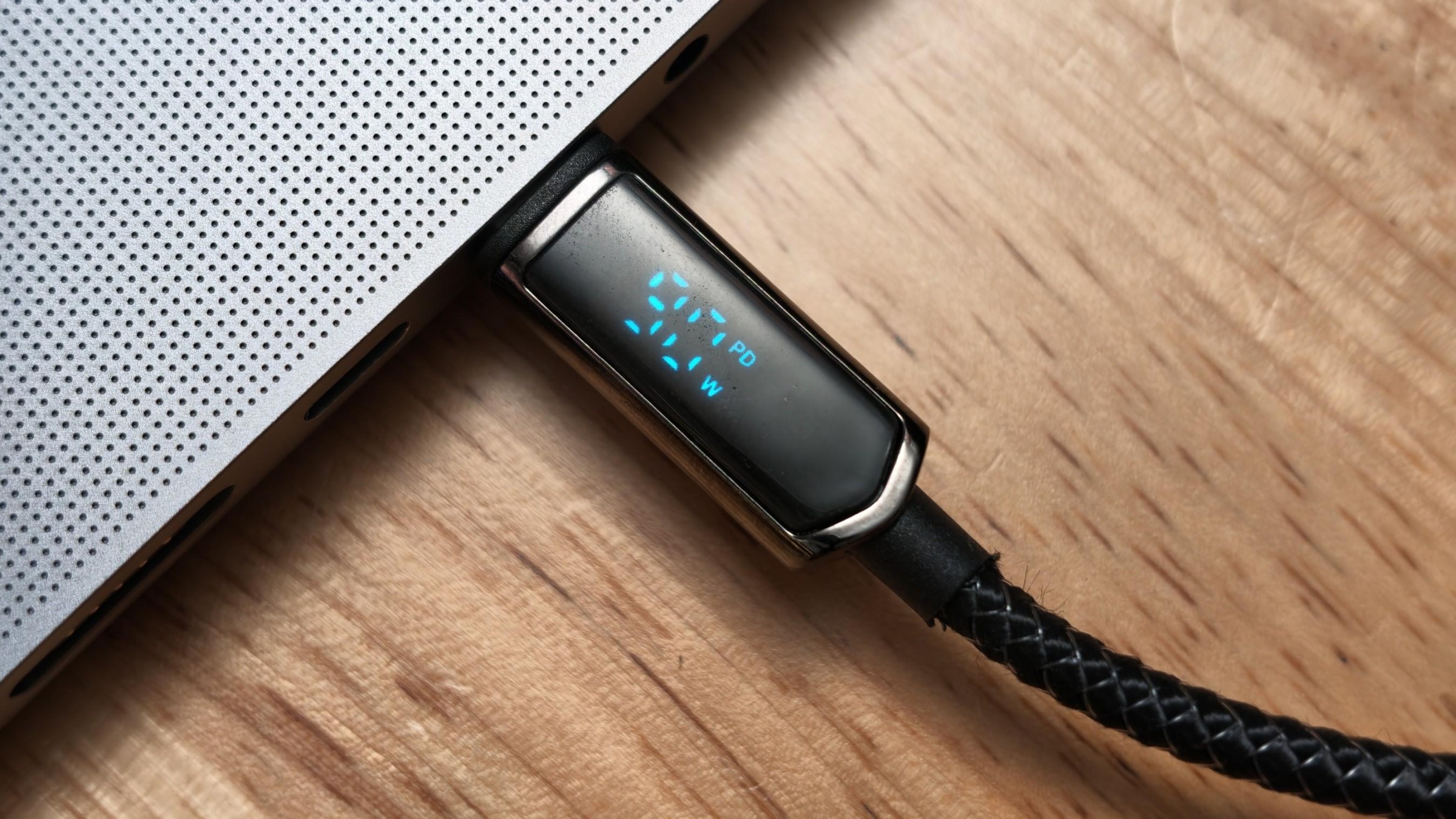
Sure enough, I’m getting more than 60W when I plug a 140W battery into my Mac:
WhatCable can detect that I’m connected to a 100W charger, too:
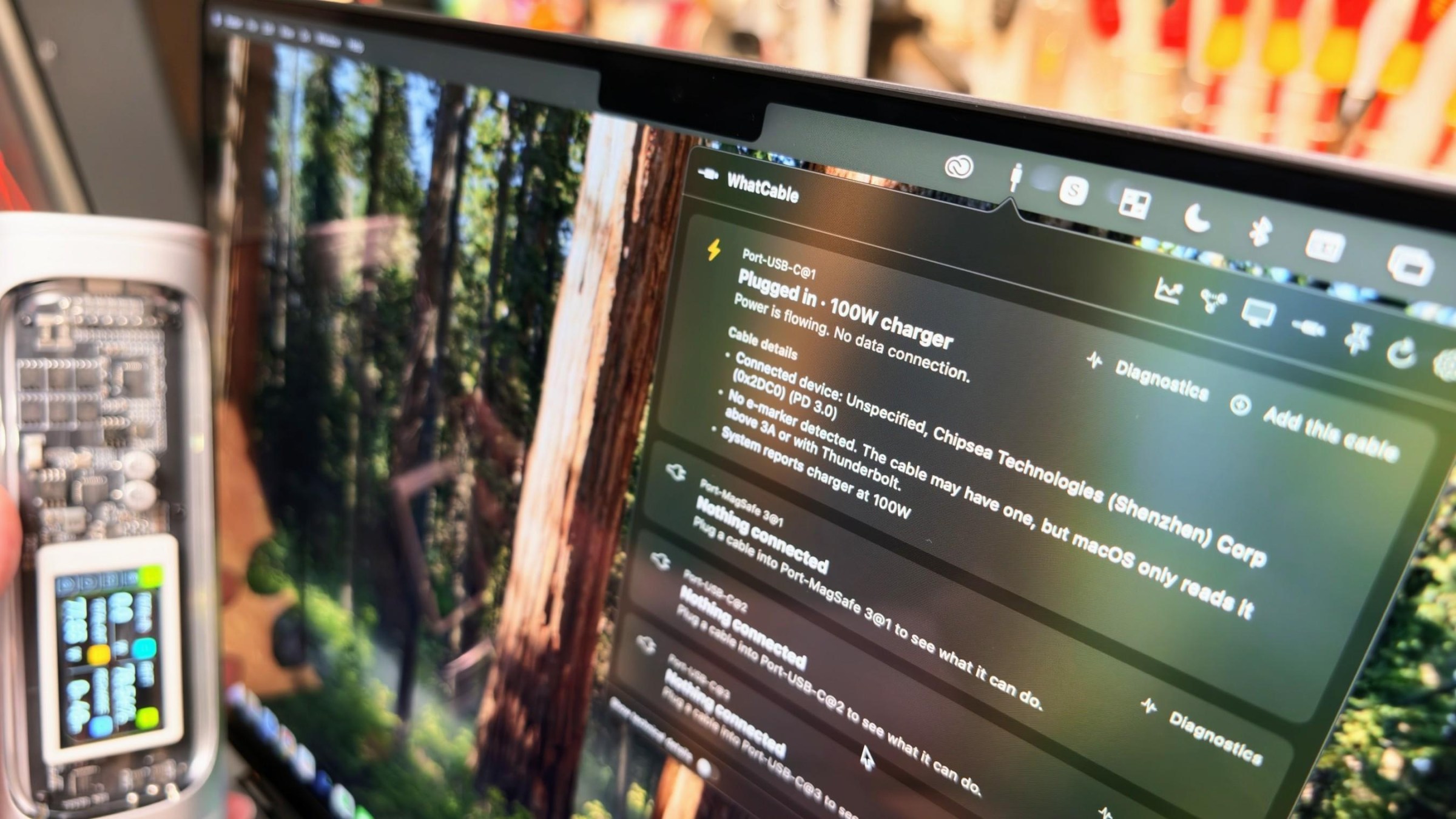
Now, let’s try one of my five favorite USB-C cables yet — my 10Gbps, 100W Supercalla cable with magnetic winding beads:
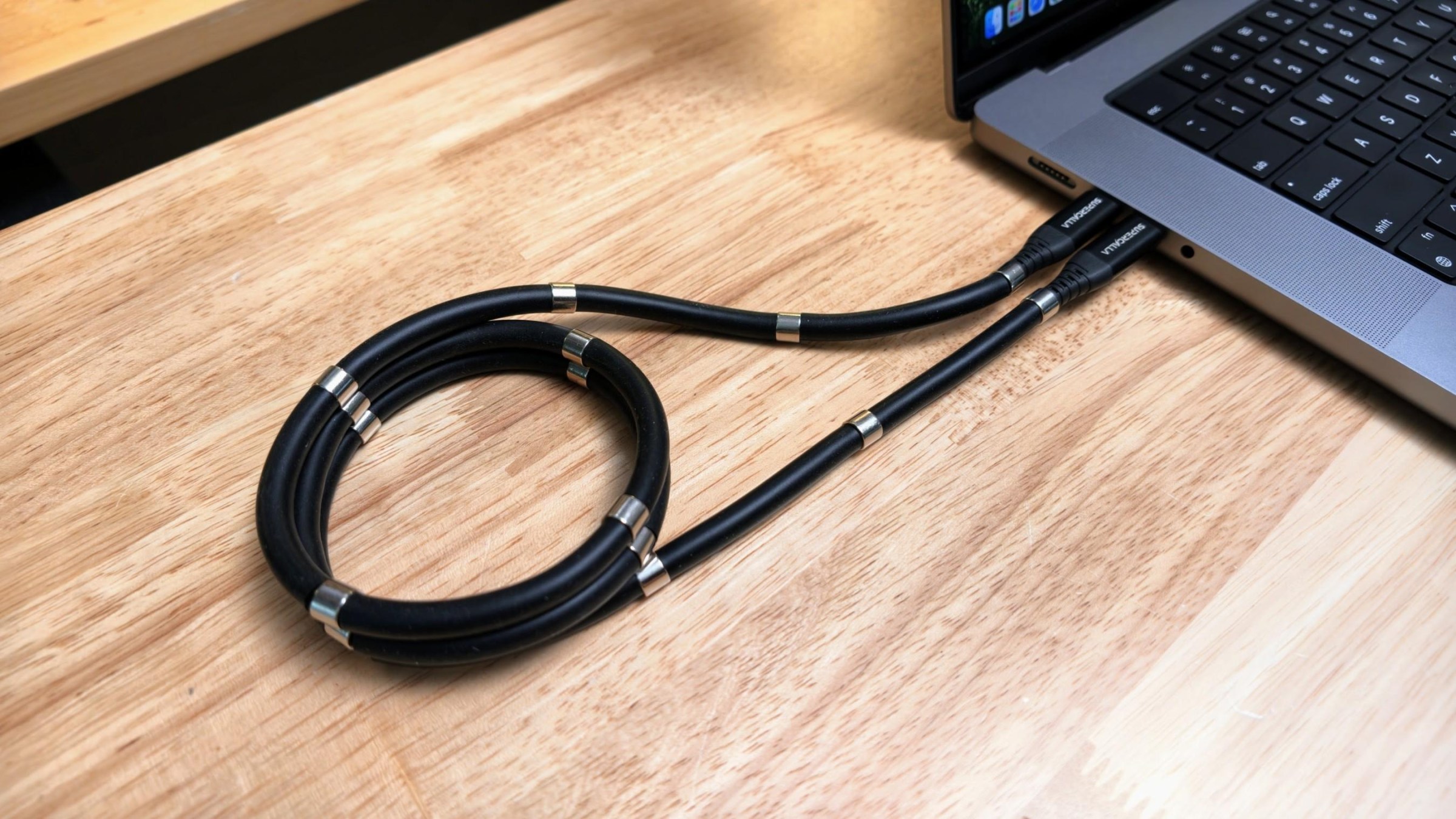
That’s strange: the cable’s e-marker does claim it’s 10Gbps and 100W, but the Mac isn’t treating it that way!
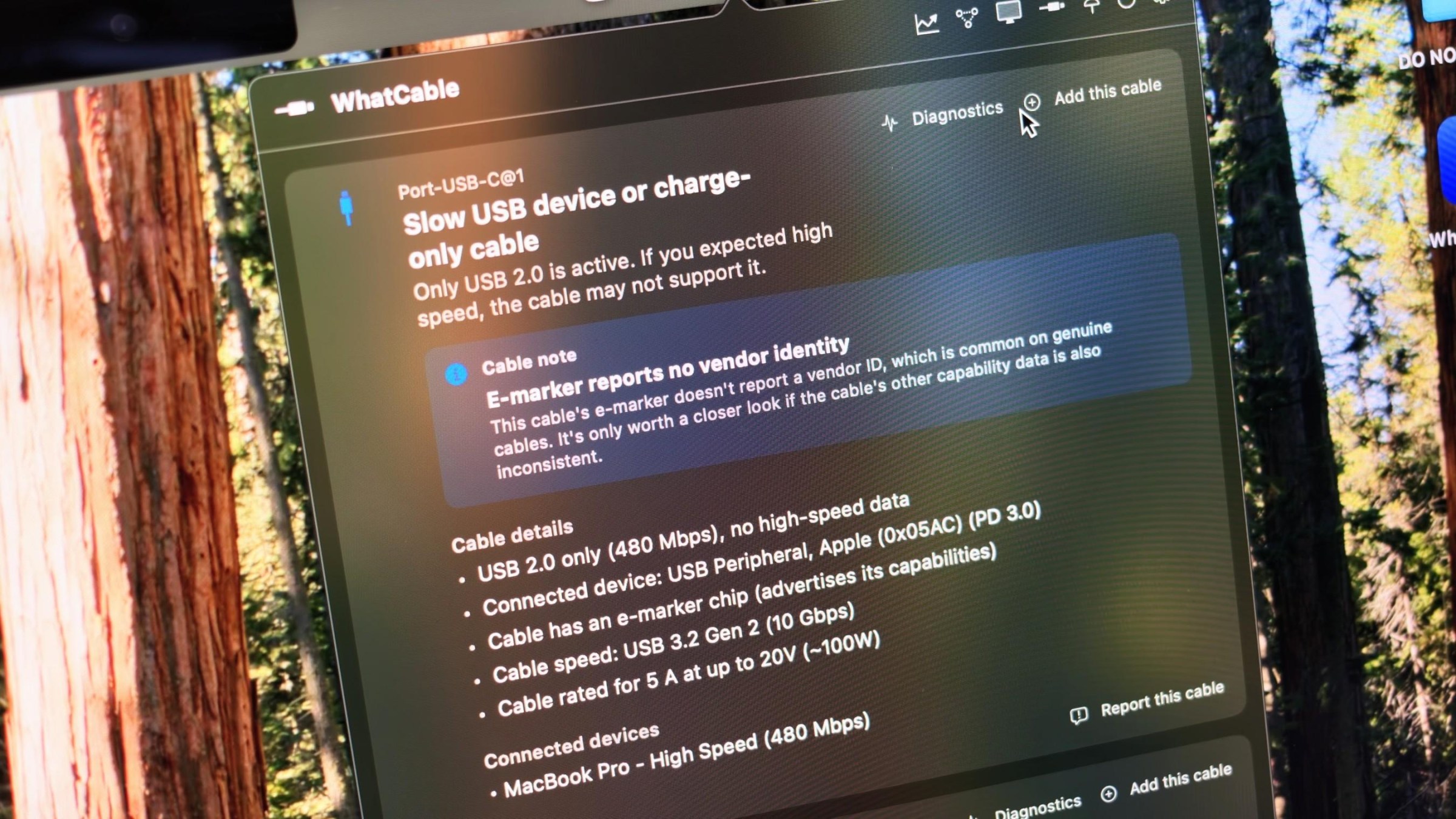
When I plug in a fast 10Gbps SSD, I’m not getting that speed with this cord:
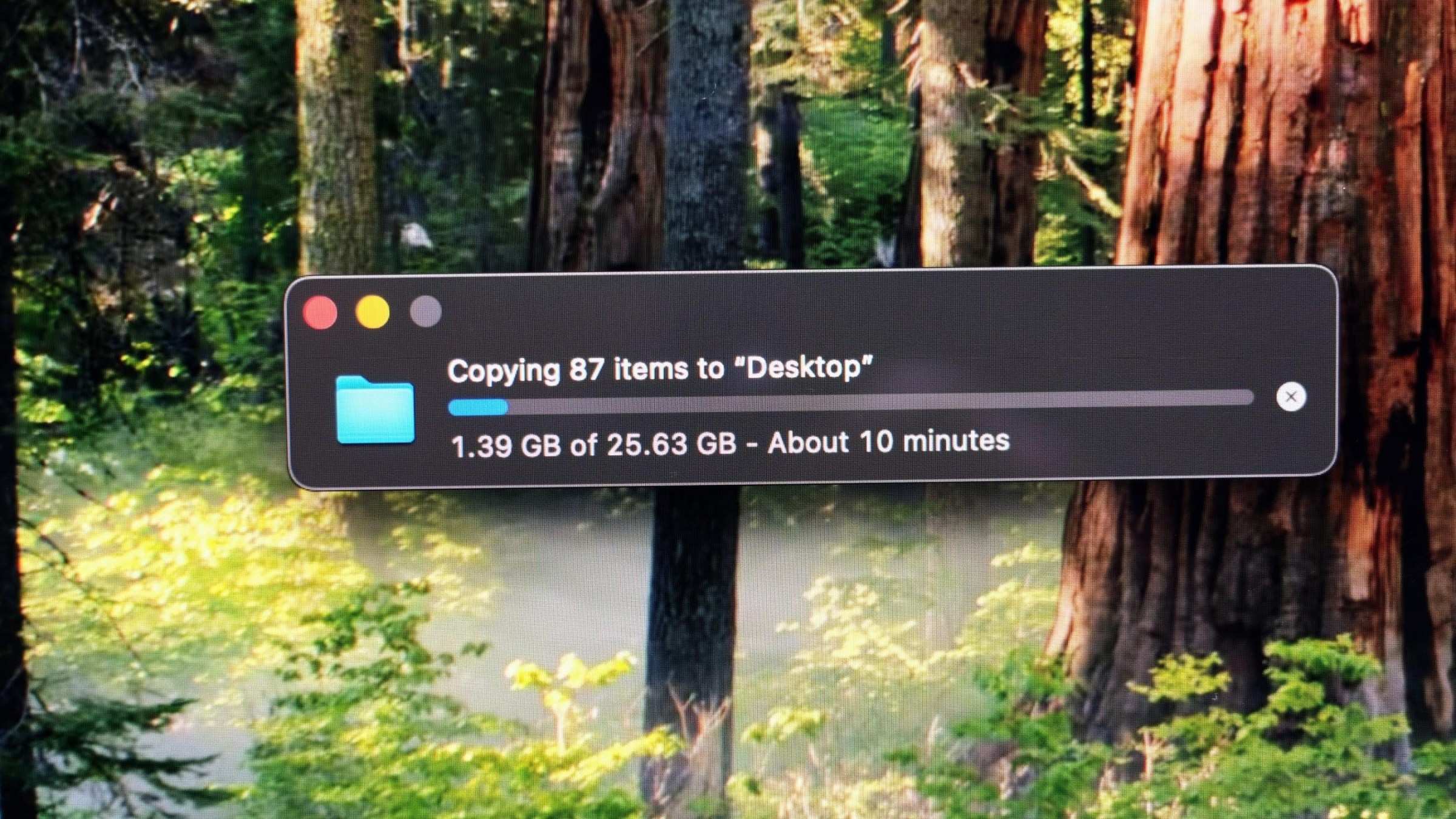
And it appears that’s because my daily driver cable is finally wearing out. Guess it’s time to retire this one!
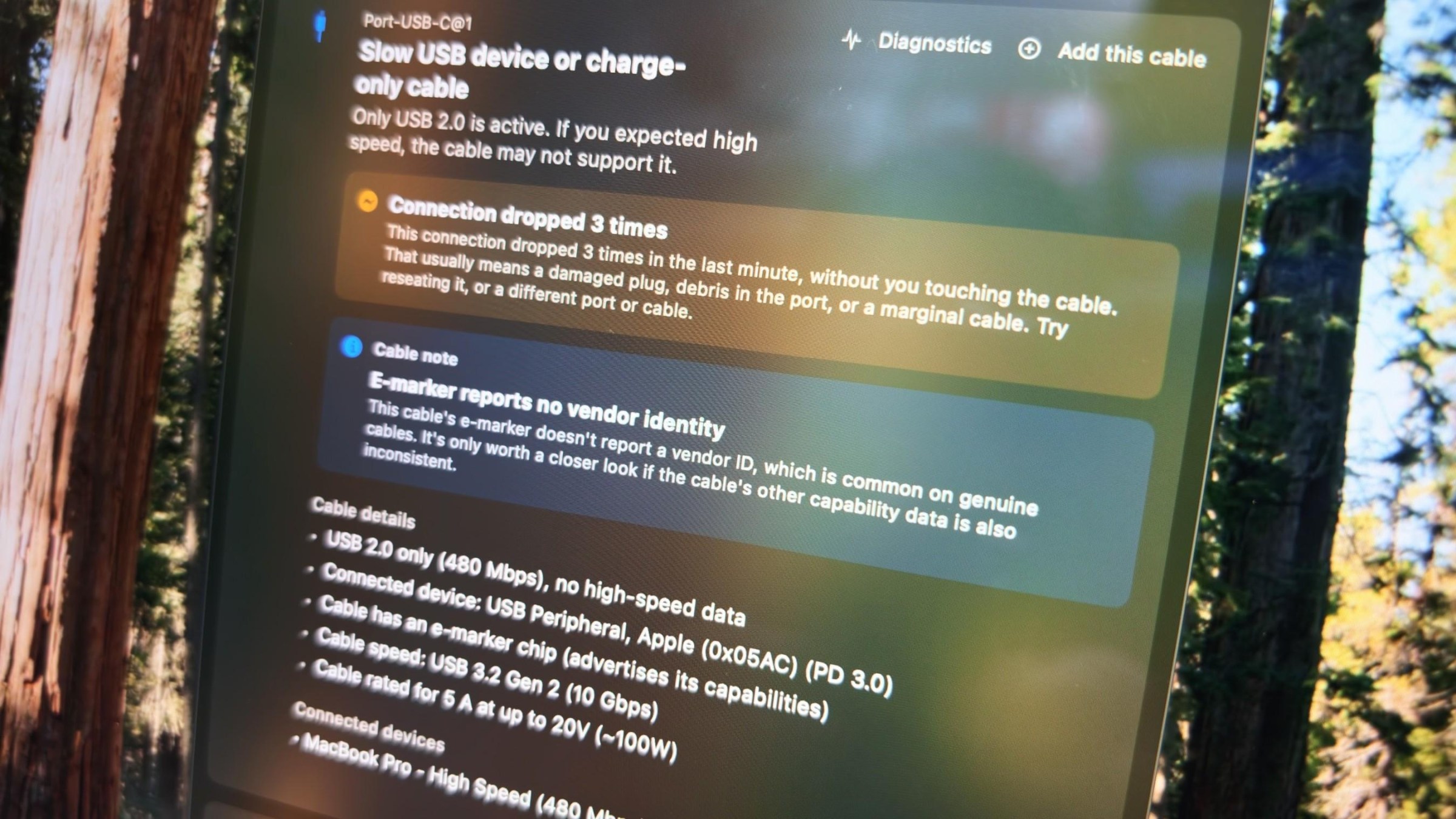
Now let’s try the theoretically latest and greatest cable in my drawer: a 240W USB4 40Gbps cable.
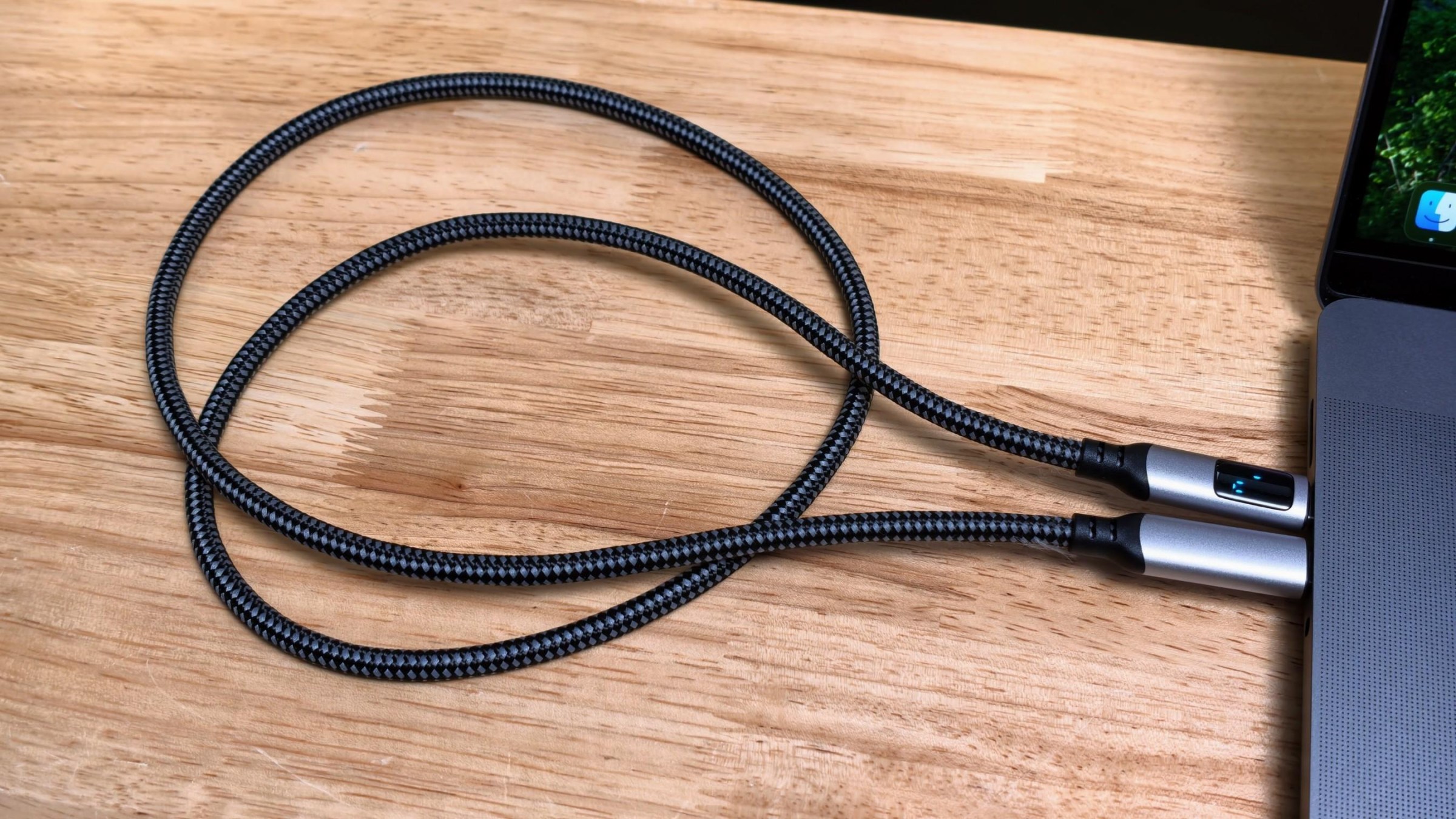
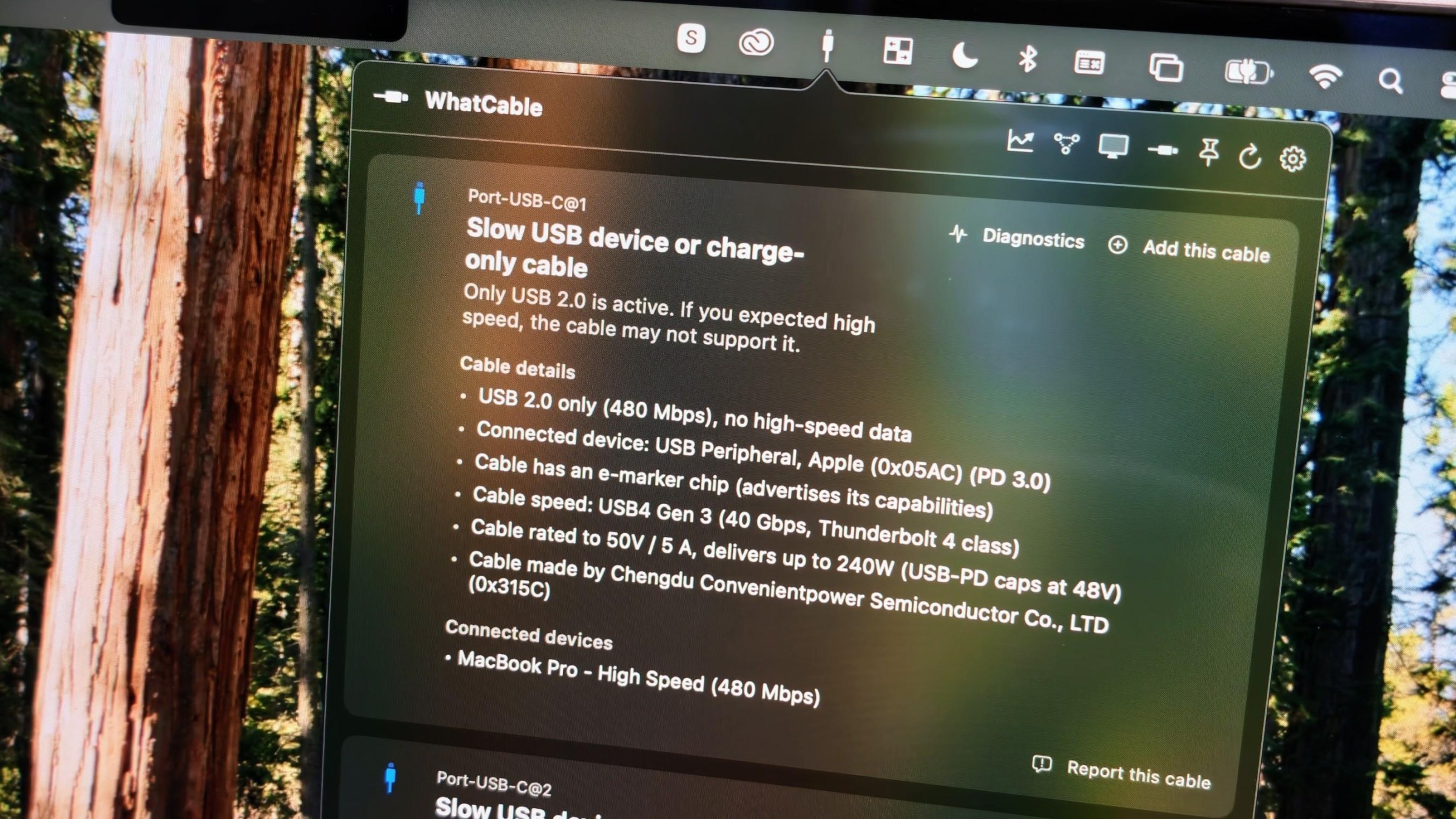
Again, the e-marker seems to validate those speeds, even if the Mac isn’t connecting to itself at that rate.
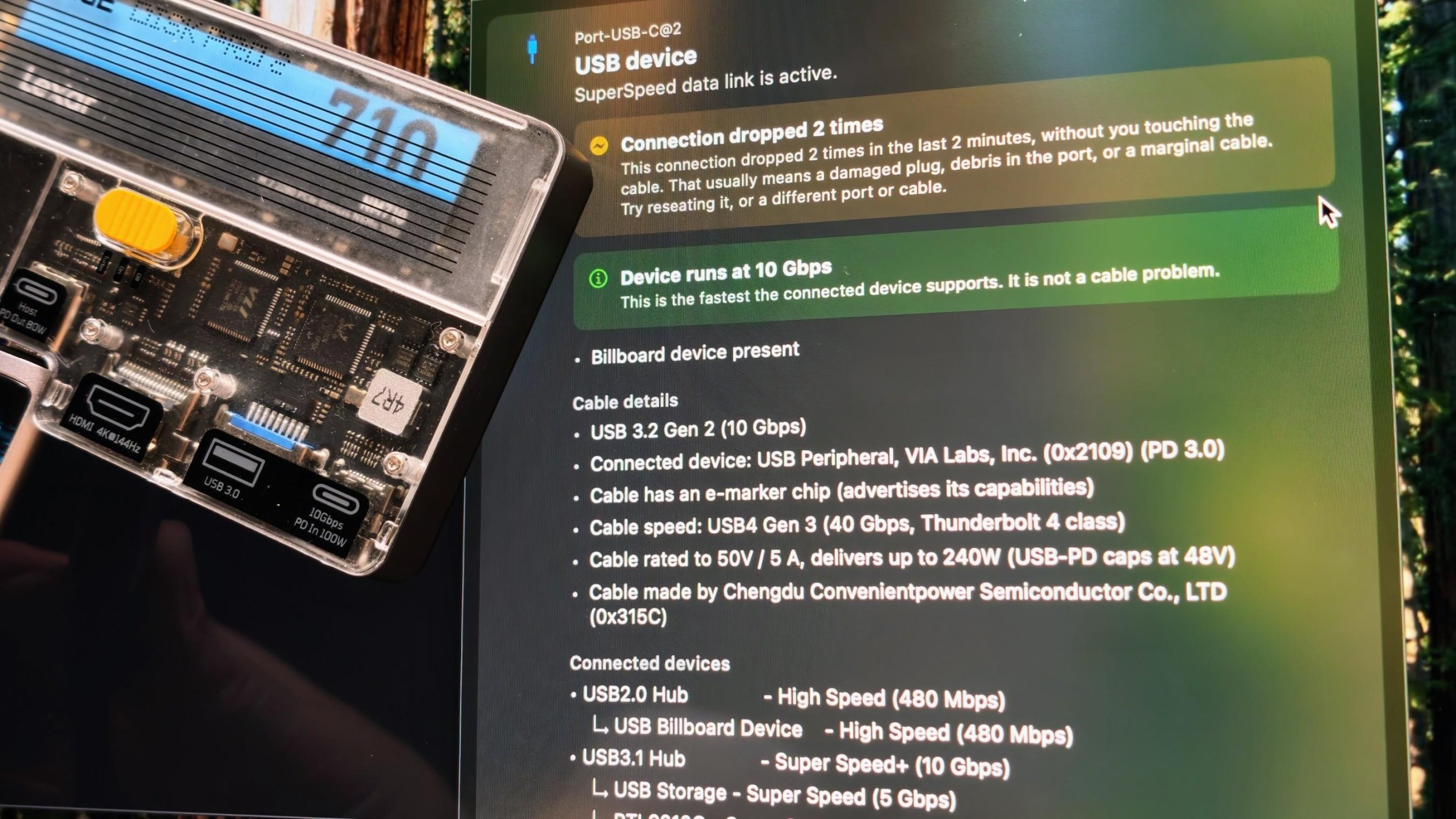
Once I plug in the drive, WhatCable detects that the Mac has a 10Gbps link:
That’s more like it: this 25GB transfer is measured in seconds instead of minutes:
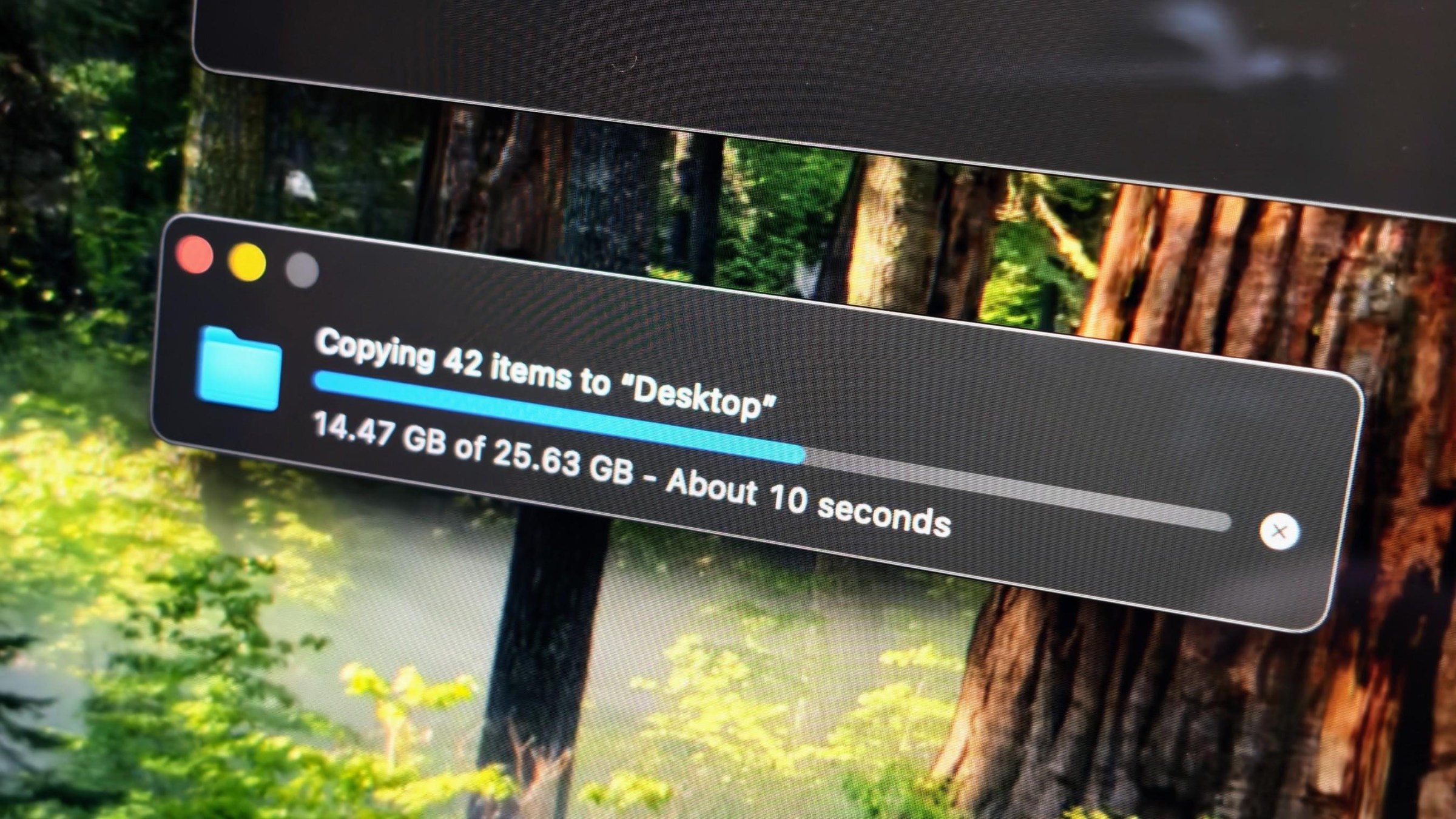
Here’s a cable that arrived at my home just the other day exclusively for 100W charging. I’m not expecting more than USB 2.0 480Mbps data; on Amazon, the company only advertised USB 2.0 speeds:
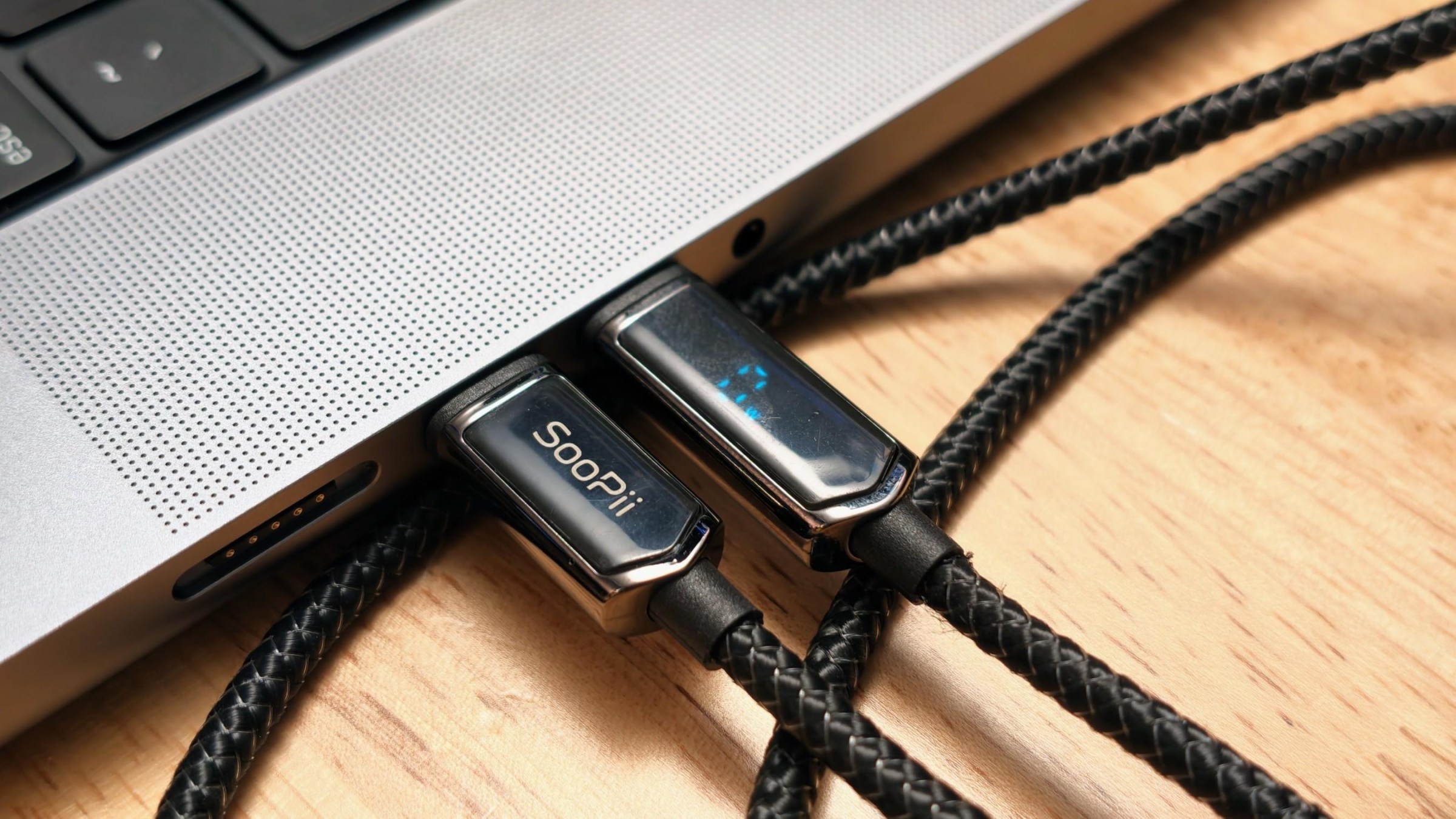
But WhatCable says its own e-marker advertises 10Gbps USB 3 data… could it be?
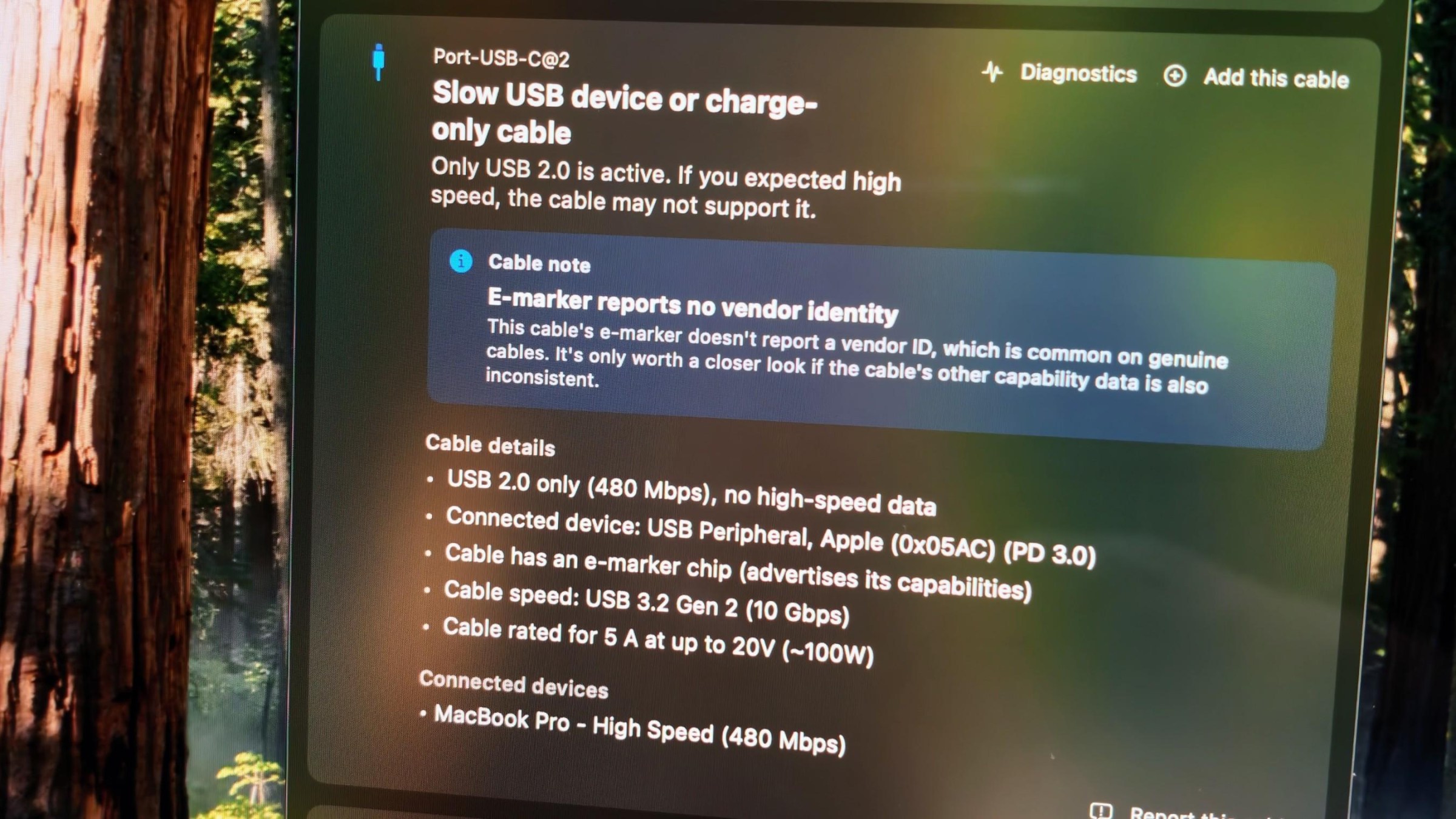
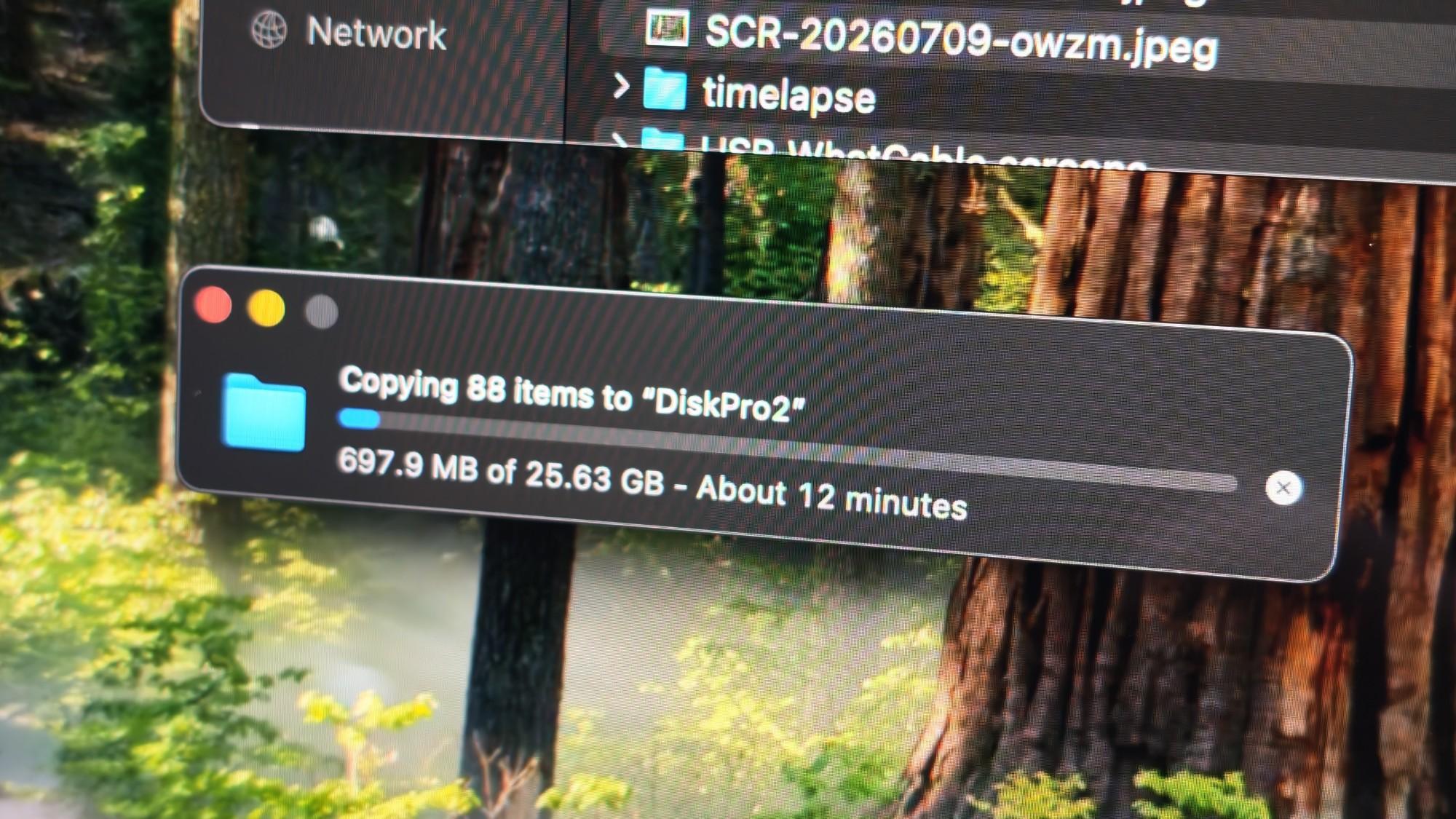
I’m afraid not: this cable’s e-marker wrote checks its body couldn’t cash. Minutes, not seconds, for the same 25GB transfer:
Here, my $8 tester did a better job, immediately detecting that the cable doesn’t support SS (SuperSpeed, aka USB 3).
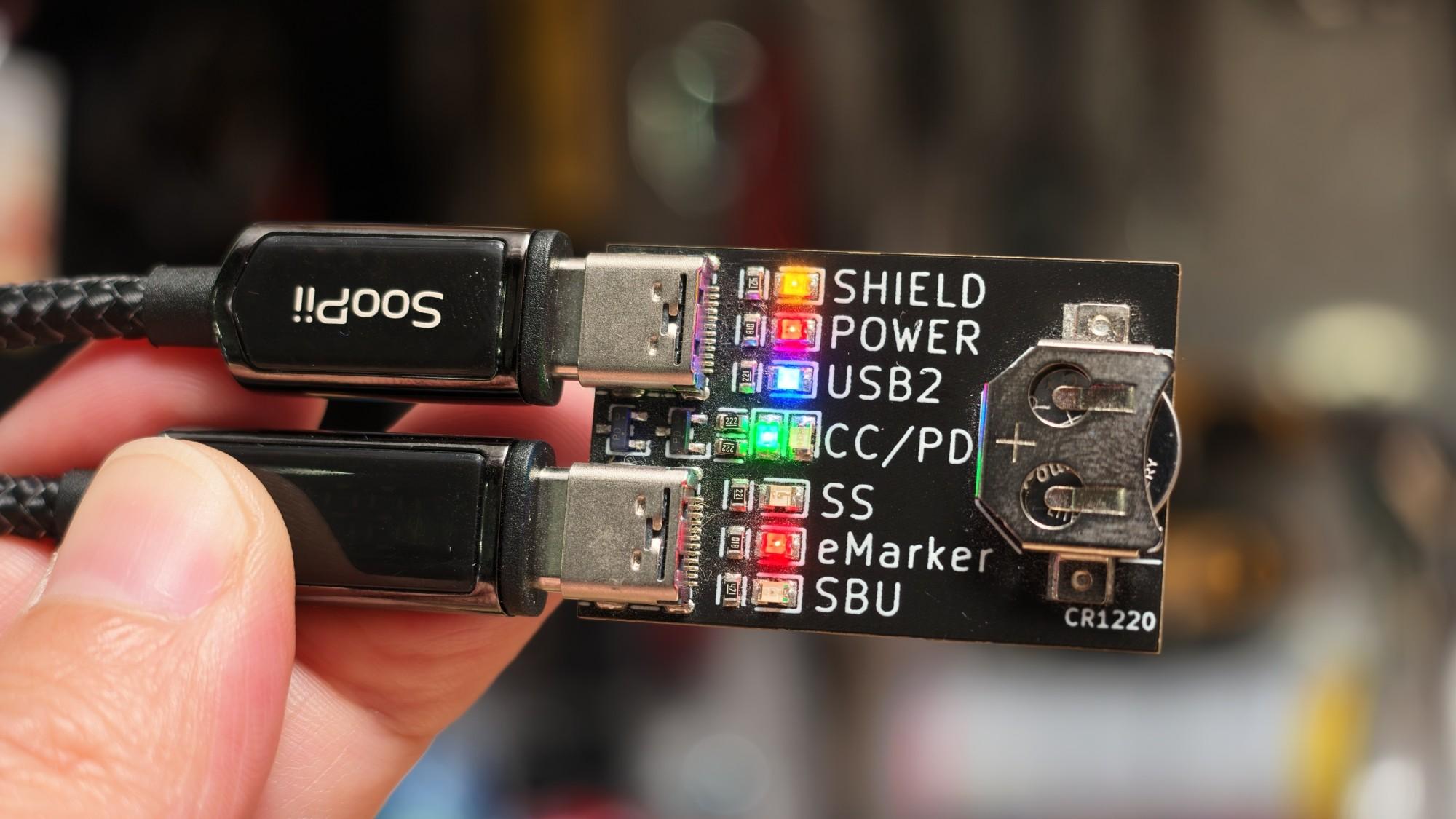
It delivers on the 5 amp charging speeds, though:
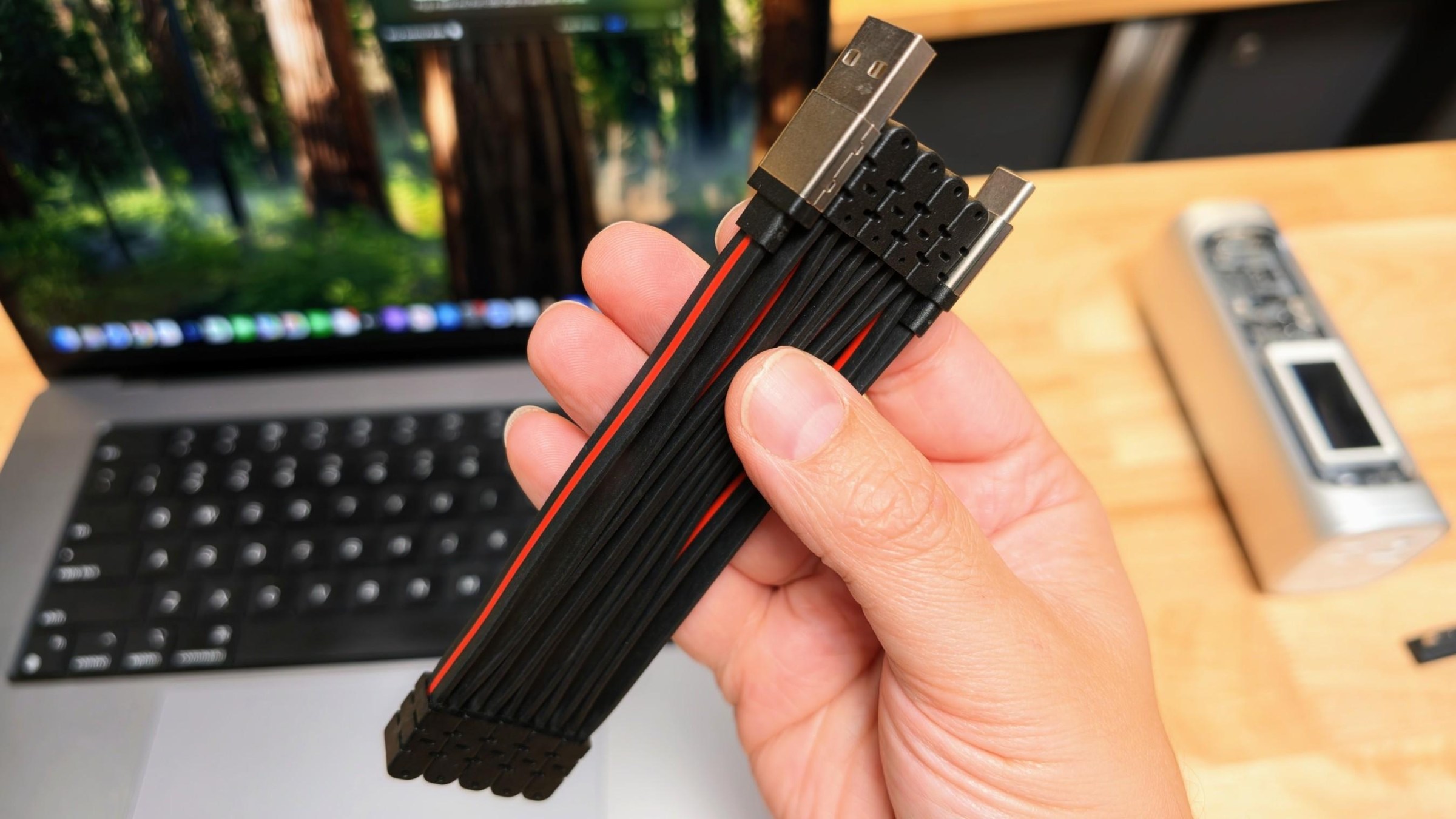
Next, I thought I’d plug in my magnetic accordion USB-A to USB-C cable, which is definitely only capable of 480Mbps USB 2.0 speeds:
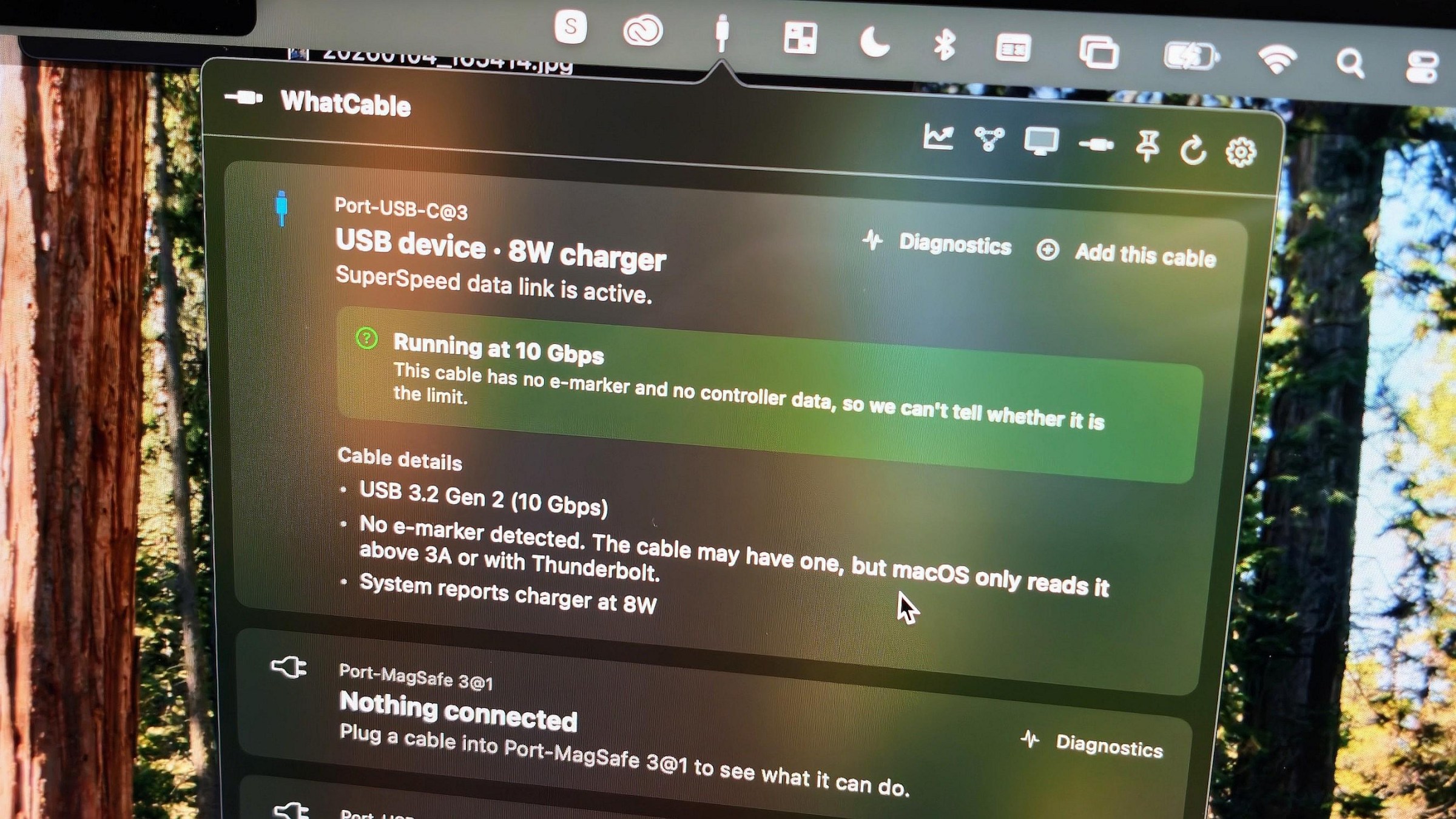
Strangely, the Mac insists it’s running at 10Gbps… while connected to my external battery. That seems wrong!
Last but not least, here’s the old faithful cable that came with a LaCie drive I bought way back in 2019, one I’ve always turned to for stability and speed:
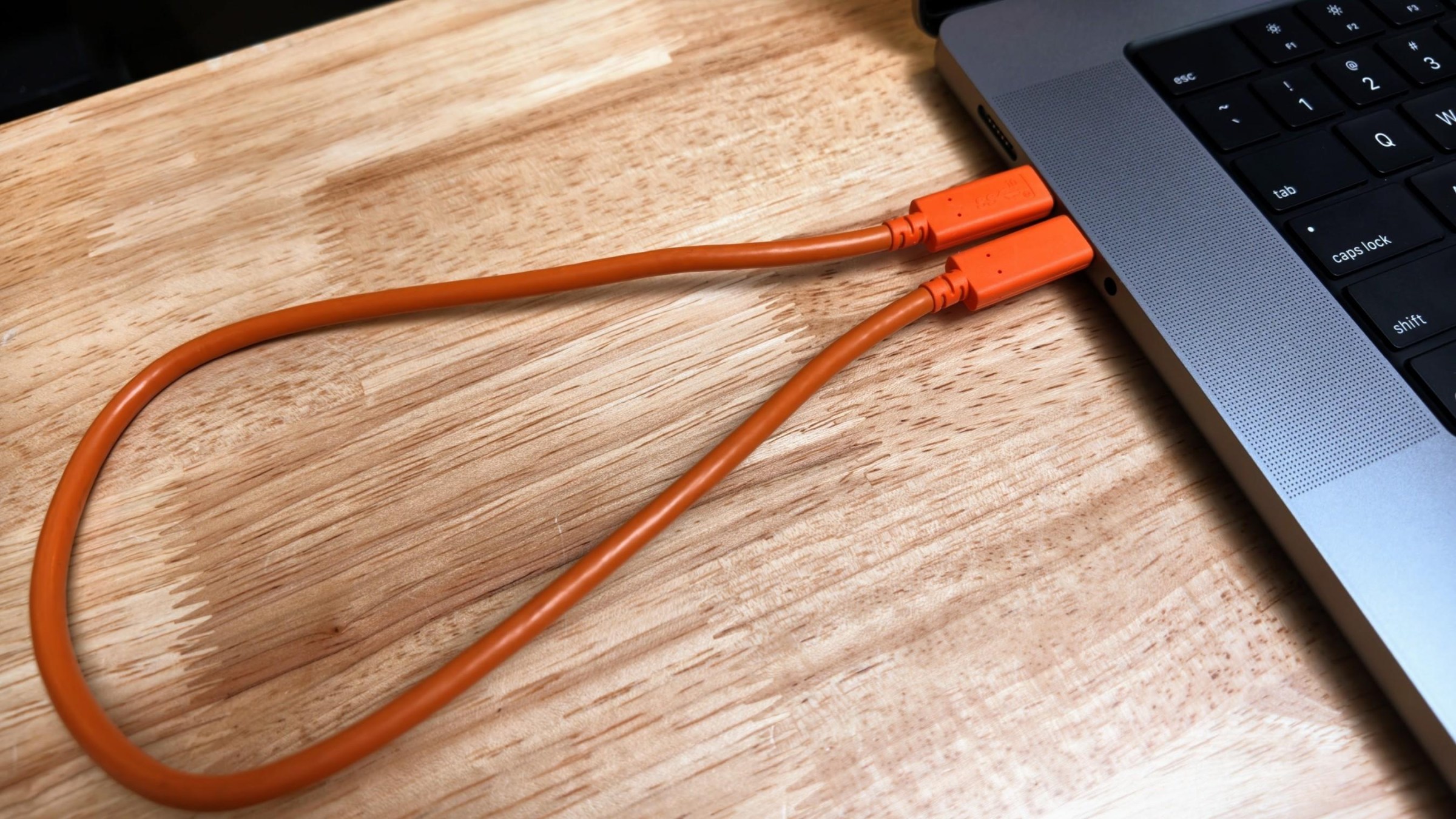
It’s reporting as a 20Gbps Thunderbolt cable, even though it says 10Gbps on the end. I don’t have one handy, but I’ll have to try it with a Thunderbolt drive to check!
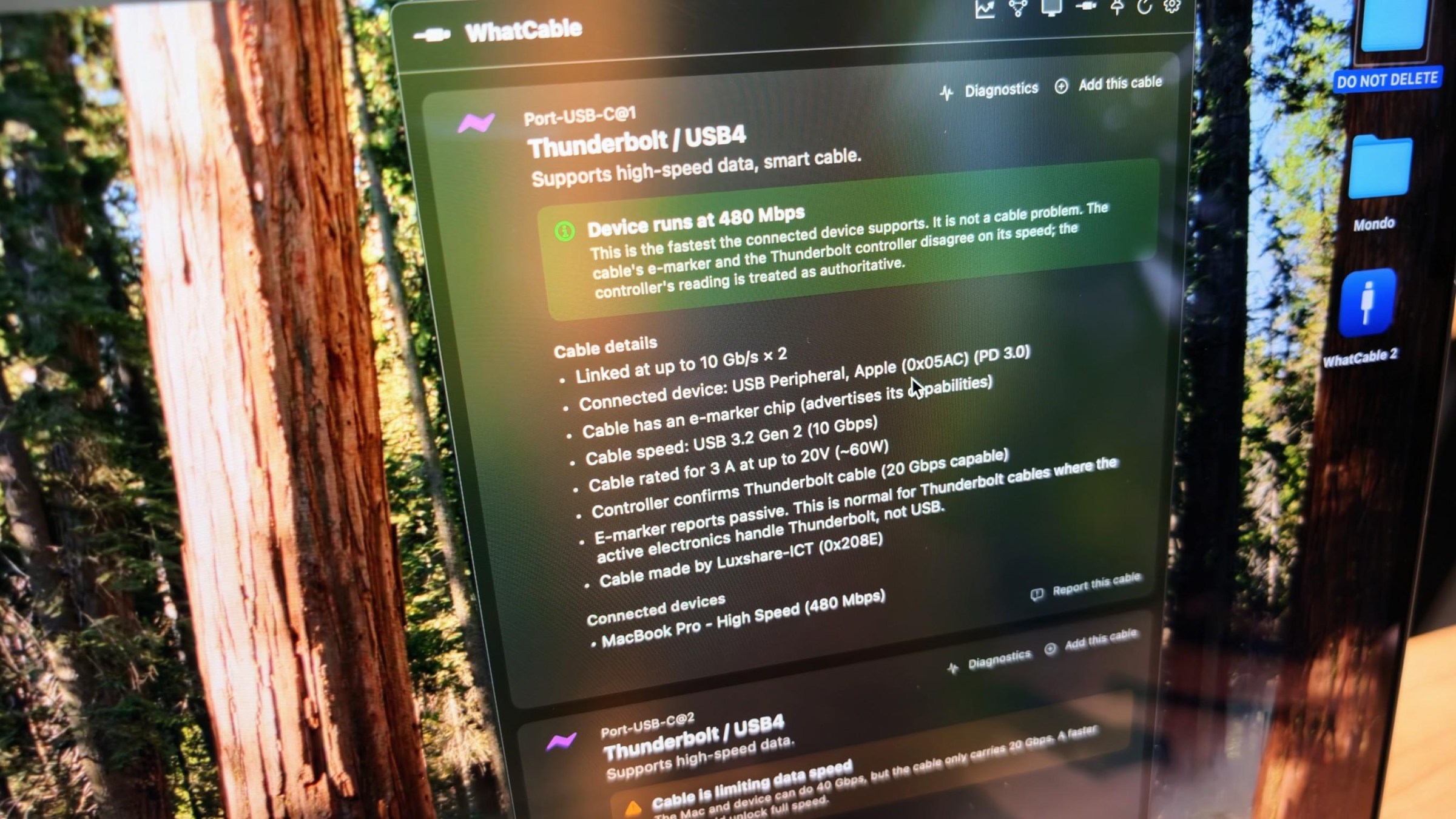
Morley isn’t the first to realize a MacBook could be a USB-C cable tester. USB Connection Information is a similar paid app that arrived a year ago. But Morley’s version is free, and he tells me it “will always stay free at its core,” though you can pay £9.99 to get the Pro version that offers a real-time power monitor, diagnostics, and a terminal view.
He’s also now built an even simpler version of the idea called WhatPort that simply monitors what each of your Mac’s USB-C ports is doing right now, including power, data, and video.
Morley tells me he won’t be able to build a version of WhatCable for Windows because “there’s too much hardware variance and the Windows APIs don’t expose what WhatCable needs,” and says Android and iOS similarly don’t provide enough low-level access.
“If anyone has a workaround I’d love to hear it,” he says.
But he’s already working on a Linux port, and is continuing to update the Mac version. You can follow along with the updates at his GitHub page.
Photos by Sean Hollister / The Verge
Read the full article here