



Continuous glucose monitoring is moving further into consumer wellness.
Ultrahuman has launched M2 Live in the US, an updated metabolic tracking platform that uses Abbott’s over-the-counter Lingo continuous glucose monitor and does not require a prescription. For consumers, employers, and health-tech buyers watching wearable data platforms, the launch lowers a major access barrier while raising familiar questions about cost, privacy, and how wellness data should be used.
The product also shows how wearable companies are shifting from simple activity tracking toward platforms that combine sensors, subscriptions, and AI-generated health insights.
M2 Live lowers the access barrier for glucose tracking
Ultrahuman announced M2 Live on June 18, positioning the product as a more accessible successor to its M1 Live platform. The new version uses Abbott’s Lingo CGM, which is available over the counter for adults 18 and older who are not on insulin.
“M2 Live helps people understand how their body responds to food, exercise, stress, and sleep in real time,” Ultrahuman said in its launch announcement.
The company added that the platform combines glucose data with other health signals from Ultrahuman’s ecosystem, including the Ultrahuman Ring. The app can use glucose readings alongside data on sleep, stress, activity, recovery, heart rate variability, and skin temperature to provide metabolic insights.
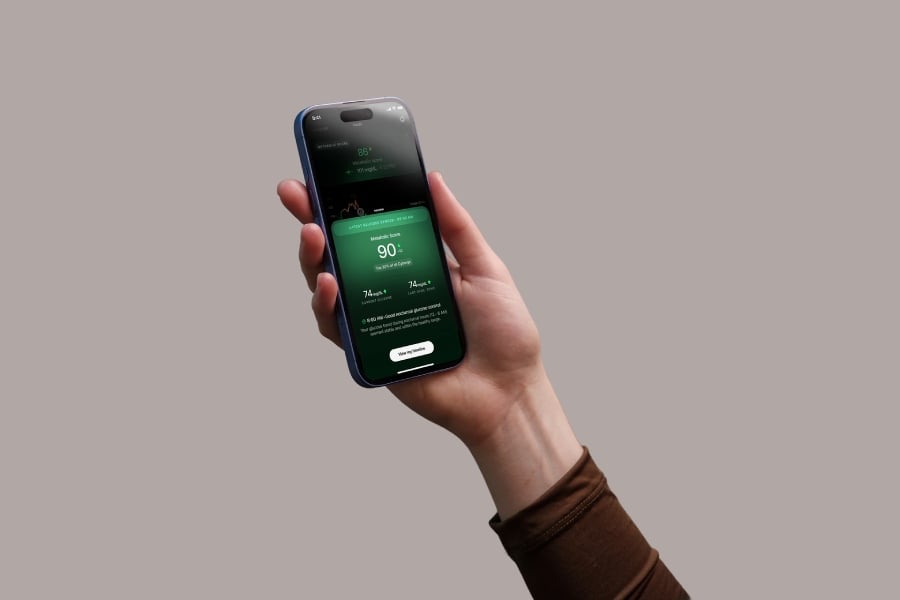
Ultrahuman said its Jade AI system connects those data points and supports features such as glucose tracking, spike detection, a daily Metabolic Score, Food Score, and Fueling Score.
Pricing puts CGM closer to mainstream wearables
M2 Live also changes the cost equation.
Engadget reported that Ultrahuman’s earlier M1 Live used Abbott’s Freestyle Libre, which required a prescription in the US and carried a higher cost for access.
The updated M2 Live platform starts at $129 for a one-month one-time purchase with two CGM sensors, according to Ultrahuman’s US pricing page. A subscription option costs $99 per month and includes two CGM sensors. Ultrahuman also lists three-month and one-year plans priced at $289 and $1,229, respectively.
Each Lingo biosensor can be worn for up to 14 days, though Ultrahuman’s launch materials noted that not all sensors last the full period. According to Engadget, the company said 77.1% of biosensors in a study lasted the full 14 days, while 22.9% may not last that long when used according to package labeling.
More must-read AI coverage
Why this matters for workplace wellness and data use
Ultrahuman M2 Live is part of a broader shift toward health platforms that combine wearables, subscriptions, and personal biomarker data. That could make tools like CGMs more relevant to wellness programs, benefits providers, and health-tech startups.
Lower-cost, no-prescription CGM access could make metabolic tracking more attractive to wellness programs, insurers, and health-tech startups. It could also create new compliance and privacy questions if employers or third-party platforms begin collecting, analyzing, or incentivizing behavior based on glucose-related data.
Android Authority noted that M2 Live can work without an Ultrahuman device, though pairing it with the Ultrahuman Ring provides deeper analysis. That flexibility may help Ultrahuman reach users interested in glucose tracking but not ready to adopt a full hardware ecosystem.
“By combining M2 Live with glucose data from Abbott’s Lingo, people can better understand how to make healthy change and improve their metabolic health,” Mohit Kumar, founder and CEO of Ultrahuman, said in the company’s announcement.
The bigger challenge will be proving that more personal health data leads to better decisions, not just more dashboards.
As CGM moves into mainstream wellness, buyers and users will need to weigh convenience, cost, data handling, and clinical limits before treating glucose insights as everyday guidance.
See how Apple, Samsung, and other wearable makers are racing to turn glucose data into AI health advice.
Read the full article here