

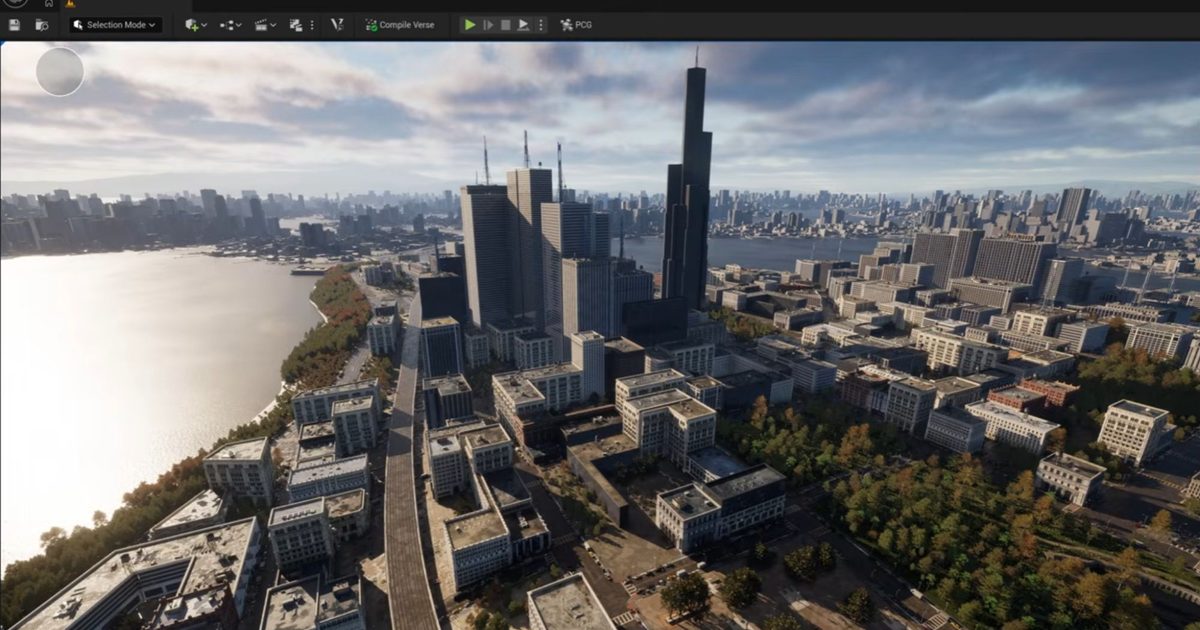

Epic Games has released Unreal Engine 5.8, the last planned major release in the UE5 line. The update ships with an experimental plugin that brings large language model (LLM) support directly into the engine, along with a set of new tools for worldbuilding, rendering, animation, and virtual production.
LLMs come to Unreal Engine
The Model Context Protocol (MCP) plugin connects any LLM to core engine systems, including blueprints, assets, levels, materials, and meshes. Developers can use it to build assets and systems, extend engine functionality, and run testing and optimization tasks, with the option to add custom functionality on top.
In a video published Wednesday, Epic demonstrated Anthropic’s Claude Code using the plugin to pull objects from an asset library, arrange them in a scene, and adjust lighting to match real-world reference images.
Along with the AI plugin, UE5.8 adds Mesh Terrain, a new 3D mesh-based system for building larger, more complex environments with support for overhangs, floating islands, and tunnels. MegaLights has been moved to production-ready status with improved performance targeting 60fps on current-gen consoles, while a new Lumen Lite mode targets Nintendo Switch 2 at the same frame rate. MetaHuman Animator has picked up full-body performance capture from a single camera with no mocap rig required, and Mesh to MetaHuman now conforms full bodies in addition to heads.
The bigger AI push is still to come
Epic framed the MCP plugin as groundwork for Unreal Engine 6, where LLM integration is set to become a central part of the creation pipeline. The company said its goal for UE6 is to reduce tedious content authoring and free up more time for creative iteration.
Epic is targeting an early access release of UE6 in late 2027, with a full launch around 12 to 18 months after that. The move reflects a broader push across the gaming industry to fold gen AI into development pipelines, something that many developers remain skeptical about.
Read the full article here