



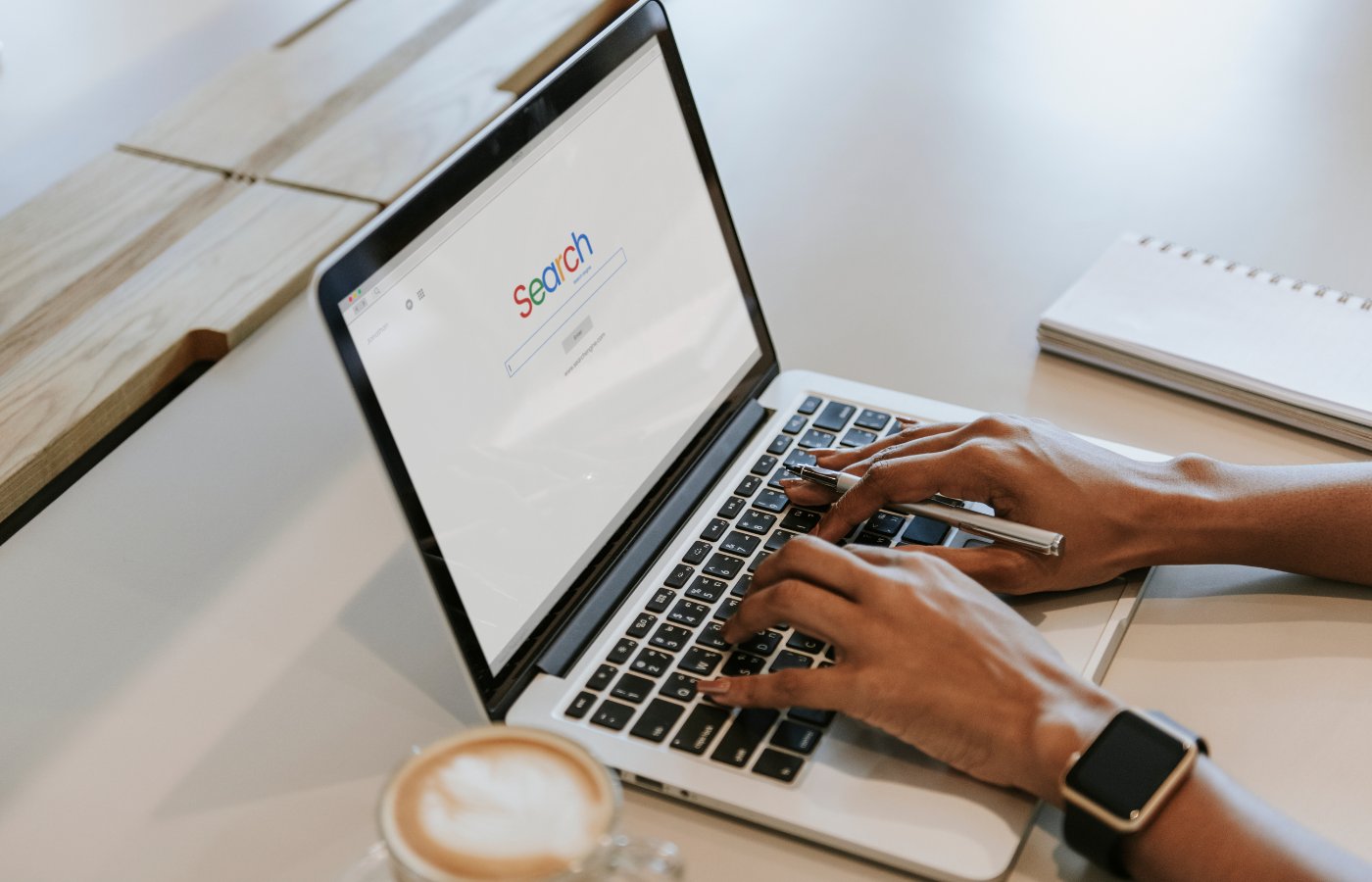

Alphabet is updating Google Search with new AI capabilities, inviting users to engage with its search engine much like they would with a conversational LLM.
Announced as part of the I/O developer conference, the new features revolve around an upgrade to Google’s classic Search box, which is now becoming an “intelligent” box that’s more integrated with the previously separate AI Mode.
This box will expand according to the type of user query, and runs on new model Gemini 3.5 Flash, enabling it to comprehend user context and intent in search queries, which can now be written like chatbot prompts.
Coupled with the ability to move seamlessly between the Search box and AI Mode, Google is claiming that Search is now “more intuitive than ever.”
However, SEO experts argue that website owners will find it harder to maintain visibility and attract clicks following the upgrade, a change that will force them to go back to basics, publishing more original reporting, insights, and data.
Conversationalizing Google Search
Other changes to Google Search include the merging of AI Overviews and AI Mode, in that users will be provided with a prompt box in AI Overviews so that they can ask follow-up questions.
Also interesting is that the core Google Search box is now multimodal, enabling users to search using text, images, videos, files, and URLs, while it will also introduce Search agents that can perform multi-step retrieval actions on your behalf.
Google also emphasizes that, the more you chat with the Gemini 3.5-based Search engine, the more it will understand your context, providing you with increasingly relevant information.
While the point of these updates is to conversationalize Google Search and to encourage users to spend more time using Google’s AI models, there’s a growing worry that it could end up reducing traffic to publishers and websites.
“Google’s new AI-integrated search box and search agents will undoubtedly lead to fewer clicks,” says Brian Dean, an SEO expert and the co-founder of Exploding Topics.
In its press releases, Google does take pains to state that users will “continue to get a range of results from Search, just like [they] do today,” yet evidence indicates that AI Overviews were already having the effect of reducing visits.
For instance, a Pew Research Center survey from 2025 discovered that only 8% of Google users click on a traditional search link if they see an AI Overview at the top of the results page, as compared to 15% of users who do not see an AI Overview (the remainder either run another search, directly visit another URL, or stop browsing altogether).
“This update makes that situation occur more often,” adds Dean, speaking to TechRepublic.
Other SEO experts agree with this prognosis, with Sam Robson — the founder and CEO of the better web co. — telling TechRepublic that the long-term trend will involve “more and more people” engaging with the web via AI interfaces and spending less time directly visiting websites via their browsers.
However, Robson adds an interesting qualification to this analysis, which is that it isn’t clear how much the new update will accelerate this process, since much of the damage has already been done.
“You are right to mention AI Overviews, which have absolutely diminished clicks for informational SEO queries,” he explains. “However, they’ve been so impactful, there’s a genuine question of whether these new changes can actually make things worse for information content.”
Robson says that he has seen some sites for which 90% of the SEO keywords serve for AIO purposes, implying that many businesses have already begun adapting to the environment Google seems intent on creating.
Websites need original content to survive
In a similar vein, Dean admits it’s too early to say what the long-term impact on publishers will be, since other negatively perceived changes in Google’s past have had positive overall effects.
“Mobile SERPs [search engine results pages] also had lower CTRs [click-through rates] than desktop SERPs,” he explains. “But what ultimately happened? Total clicks increased as more people used Google overall.”
Dean adds that this is not necessarily what will happen in this case, and in the event that it does make conditions more difficult, he advises websites to begin adapting already.
“Businesses should focus on providing legitimately new, first-hand experience in every piece of content,” he advises. “Google and users don’t want AI slop to rank.”
According to Dean, this is why expert perspectives and opinion pieces are performing best right now in SEO and GEO (generative engine optimization), something which should incentivize publishers to put out “unique stuff that ChatGPT can’t write.”
Sam Robson also highlights the importance of providing value over and above what AI can replicate or repackage, noting that the March 2026 Core update resulted in Google boosting sites that directly serve users in some capacity.
“This benefit extended to sites that sell products or services themselves, community sites where users engage with other real people, and topics where AI struggles, such as fast-moving news, opinion or entertainment-focused (rather than functional) content,” he says.
Available data backs up this analysis, with the latest Muck Rack “What is AI Reading?” report finding that 99% of sources cited by AI summaries come from non-paid media.
This includes 25.4% for journalistic sources, 24% for corporate blogs and content, and 15.2% for owned media.
More broadly, Kelly Cutler — an associate professor of digital marketing and visual communication at Northwestern University — predicts that the shift Google initiated with AI Overviews requires a “fundamental evolution” in how businesses shape their marketing strategies and measure performance.
She tells TechRepublic, “Traditional SEO must expand to include generative engine optimization (GEO), with a focus on visibility and measurement within zero-click environments.”
This includes greater use of structured data and schema markup, optimizing for citations, and building authority through community and trusted platforms.
She adds, “Tools such as SEMrush and Ahrefs, along with emerging AI visibility frameworks, will play an increasingly important role.”
Read the full article here