





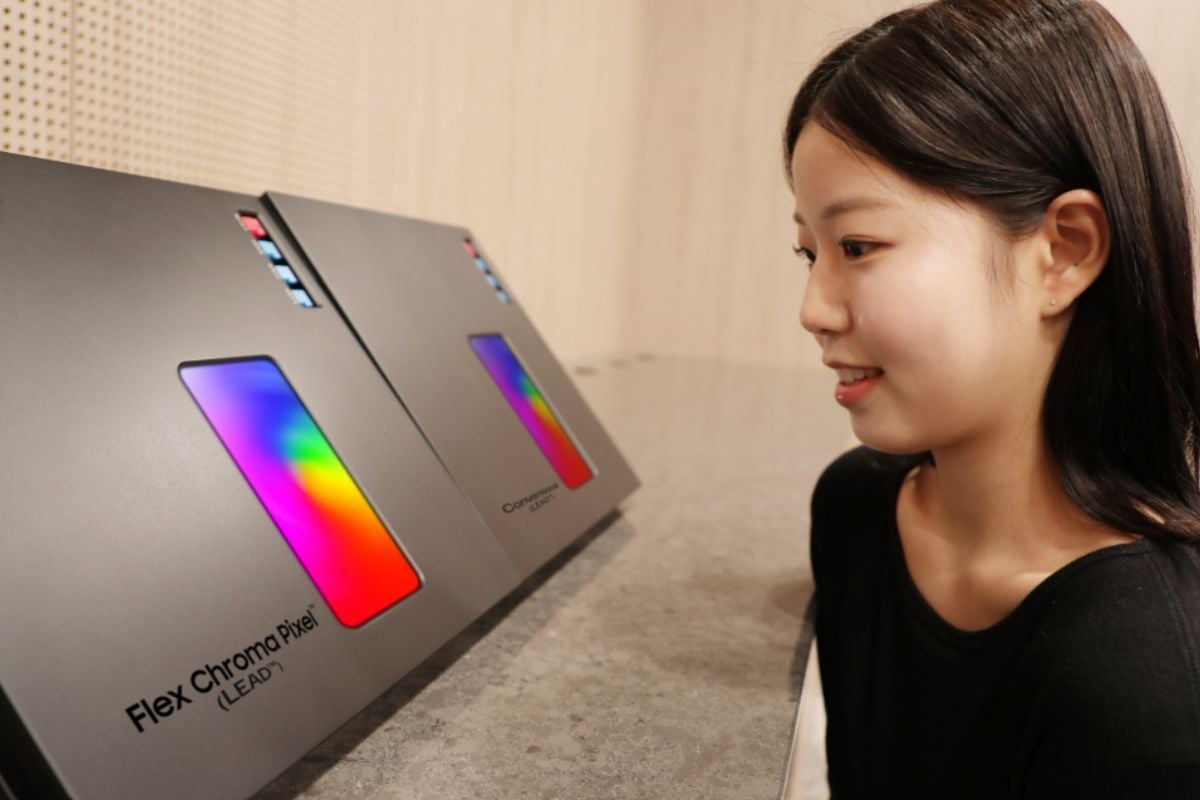

At SID Display Week 2026 in Los Angeles, Samsung Display kicked off the week by showcasing a batch of prototype screens that hint at the future of smartphones, wearables, and even cars.
Running from May 5 to 7, the event is one of the display industry’s biggest stages, and Samsung used it to highlight advances in brightness, color accuracy, and entirely new uses for screens. The headline reveal is a new OLED panel called Flex Chroma Pixel, designed for future smartphones.
According to Samsung, the display can reach up to 3,000 nits of brightness in High Brightness Mode (HBM), a level designed to improve visibility in direct sunlight. At the same time, it supports 96% of the BT.2020 color standard, far beyond the roughly 70% most current phones achieve.
“Some recent products in the industry have increased color purity while lowering brightness in order to meet the BT.2020 standard. Flex Chroma Pixel™ secures long lifetime, high brightness, and wide color gamut characteristics by optimizing both material performance and optical structure based on our LEAD™ technology,” Samsung explained in a statement.
The company says it achieved this using new materials and its in-house LEAD technology, which improves efficiency while maintaining brightness and durability.
A phone screen that can track your health
Samsung also introduced a Sensor OLED Display, a 6.8-inch panel that does more than just show content.
The display integrates organic photodiodes (OPDs) directly into the panel, enabling it to measure biometric data such as heart rate and blood pressure using light emitted by the screen. Despite this added functionality, it still reaches 500 pixels per inch (PPI), comparable to flagship smartphones.
There’s also a privacy angle. The display includes Samsung’s Flex Magic Pixel technology, which hides sensitive information such as health data when viewed from the side while keeping the rest of the screen visible.
Advances beyond smartphones
Samsung didn’t stop at phone displays.
The company also showcased EL-QD (electroluminescent quantum dot) panels, reaching up to 500 nits brightness, along with improved efficiency. These displays, which emit light directly rather than through traditional OLED structures, were recognized as a SID Distinguished Paper, highlighting their technical significance.
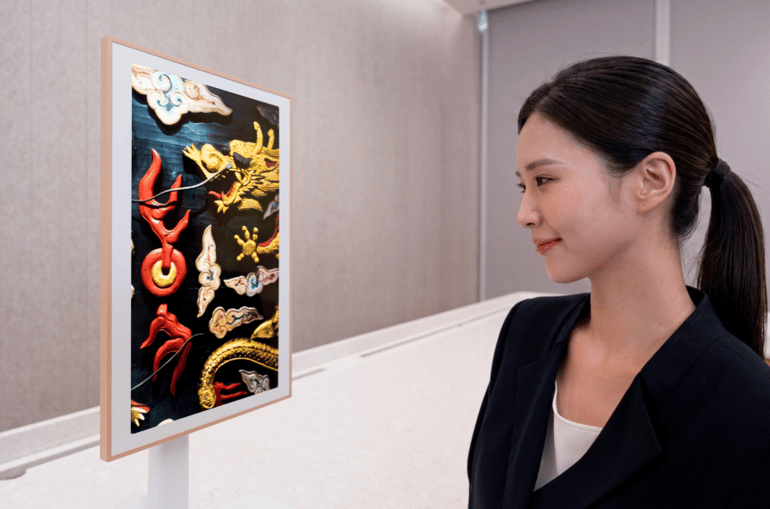
“Improving emission efficiency not only enhances brightness but also reduces power consumption. EL-QD is expected to contribute to lowering display power usage and improving battery efficiency in future AI-based high-computing environments,” a Samsung Display official noted.
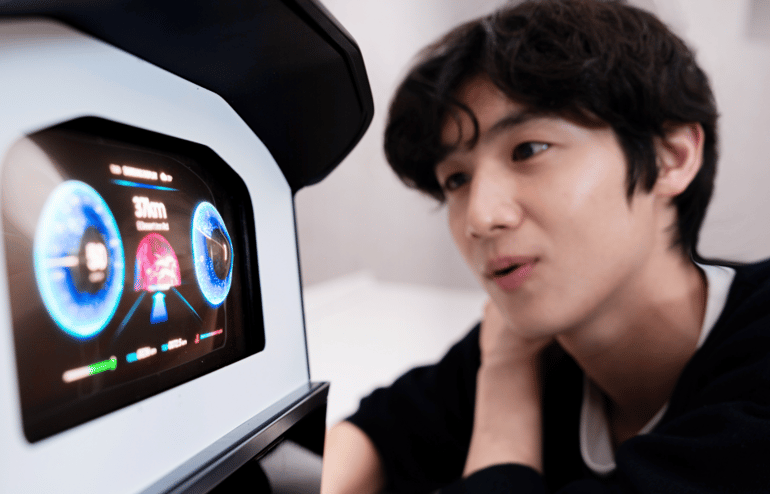
Meanwhile, a Stretchable Display 2.0 prototype demonstrated how screens could expand and reshape in real time. Designed with automotive use in mind, the panel reaches 200 PPI, matching current car display standards while also enabling physical transformation based on driving conditions.
What’s hot at TechRepublic
What it all means
None of these technologies is ready for immediate release, but they offer a clear direction for the industry. From ultra-bright screens that remain color-accurate to displays that double as sensors, Samsung’s latest concepts suggest future smartphones could do far more than simply display content.
If these ideas make it into commercial devices, users could see phones that are easier to use in sunlight, better for media, and capable of tracking health, all without extra hardware.
For more on Samsung’s broader device strategy, including its reported shift toward Android-powered laptops, check out our coverage of the Galaxy Book’s possible move away from Windows.
Read the full article here