




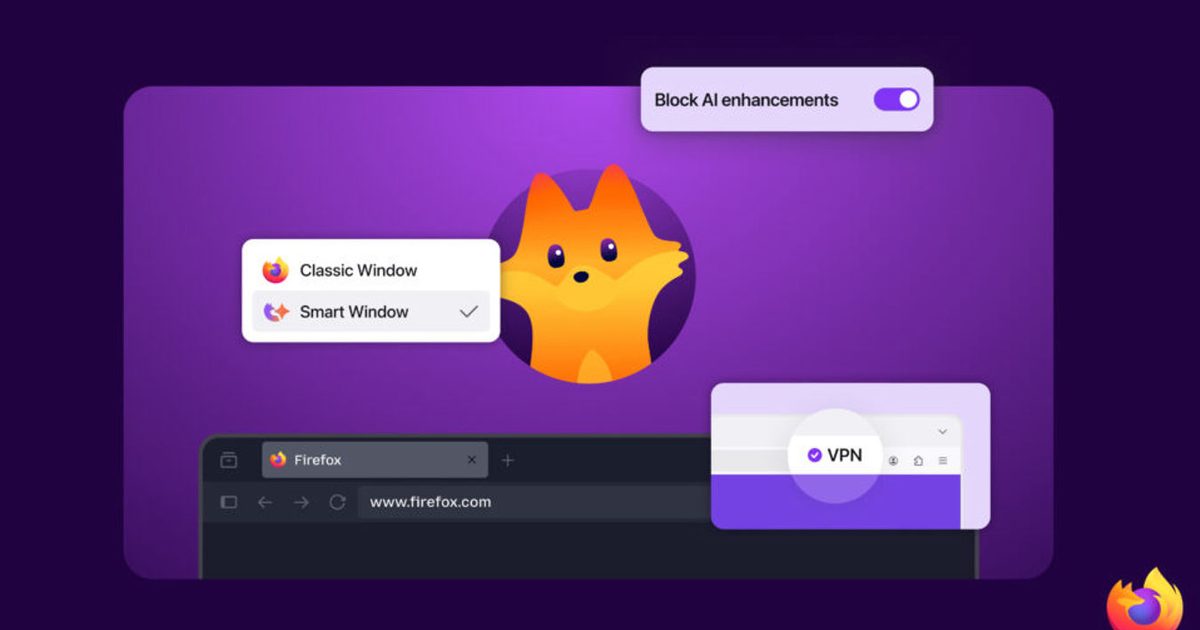

Mozilla is rolling out a Firefox free VPN that goes after a long-standing problem with no-cost privacy tools. Many free VPNs rely on unclear data practices to stay afloat. This one is built into the browser and aims to avoid that tradeoff.
It arrives in Firefox 149 starting March 24, with users in the US, France, Germany, and the UK getting 50GB of monthly data. The feature routes browser traffic through a proxy, masking your IP address and location without needing extra downloads.
This move fits into a broader push around user control and safer defaults. Protections run quietly in the background, while new features remain optional instead of automatic. You don’t have to sign up for another service just to get basic protection.
Why this VPN stands out
Free VPNs often come with hidden costs, usually tied to how user data is handled. Mozilla is framing this option as part of its existing privacy model, where that kind of tradeoff isn’t the business.
Because it runs inside Firefox, there’s no separate app to install or account to manage. That reduces friction and keeps your browsing within one environment. It also limits how much of your activity passes through outside providers.
There are still limits to keep in mind. The rollout starts in a small set of regions and includes a 50GB monthly cap, so it won’t fully replace a paid VPN for streaming or constant use. For everyday browsing though, it should cover most common needs without extra setup.
More tools, same philosophy
The VPN is part of a wider set of updates that focus on making browsing more flexible without adding complexity.
Split view lets you run two pages side by side in a single window, which makes comparisons or multitasking easier. Tab Notes add simple reminders directly to tabs so you can return to unfinished work without losing context.
There’s also an optional AI feature called Smart Window that can summarize pages, define terms, or compare products without leaving the tab. It’s opt-in, which keeps control in your hands instead of forcing new tools into your workflow.
What happens next
The built-in VPN starts rolling out with Firefox 149 on March 24, though availability is limited at launch. Mozilla hasn’t shared timing for a wider release yet.
The update also includes deeper security work, including a Sanitizer API that blocks certain attacks before they reach users. A visual refresh is on the way as well, with updated interface elements and a new mascot shaping the browser’s next phase.
If you’re in a supported region, it’s worth trying once it lands. It won’t replace a full VPN setup, but it should handle most everyday browsing without extra effort.
Read the full article here