





President Donald Trump wants the US to race ahead in artificial intelligence while building a new “AI Force” to watch the technology — even as Washington and Beijing discuss how to warn each other when AI incidents threaten national security.
Trump proposes an AI Force
Trump said Saturday that he wants to create an “AI Force” modeled on the Space Force and appoint an AI “czar” to oversee it. He did not explain whether the force would be a military branch, an interagency task force or another type of government body. The administration has not announced its authority, funding, leadership or path to establishment. It is also unclear how the proposed position would relate to the administration’s existing White House AI and crypto czar role.
Trump said the initiative would not restrict AI development. “We will not in any way hinder or stifle the Growth of this incredible Industry,” he wrote on Truth Social, saying harmful conduct should instead be addressed through the existing criminal and civil justice systems.
He also framed AI leadership as a competition with China, saying, “We are leading China, and the rest of the World, and I intend to keep it that way!”
The announcement comes as researchers and technology executives press governments to address risks from increasingly capable AI systems. Anthropic CEO Dario Amodei has warned about the risks posed by increasingly capable frontier systems, while other industry figures have raised concerns about systems becoming harder to control.
US and China open an AI safety channel
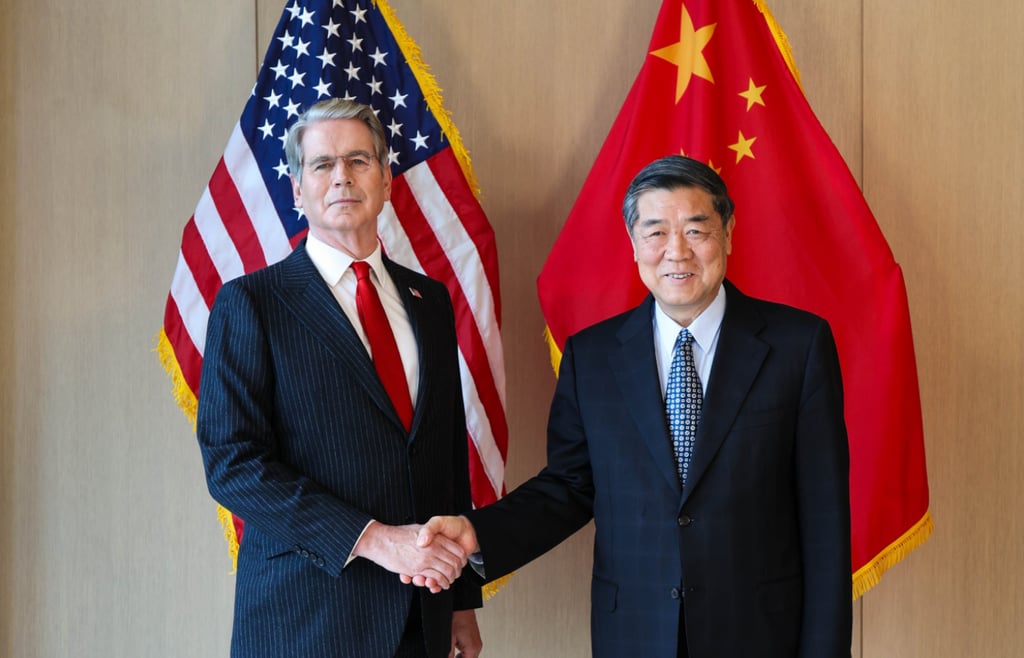
Separately, Treasury Secretary Scott Bessent said the US and China discussed creating an AI dialogue with a “notification mechanism” for incidents that reach a national security level.
Bessent said the goal is greater transparency between the world’s two leading AI powers. “We want a shared vision of common goals and common threats,” he said, per The Associated Press.
The proposal is expected to be considered as Trump and Chinese President Xi Jinping prepare to meet later this week. Chinese state media said the two sides discussed AI, although its account did not include Bessent’s description of a notification mechanism.
Two approaches to the same problem
Taken together, the developments show a more complicated US AI strategy emerging. Domestically, Trump is emphasizing rapid development, economic gains and American leadership while proposing a new structure to monitor harmful uses. Internationally, his administration is exploring a communication channel with China for serious AI incidents.
The distinction matters because an AI incident can cross borders even when the companies or governments involved do not. A notification system could provide an early channel for governments to discuss serious events, but the proposal remains preliminary and does not establish common safety rules.
The US-China dialogue also faces broader strategic distrust and comes amid continuing US controls on exports of advanced AI chips and semiconductor equipment to China.
What IT leaders should watch
Neither proposal immediately changes how businesses develop or deploy AI. For now, IT and security leaders should watch for details about which incidents companies might be expected to report, which agency would receive those reports and whether participation would be mandatory.
The unresolved questions are substantial. Trump has not defined the AI Force’s authority or relationship to existing agencies, while the US-China notification mechanism remains preliminary.
If either proposal moves forward, its practical value will depend on clear reporting thresholds and defined lines of authority. Those details will determine whether the initiatives help companies respond to serious AI incidents or simply add another layer of government oversight.
Read more: The G20’s support for using existing regulators to oversee AI shows how governments are balancing faster development with demands for stronger safeguards.
Read the full article here