


“I’ve seen AIs of me sitting with Obama talking about insane things that we never did”.
George Clooney is clearly concerned about the power that AI has to produce deepfakes that are so real you can’t tell that they’re fake, especially when they contain images of world leaders.
“We were never there having a conversation. It is me doing it. And okay, that’s a joke for people. But what happens if you see a video of Putin saying he’s launched the first nuclear strike [against] the United States — how do you discern it?”
Latest Videos FromTechRadar
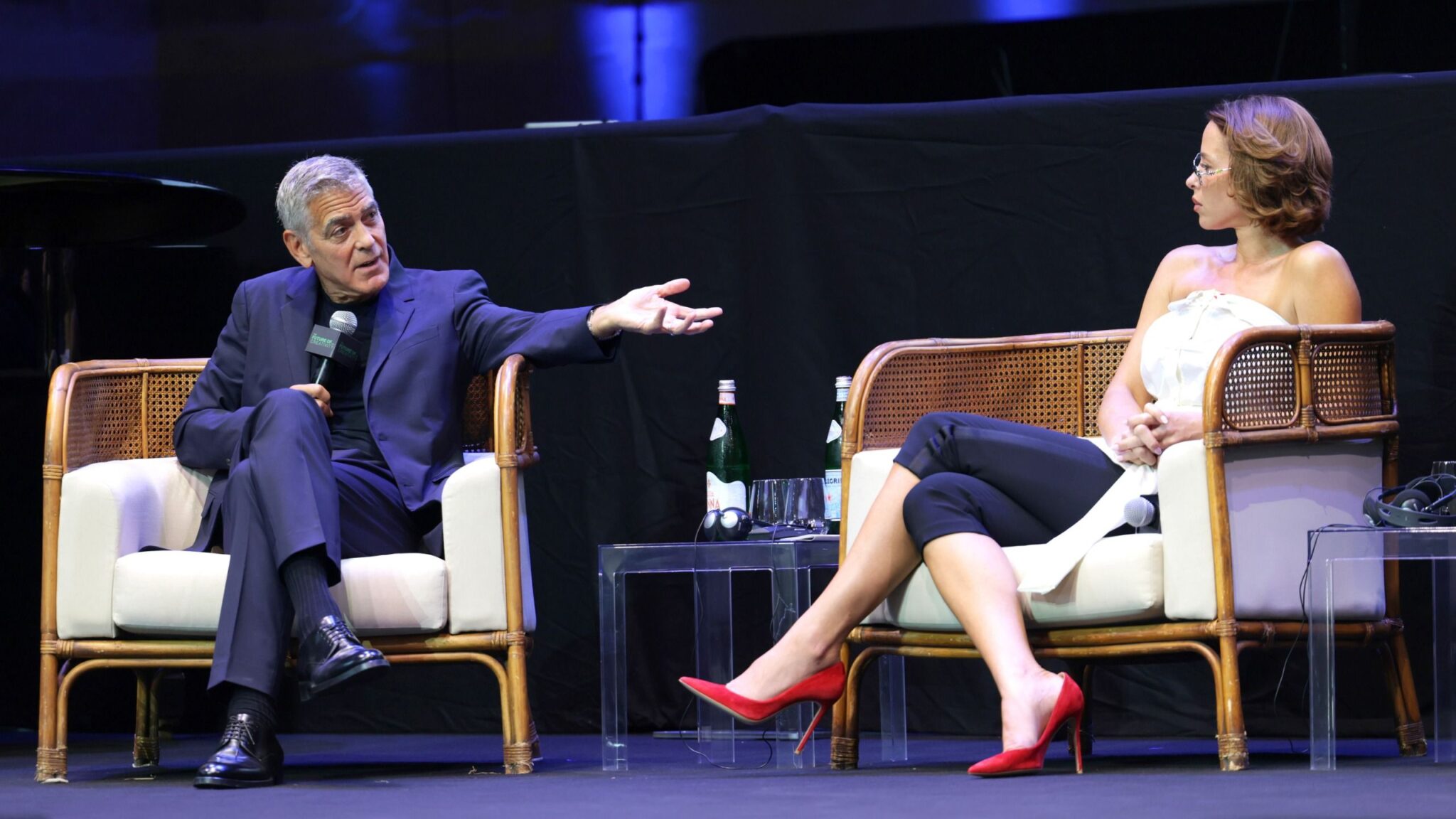
Clooney was raising his concerns in Venice at the ‘The Future of… Creativity’ symposium presented by Finch & Partners and Creative Artists Agency (CAA). George Clooney and Maggie Gyllenhaal were among the international group of artists, filmmakers, musicians, cultural thinkers and technology leaders who gathered to discuss how technology is changing creative work, and the people who produce it.
The panel discussions were moderated by the journalist and broadcaster Emily Maitlis, who asked Clooney, “is there a fear of replacement, as an actor?”
Clooney acknowledged the risk, but also the problem inherent with AI actors, which is that it’s going to be hard to create an AI movie star: “Well, there’s two different conversations we’re talking about. As an actor, there will be some portion of that that will be replaced. AI will have the exact same problem that I have as a director, and that we all have as filmmakers, which is how you make a star, because that’s hard to do.”
‘And it fundamentally did not work’
Actor and filmmaker Maggie Gyllenhaal cited a recent experience with AI on her upcoming short film Flesh Impact about Marilyn Monroe, commenting: “I did try working with AI on this project […] I have a 100-year-old Marilyn Monroe, and then I also have flashbacks to Marilyn Monroe when she’s in her 30s. I have Dakota Johnson playing her, who is an incredible artist in my opinion. And the people who commissioned this project asked me to use AI […] and I went for it. I was like, ‘All right, I’m curious. I don’t know. Let’s see.’ And it fundamentally did not work.”
Ultimately, Gyllenhaal found that AI was not able to replicate the nuances of human performance and emotion.
“The idea was that we trained it on her. We then put her face on Dakota’s face; we worked very hard at it, and in the end, they threw it away because [… ] Dakota playing Marilyn Monroe, was so much more moving, human, alive. All the reasons we decided to make this project to begin with”.
It’s perhaps reassuring to hear filmmakers say that while a fabricated AI clip can be convincing enough to mislead someone, it can’t deliver the emotional depth a director wants from a performance. Gyllenhaal’s experience offers a reason for creative optimism, even as Clooney’s raises concerns about what audiences will believe.
Follow TechRadar on Google News and add us as a preferred source to get our expert news, reviews, and opinion in your feeds.
Read the full article here