







Finding a task management app that supports my team’s workflows has meant dealing with the hassle of trying several options. Some are better for personal planning, while others handle complex workflows much more effectively. To save you time, I’m sharing my personal picks for the best task management software and the specific areas where each one performs best.
| monday | Best for visual task tracking | ||
| Jira | Best for sprint management | ||
| ClickUp | Best for detailed task organization | ||
| Asana | Best for cross-team task coordination | ||
| Wrike | Best for approval-based workflows | ||
| Smartsheet | Best for spreadsheet-style task planning | ||
| Trello | Best for Kanban task management | ||
| Notion | Best for connected tasks and notes | ||
| Todoist | Best for personal task planning |
Why you should trust TechRepublic
I’ve spent the past four years testing nearly 20 task management platforms, and some of them have become part of my workflow. Writing dozens of PM software guides for businesses of all sizes taught me what individuals and teams need from these tools beyond the marketing pitch. I also build custom scoring rubrics for each review to ensure fairness and that selected platforms get evaluated on the same criteria.
Marianne Sison
Senior Staff Writer for Project Management
1. monday work management: Best visual task tracking
My rating: 4.93 / 5
Why I chose monday Work Management
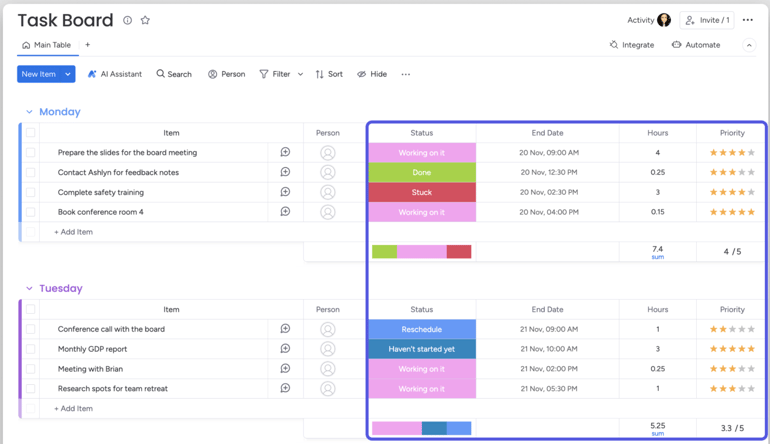
monday Work Management stands out as my top choice because it is fundamentally built around customizable visual workflows. While visual boards are common among competitors like ClickUp and Asana, they tend to get cluttered once projects expand. With monday, the interface stays relatively clean even as you add more automations, dependencies, and task lists.
Another strength is the drag-and-drop functionality and grid-style boards. As a first-time user, I adapted quickly because the interaction feels similar to Trello and spreadsheet apps, but with more advanced project tracking.
Even when managing large lists of tasks, monday’s color-coded columns make project information easy to scan at a glance. The dashboards further enhance visual tracking through widgets that display workload distribution, project progress, budget tracking, and timeline health in real time. Executives and team leads often prefer this setup because they can monitor multiple projects from a single screen.
| Pros | Cons |
|---|---|
| ✅Flexible column system for custom fields ✅Multi-step automation actions ✅Save any board as a custom template |
❌Seat block model forces small teams to pay for “zombie seats” ❌Essential task management features are paywalled ❌Initial admin setup can be overwhelming |
monday pricing
- Free: Up to 2 users — Includes 3 boards, task tracking, basic column types
- Basic: $9/user/month — Adds unlimited boards and items, unlimited viewers, dashboard, file storage
- Standard: $12/user/month — Adds timeline and Gantt views, calendar view, basic automation, integrations
- Pro: $19/user/month — Adds time tracking, private boards for task control, advanced automation limits, formula columns
- Enterprise: Custom pricing — Adds advanced permissions, enterprise-scale task dashboards, audit logs, higher automation and integration limits
Standout features
- Organize your task list via drag-and-drop functionality
- Share files, tag teammates, and leave comments within each task.
- Use a timer or add a time range to record and track task durations.
- Add text, formulas, links, and the address of a specific location within columns.
2. Jira: Best for sprint management

My rating: 4.87 / 5
Why I chose Jira
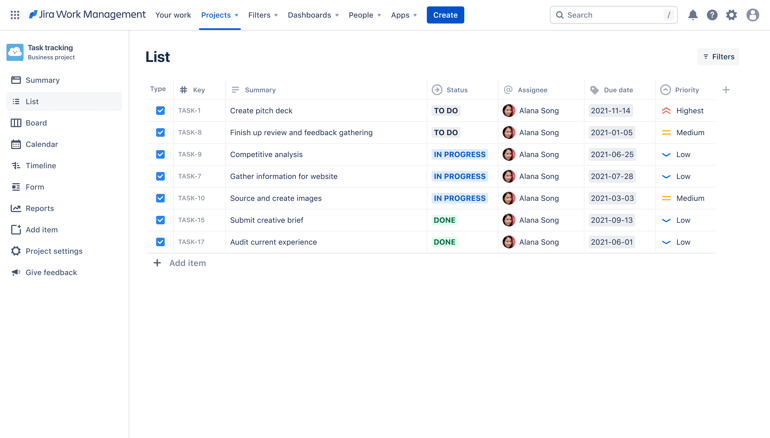
Jira works best for sprint management because the platform was designed specifically for Scrum and Agile workflows. From backlog grooming to sprint retrospectives, everything exists within the same workspace, which makes managing Agile projects more efficient for dev teams.
For sprint planning, teams can easily prioritize backlog items through drag-and-drop boards, estimate workloads using story points, and assign tasks based on team capacity. I can also apply automations for issue transitions, sprint closures, blocker notifications, and workflow updates.
Another reason I prefer Jira over many competitors is its reporting tools. Burndown charts and velocity reports update automatically, which makes it easier for me to detect scope creep or uneven workload. I also have the option to integrate the platform with Confluence to connect sprint tasks with sprint documentation, meeting notes, and project requirements.
| Pros | Cons |
|---|---|
| ✅Connects with 3,000+ apps ✅Comprehensive Agile reports ✅Deploy pre-configured boards, fields, and workflows instantly. |
❌Customization makes workflows hard to manage ❌Requires knowledge in Agile workflows ❌Steep price jump between plans |
Jira pricing
- Free: Up to 10 users — Includes unlimited tasks, board/backlog/timeline views, reporting dashboards
- Standard: $9.05/user/month — Adds user roles, guest access, and AI features
- Premium: $18.30/user/month — Adds cross-team roadmaps, dependencies, custom issue hierarchy, and unlimited storage
- Enterprise: Contact sales — Adds unlimited automation rule runs, up to 150 sites, and analytics
Standout features
- Assign story points to backlog items to assess effort and complexity.
- Control what users can see and how they access specific issue types or projects.
- Set a dedicated forum to discuss and review completed features with other developers.
- Access a variety of Agile reports such as velocity charts, release burndown, and sprint reports.
3. ClickUp: Best for detailed task organization

My rating: 4.66 / 5
Why I chose ClickUp
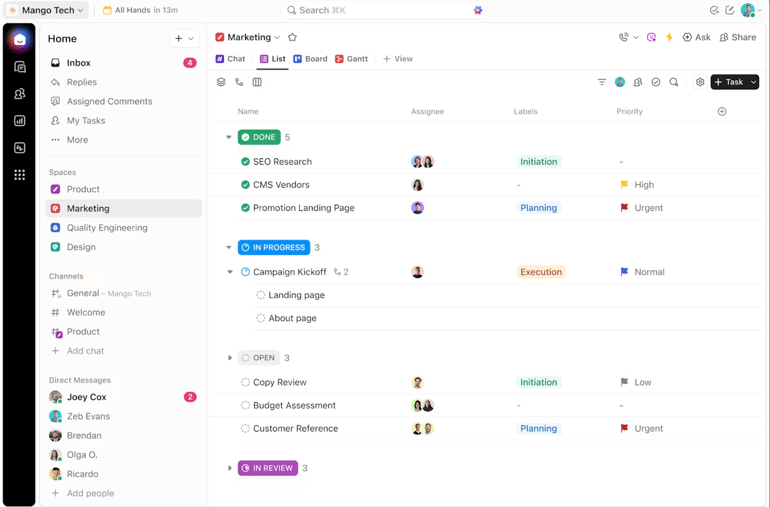
ClickUp’s strongest use case lies in its hierarchy system. I can organize work through nested categories such as Workspaces, Spaces, Folders, Lists, Tasks, and Subtasks. In my experience, this setup works especially well for large workspaces because I can separate projects by department, client, workflow, or business function without adding visual clutter.
I often use subtasks and nested subtasks to break large projects into smaller action items, which makes task ownership and progress tracking much easier. Within each task, I can customize details by adding priorities, tags, due dates, assignees, dependencies, and custom fields based on my workflow.
Another reason I prefer ClickUp is how it connects team discussions to each task. Descriptions, comments, attachments, and documents are within the same work item, so my team spends less time searching for project context.
| Pros | Cons |
|---|---|
| ✅Over 15 project views ✅Hierarchical task structure ✅Generate tasks with contextual-AI |
❌Portfolio capabilities could be better ❌Requires in-depth training for effective use ❌Can feel overwhelming due to the sheer number of features |
ClickUp pricing
- Free Forever: — Includes unlimited tasks, multiple task views (list, board), basic task statuses, task comments, mentions
- Unlimited: $7/user/month — Adds Gantt charts, time tracking, custom fields, resource management
- Business: $12/user/month — Adds sprint points, advanced automation, workload management, time tracking, task dependencies
- Enterprise: Custom pricing — Adds advanced permissions, custom roles, enterprise-scale task management controls
Standout features
- Assign tasks to a team or multiple people for shared responsibilities.
- Write your task descriptions with the help of ClickUp’s AI agents
- See the running log of task activity, such as comments and task updates.
- Divide work items into subtasks and nested subtasks.
4. Asana: Best collaborative workflow management

My rating: 4.56 / 5
Why I chose Asana
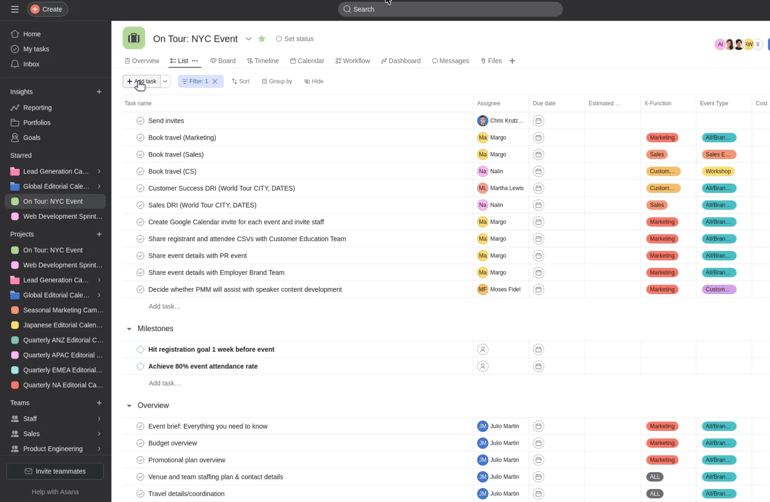
Most project management tools rely heavily on third-party integrations for team communication, but Asana integrates collaboration into the platform rather than treating it as a separate feature.
I can add collaborators manually or use @mentions to notify specific people about updates, discussions, or task changes. Smaller touches like likes and appreciations give users a simple way to acknowledge work or celebrate progress.
The Inbox has become my go-to feature because it centralizes all my notifications, mentions, task assignments, and project updates, which matters when I’m managing several boards at once. The filters let me sort updates by task, collaborator, or project, so I’m not stuck scrolling through every notification.
| Pros | Cons |
|---|---|
| ✅Update multiple templates simultaneously ✅Convert files into tasks ✅Clean and less intimidating interface |
❌Monthly plans are significantly pricier than market averages ❌Lacks real-time customer support ❌Leans toward traditional project management |
Asana pricing
- Personal: 2 users — Includes unlimited tasks, list/board/calendar views, status updates, and unlimited storage (100MB/file)
- Starter: $10.99/user/month — Adds timeline and Gantt views, forms, custom fields, unlimited automations, AI credits, workflow builder
- Advanced: $24.99/user/month — Adds portfolios, goal tracking (OKRs), time tracking, formulas, and approval workflows
- Enterprise: Custom pricing— Adds workload management, capacity planning, and admin controls
Standout features
- Update a single task across multiple projects and sync changes automatically.
- Get a personalized view of all your tasks in one place.
- Save time with ready-made task templates built for specific use cases.
- Set task dependencies and notify assignees when work is unblocked.
5. Wrike: Best for approval-based workflows

My rating: 4.44 / 5
Why I chose Wrike
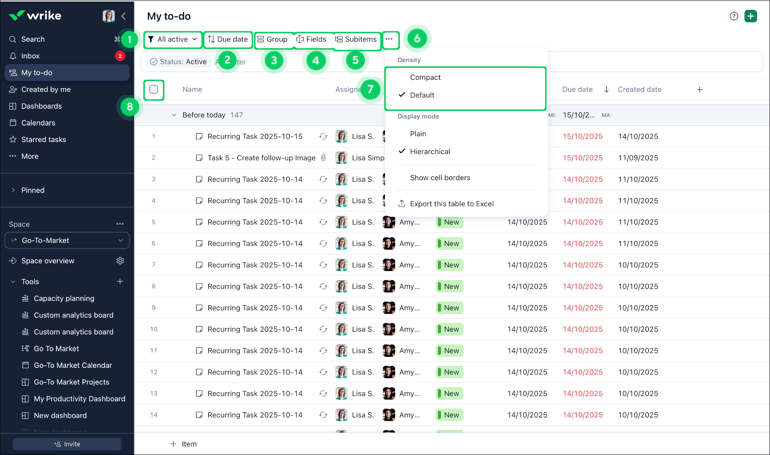
Wrike’s approval capability works best for marketing teams managing creative assets and review workflows. Approvals are built directly into tasks, folders, and projects, so I never have to rely on a separate tool just to get a sign-off.
Setting up the approval process is fairly straightforward. I can assign approvers, attach due dates, and automate status changes through request forms. For projects with different requirements, the conditional approval feature routes work automatically to the designated reviewer.
Wrike logs approval history and reviewer activity within a task. Approvals can trigger automatically when task statuses change, and completed reviews can immediately move work into statuses like “Approved” or “Changes Needed.”
| Pros | Cons |
|---|---|
| ✅Specialized templates for tasks & folders ✅Generate tasks from emails/project data ✅Supports four types of task dependencies |
❌Plan upgrade is necessary for full functionality ❌Steep learning curve ❌Strict user limits on lower-priced plans |
Wrike pricing
- Free: Unlimited users — Includes task management, folder hierarchy, board/table view, custom views
- Team: $10/user/month — Adds Gantt charts, dashboards, basic AI features
- Business: $25/user/month — Adds resource management, AI agents, forms, workflow automation
- Pinnacle: Custom pricing — Adds budgeting, advanced security
- Apex: Custom pricing — Adds bi-directional integrations, Wrike Sync, enterprise-scale automations with Wrike Integrate
Standout features
- Assign the required number of effort to complete a task
- Get a weekly summary of the tasks you worked on, along with the time spent on each one.
- Enable one task to exist across multiple teams or workflows through cross-tagging
- Create a Wrike task without leaving a Slack channel
6. Smartsheet: Best for spreadsheet-style task planning

My rating: 4.39 / 5
Why I chose Smartsheet
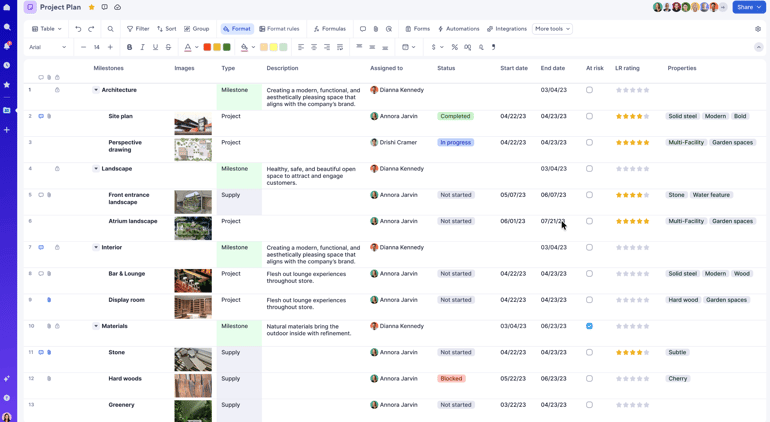
Smartsheet enhances the traditional spreadsheet experience by supporting workflow management across the project lifecycle. Rows and columns are not just placeholders for data, but they also serve as project records tied to deadlines, assignees, calculations, approvals, attachments, and status updates.
Teams can build formulas, automate recurring actions, and apply conditional formatting. Beyond text and functions, teams can also leave comments, attach files, send update requests, and receive automated notifications directly within the sheet itself.
The template library also standardizes recurring processes such as budgeting, reporting, and resource planning, which makes it ideal for data-heavy operations.
| Pros | Cons |
|---|---|
| ✅Rich library of spreadsheet templates ✅Formula-based conditional logic ✅Highly adaptable for various workflows |
❌Advanced workflows often require extra training ❌Can be complex to use for non-spreadsheet users ❌No workload view |
Smartsheet pricing
- Pro: $9/user/month — Includes rich formulas, Gantt/board/calendar views, unlimited sheets and reports
- Business: $19/user/month — Adds timeline view, workload tracking, unlimited automations
- Enterprise: Custom pricing — Adds scenario planning, AI formulas and charts, project portfolios
- Advanced Work Management: Custom pricing — Adds Control Center for portfolio scaling, Dynamic View for granular sharing, Data Shuttle sync
Standout features
- Set up automation rules for auto-assigning tasks and sending reminders
- Automatically adjust timelines when the task sequence changes
- Customize forms to standardize how other users submit task requests
- Link data across several sheets through rich formulas
7. Trello: Best for Kanban task management

My rating: 4.33 / 5
Why I chose Trello
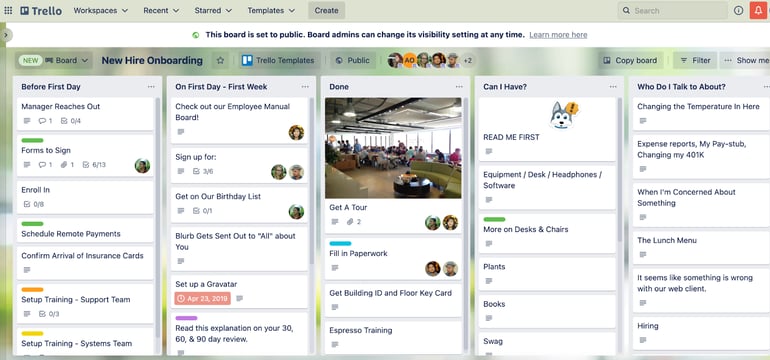
Trello works best for lightweight Kanban workflows because it is simple enough to adopt quickly but flexible enough to support more demanding workflows. Beyond drag-and-drop task tracking, Trello includes multiple project views, workflow automation, third-party plugins, and a digital planner.
Each Kanban card can hold the full context of a task, such as due dates, labels, attachments, checklists, and task discussions. The platform also follows a pull-based workflow, where team members move cards into active stages only when they have capacity. If WIP limits are exceeded, Trello immediately alerts the user.
Within Trello, I can also automate repetitive actions like moving cards, assigning members, updating due dates, or triggering notifications when specific board conditions are met. If I need to connect file management or analytics tools, I can use Power-Ups to integrate third-party tools into the board. For performance tracking, Trello also supports cycle time tracking, cumulative flow diagrams, throughput analysis, and burndown charts.
| Pros | Cons |
|---|---|
| ✅Ideal for lightweight task tracking ✅Excellent value for basic task lists ✅Intuitive drag-and-drop functionality |
❌Lacks advanced native dependencies functionality ❌Doesn’t support nested comments ❌Inability to apply global updates across all boards |
Trello pricing
- Free: Includes unlimited cards, unlimited Power-Ups per board, assignees, due dates,
- Standard: $5/user/month — Adds unlimited boards, advanced checklists, custom fields, card mirroring
- Premium: $10/user/month — Adds timeline/calendar/table/map views, AI features, board collections
- Enterprise: $17.50/user/month — Adds org-wide permissions and multi-board guests
Standout features
- Organize tasks into boards, lists, and cards to track progress across workflows.
- Add due dates, assignees, and checklists to manage task ownership and completion.
- Automate repetitive task actions with Butler automation rules.
- Customize task workflows with labels and card details for better tracking.
8. Notion: Best for connected tasks & notes

My rating: 4.30 / 5
Why I chose Notion
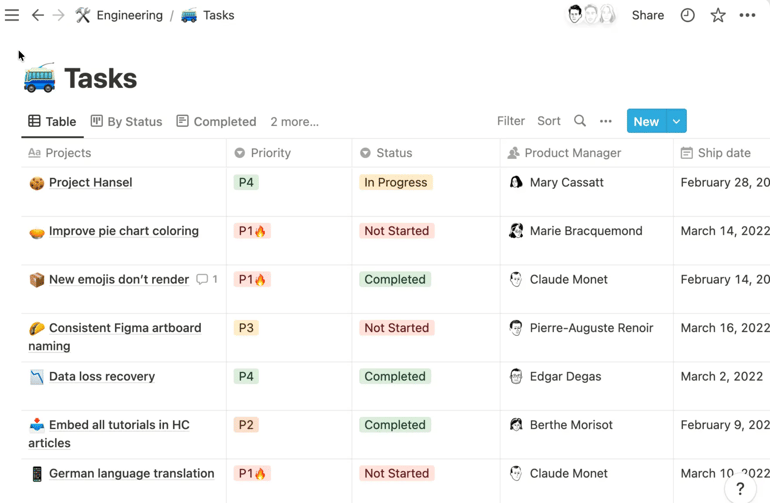
The database structure is the main reason I prefer Notion over traditional task managers. It gives me a single workspace for project management and documentation because tasks exist as database entries that link to meeting notes, project docs, roadmaps, and goals.
The “My Tasks” view collects all of my assigned tasks from multiple databases into one personal dashboard. Teams can comment, edit documents, and assign tasks inside workspace pages.
Notion also handles company knowledge better than most task management platforms. Wikis, onboarding docs, project notes, and tasks are stored in a single workspace, while nested pages and databases can also nest inside other pages, which keeps large project systems organized.
| Pros | Cons |
|---|---|
| ✅Excellent document-task integration ✅Extensive community templates for a range of use cases ✅Highly rated for flexibility |
❌Lacks out-of-the-box resource management ❌Doesn’t bundle AI features into its pricing ❌Lacks native project management tools |
Notion pricing
- Free: Includes databases (subtasks, dependencies, custom properties), Notion Calendar, 7-day page history, basic forms
- Plus: $10/user/month — Adds unlimited collaborative blocks, unlimited file uploads, 30-day page history, unlimited charts
- Business: $20/user/month — Adds AI features, database permissions, private teamspaces, 90-day page history, SAML SSO
- Enterprise: Custom pricing — Adds user provisioning (SCIM), advanced security and controls, audit logs, unlimited page history
Standout features
- Track tasks in customizable databases with views like list, board, and calendar.
- Assign tasks, set due dates, and manage status
- Create reusable task templates to standardize workflows across projects.
- Link related tasks and pages to connect related project work
9. Todoist: Best for personal task planning

My rating: 3.46 / 5
Why I chose Todoist
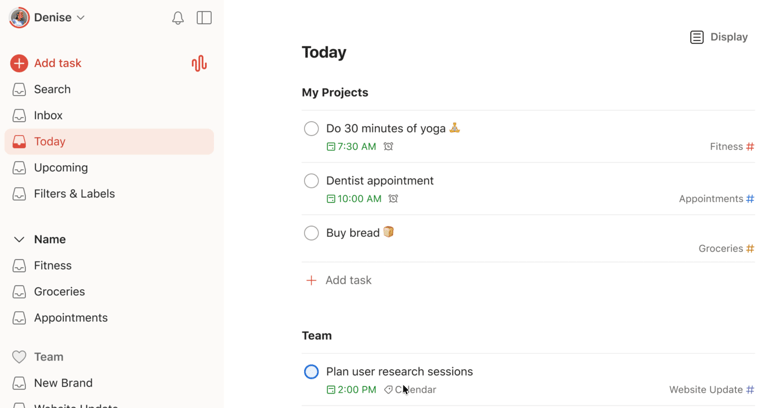
Todoist is my go-to app for organizing my daily activities because adding items takes little effort. I can type natural phrases like “Pay bills every Friday” or “Call dentist next Tuesday at 3pm,” and the app automatically creates a task record from plain language input. Projects, sections, labels, and priority levels separate routines, errands, and work tasks. When tackling larger goals, I use subtasks to divide work into smaller action items instead of treating them as a single task.
The Karma system tracks completed tasks and activity streaks over time, which gives me a better sense of how consistently I stay on top of responsibilities. What I appreciate most is the accessibility of Todoist across devices. I can check off tasks from desktop, mobile, browser, or a wearable, and everything syncs automatically across devices.
| Pros | Cons |
|---|---|
| ✅Natural language input simplifies task creation ✅Setup doesn’t require technical expertise ✅Highly affordable for individual use |
❌Fewer template options and limited template support ❌AI functionality is insufficient for complex workflows ❌Lacks native Gantt charts |
Todoist pricing
- Beginner: — Includes 5 personal projects, task reminders, flexible list and board layouts, three filter views
- Pro: $5/user/month — Adds calendar layout, task duration, custom task reminders, 150 filter views
- Business: $8/user/month — Adds shared team workspace, activity logs, shared templates
Standout features
- Organize tasks into projects, sections, and subtasks to structure your workload.
- Set recurring due dates and task reminders
- Use priority levels to focus on the most important tasks first.
- View all assigned tasks in a unified Today or Upcoming view for better planning.
My methodology
To ensure a balanced evaluation of the best task management software, I created a scoring rubric that measures each platform across pricing, features, usability, support, and overall product quality.
General features (25%): I looked at core task management features like dependencies, recurring tasks, automation, project templates, collaboration tools, and workflow views. I also considered how well each platform handled different project structures through Kanban boards, timelines, calendars, dashboards, and workload tracking.
Pricing (20%): I evaluated pricing based on free plan availability, monthly per-user costs, AI feature access, and total cost of ownership. Platforms scored higher when pricing was upfront and did not require expensive upgrades to unlock core functionality.
Advanced and niche features (20%): For advanced features, I reviewed AI automation, reporting tools, integrations, portfolio management, and resource planning capabilities. Higher scores went to platforms that supported predictive reporting, advanced automation, and enterprise-level integrations.
Expert score (15%): My expert score combined hands-on testing, feature depth, pricing value, third-party review averages, and overall research accessibility. I also factored in how well each platform performed across different team sizes, workflows, and operational needs.
Support (10%): I assessed customer support through available support channels, educational resources, community engagement, and security controls. Platforms performed better when they offered responsive support, active communities, strong onboarding materials, and enterprise-grade security features.
Ease of use (10%): I focused heavily on how easy it is for users to learn, customize, and navigate the platform. Higher ratings went to tools that balanced advanced customization with intuitive navigation.
How to choose the best task management software
Choosing the best task management software involves factors like your team’s workflow, the complexity of your projects, and how much customization you actually need. Let’s take a look at what I focus on when evaluating these tools so you can find one that fits how you work.
Match the tool to your workflow
I always start by identifying how my team actually operates, whether that’s sprints, Kanban, creative reviews, or simple to-do lists. Forcing a workflow into the wrong platform creates a learning curve, so I pick tools that support the process we already use rather than adapting our work to fit the software.
Consider the features you need
Some teams thrive with flexible boards and minimal setup, while others need dependencies, custom fields, and strict permissions. Before committing to a platform, I think about whether my team benefits from core features or if the work requires deeper structure.
Test collaboration features with your actual team
Task management goes beyond organizing work; it’s also about how the team coordinates around those tasks. I check whether comments, mentions, file sharing, and notifications actually support collaboration.
Factor in integrations with tools you already use
I pay attention to whether the platform connects with an existing app stack, such as email, calendars, file storage, and messaging. Switching between disconnected tools wastes time, so native integrations or solid API support matter more than I initially thought.
Start with a small-scale project during the trial period
I never evaluate task management software with fake data or hypothetical workflows. I run an actual project through the trial so I can see how it handles tasks, bottlenecks, and team activity before deciding whether it’s worth keeping long-term.
FAQs
What’s the difference between free and paid task management software?
Free task management software typically limits advanced features like automations, custom fields, timeline views, reporting, and integrations. Paid plans unlock workflow automation, guest access, priority support, and higher storage limits. Teams managing complex projects or requiring detailed analytics usually need paid plans, while individuals and small teams often function well on free tiers.
What is the best task management software for Agile and sprint planning?
Jira is the best task management software for Agile workflows because it was built specifically for Scrum and Kanban methodologies. It supports sprint planning, backlog management, burndown charts, velocity tracking, and story point estimation.
Which task management software is best for personal use?
Todoist is the best task management software for personal use because it supports natural language input, recurring tasks, and cross-platform sync without requiring team collaboration features. Notion works well for individuals who want tasks connected to notes and documentation. Both offer free tiers that cover most personal productivity needs.
Read the full article here