


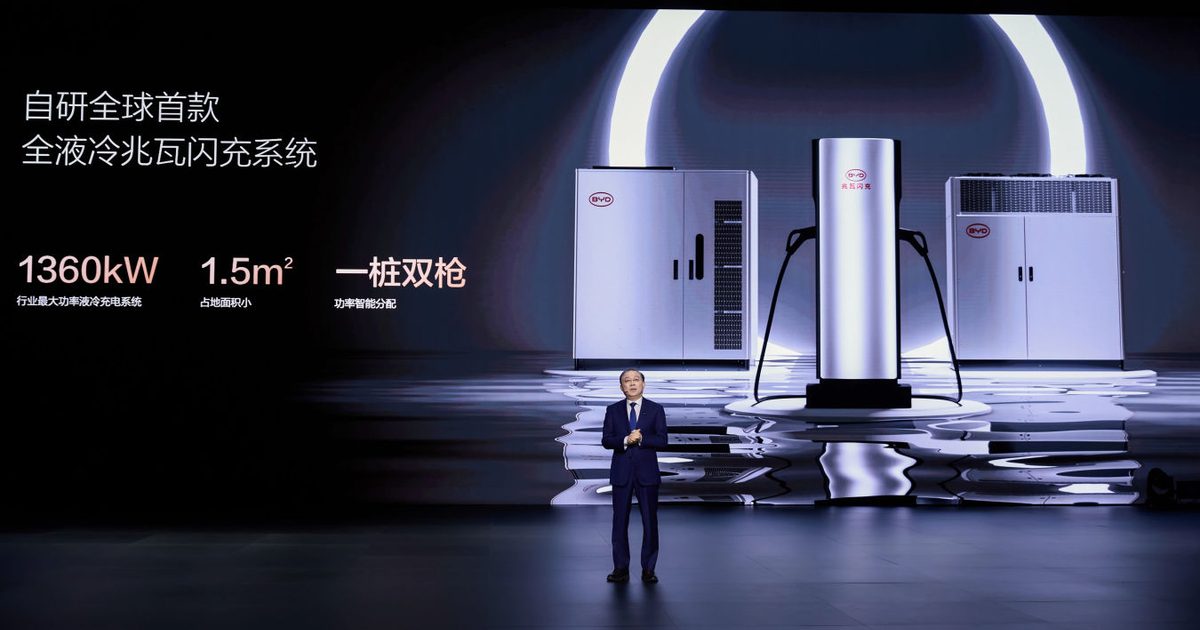

Tesla has a new problem in China. BYD is finally rolling out its megawatt flash chargers at scale, and the specs leave Superchargers in the dust. These new units push 1360kW, enough to add roughly 400 kilometers of range in about five minutes.
The timing matters. BYD has talked up this technology before but held back on deployment. Now construction is visibly underway based on the social media posts as reported by Car News China, and the company is betting that ultra-fast charging will pull more drivers to its EVs.
What 1360kW actually buys you
The numbers are hard to ignore. BYD’s system runs at 1000V and 1000A to hit that peak, a level Tesla hasn’t reached with its Superchargers. The company claims “1 second 2 kilometers,” which trims a 400km top-up to roughly five minutes plugged in.
Liquid cooling keeps the hardware from melting under that load. It runs through both the cables and the terminal itself, so you can sustain max current without overheating. The design also solves a physical annoyance, dual cables suspended from a pulley system. No more wrestling heavy lines or hunting for a cord that reaches your port.
There is a smart grid play here too. The piles store electricity during off hours and release it when demand spikes. That keeps output steady at 1MW and dodges the expensive demand charges that kill fast-charger economics.
Where Tesla still leads and where it doesn’t
The gap is stark. Tesla’s V3 Superchargers cap out at 250kW. Even the upcoming V4 cabinets, expected to hit 350kW for Cybertruck, fall short of BYD’s 1360kW peak. Real-world charging curves will taper, but that headroom still matters.
Charging speed is now a purchase driver. Tesla built its empire on range and network size. BYD is attacking the other variable, how fast you can leave. Liquid cooling means these chargers can sustain high power without the sag that plagues older fast chargers.
Cost explains the delay. The source notes this hardware is expensive, which is why BYD took so long to scale. But with construction now visible, the company is signaling that the math finally works. Local battery storage also helps keep prices reasonable by flattening demand peaks.
What to watch in the charging war
Network size still favors Tesla. Superchargers are everywhere and they just work. But BYD is closing the gap where it stings most, the actual minutes you spend waiting. The pulley system and liquid cooling also suggest these piles might stay reliable as more EVs pile on.
The open question is rollout speed. BYD needs to prove it can build this network as fast as it builds cars. If the deployment matches the charger specs, Tesla might need an answer sooner than the next Supercharger update.
Keep an eye on construction timelines in China. That is where this race will be won or lost.
Read the full article here