


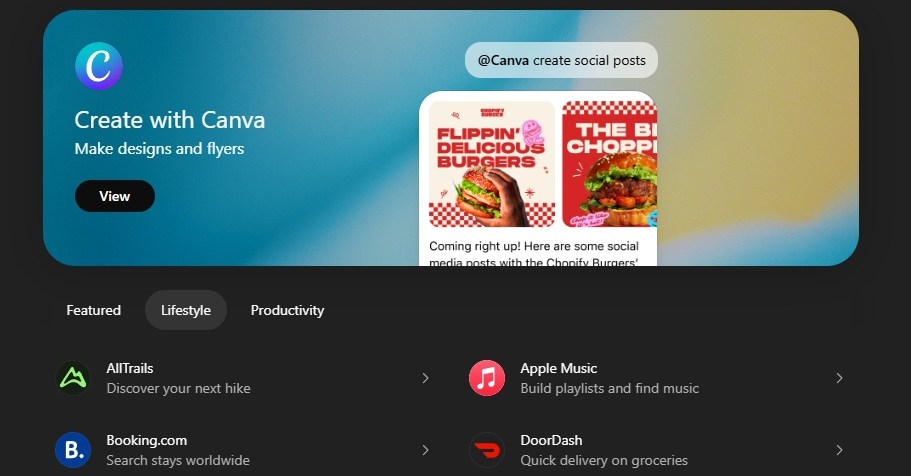

On Wednesday evening, OpenAI launched an App Directory to browse all the tools currently available and opened its SDK for developers to build new interactive experiences that operate within the bot’s UI. OpenAI CEO Sam Altman said last month that “We are planning to build the obvious features that you would expect for a robust platform over time,” and opening an app store is certainly a huge step in that direction.
Another change is that OpenAI has renamed the “connectors” that helped users pull data from other services (like Google Drive or Dropbox) into ChatGPT, and is now calling those apps too. As a support page explains, chat connectors are now “apps with file search,” deep research connectors are now “apps with deep research,” and synced connectors are now “apps with sync.” It also mentions that apps may use information from Memory, if it’s enabled, and for Free, Plus, Go, and Pro ChatGPT users, OpenAI may use information to train its models if the user has “improve the model for everyone” enabled.
For something more interactive, however, you’d look for ChatGPT apps like the ones that launched in October for Spotify, Zillow, and other services, some of which are now available in more markets, like Spotify in ChatGPT, which now works “in the UK, Switzerland, and throughout the EU.” New additions include an Apple Music app, which can help all users find music or make playlists and manage subscribers’ music libraries from within the chatbot, and DoorDash, which can turn “recipe inspiration, meal planning, and weekly staples into an actionable shopping cart” in the same window.
The answer to how all this helps OpenAI turn its AI business into something profitable is one thing it hasn’t explained yet. The announcement says only “We’re exploring additional monetization options over time, including digital goods, and will share more as we learn from how developers and users build and engage.”
Read the full article here