


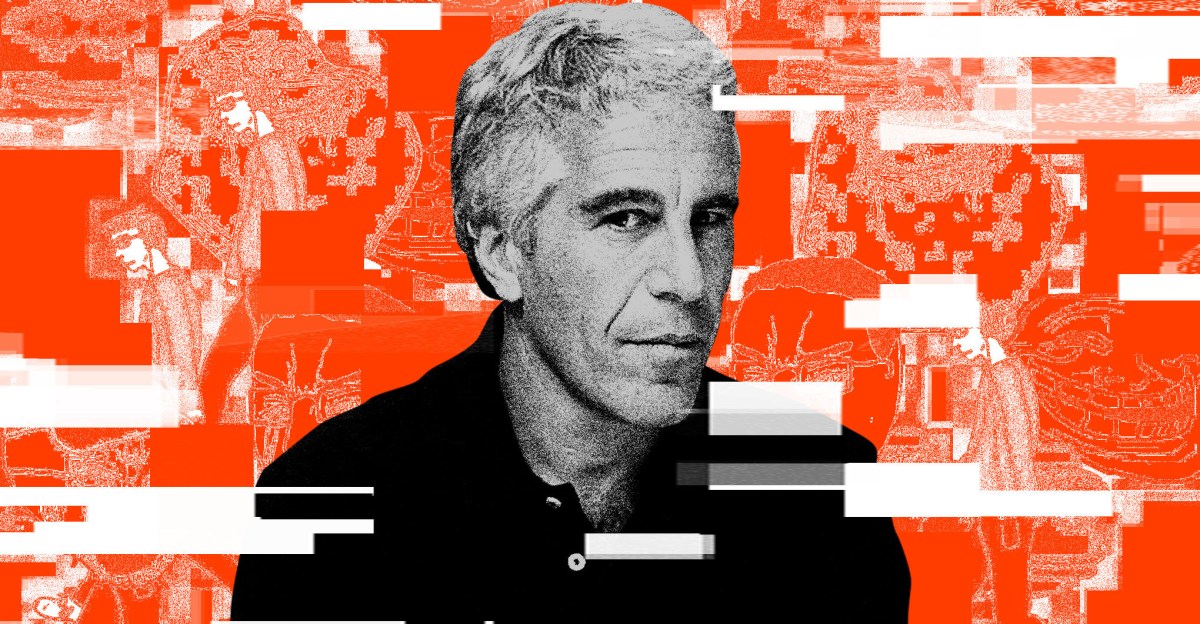

On October 24th, 2011, Jeffrey Epstein was emailing back and forth with Boris Nikolic, a biotech venture capitalist who would later be named as a backup executor of Epstein’s will. The two appeared to be discussing a meeting Nikolic had helped arrange between Epstein and “moot,” the screen name for Christopher Poole, who created the platform 4chan in 2003. Nikolic asked Epstein if he liked moot, and Epstein wrote back that he liked him a lot, thought he was very bright, and had driven him home.
All of these emails were published for the first time alongside 3.5 million other documents in the latest (delayed) release of Epstein files by the Department of Justice. Before then, it was not publicly known that Epstein had any encounters with Poole.
The day before Epstein discussed meeting him — possibly the day they had met — Poole created a new discussion board on the website called /pol/, short for “politically incorrect.” According to 4chan researcher Sal Hagen, Poole had previously shut down the board /new/ after bemoaning that it had been overrun by white supremacists. His creation of /pol/ may have been intended to contain 4chan’s most bigoted population, but instead, /pol/ came to define the platform.
The /pol/ board would go on to become one of the most infamous alt-right internet spaces ever, launching the QAnon conspiracy theory, developing modern white supremacist symbols like Pepe the Frog, and directly inspiring at least one mass shooter. When Donald Trump was elected president in 2016, /pol/ members celebrated it as a resounding victory for them.
Some posters think Epstein influenced Poole to create /pol/ during their 2011 meeting, although there’s no real evidence for that theory. The timing may just be surreal. But even if it’s coincidental, Epstein’s relationship to the center of the burgeoning, internet-driven “alt-right” movement wasn’t.
Epstein’s relationship with Poole seemed to flame out after that initial encounter, with failed attempts to set up further meetings documented in other emails. But years later, after 4chan helped propel Trump to victory, Epstein developed a much closer relationship with Steve Bannon, the chief strategist behind Trump’s 2016 campaign. As the former head of conservative outlet Breitbart News, which he called “the platform for the alt-right,” Bannon understood how to weaponize 4chan culture to get Trump in office. Later, after he was ousted from Trump’s administration in 2017, Bannon hosted QAnon-affiliated activists on his podcast. Bannon was so closely associated with the movement behind that conspiracy that Ron Watkins, who is believed to be the man behind “Q,” attempted to pin the whole thing on Bannon.
After parting ways with Trump, Bannon also started meeting with Epstein. The two took a mirror selfie together. Bannon was pictured in deep conversation with Epstein on opposite sides of a desk. There were even text messages with Bannon leading up to the day Epstein was arrested in 2019. A meeting with Bannon was one of the last plans Epstein canceled before being detained.
As with Poole, the nature of Epstein’s relationship with Bannon has only become known because of what’s in the Epstein files. As per the newly released documents, the two chatted about supporting far-right politicians in Europe, and Epstein also gave Bannon advice about how to frame Trump’s issues on the world stage. The journalist and bestselling author on Trump, Michael Wolff, had a close relationship with Epstein and sent him an excerpt from a 2019 draft for what would become Siege: Trump Under Fire, Wolff’s second book about Trump. The excerpt featured Bannon saying Epstein was “the one person I was truly afraid of coming forward during the campaign.” Epstein responded, “not surprising.”
There are also more than 1,000 Epstein files that mention Elon Musk, who, since 2022, has arguably turned Twitter into a larger, more mainstream version of 4chan. Musk has vociferously denied wrongdoing with regard to his communications and relationship with Epstein, and has instead pointed his finger at Bannon and other men named in the files. Many prominent men in tech, including Palantir cofounder Peter Thiel, were repeatedly mentioned within the latest documents. Musk and Thiel are both tech billionaires and proponents of far-right politics. In one 2016 email exchange, Epstein told Thiel that Brexit, the UK’s withdrawal from the European Union, was “just the beginning.” When Thiel asked what Epstein meant, he responded, in part, “return to tribalism,” “counter to globalization,” and “amazing new alliances.”
“It’s like pseudoscience to try to justify a white supremacist worldview.”
“To me, the interesting part is [Epstein is] fascinated with these parts of the internet, he’s fascinated with various aspects of the far right, particularly supremacist ideas of race and IQ, it’s like pseudoscience to try to justify a white supremacist worldview,” said Jared Holt, a senior researcher at Open Measures, which monitors and analyzes the spread of extremism and disinformation.
Holt is skeptical that Epstein directly influenced the creation of 4chan’s /pol/, as conspiratorial posters online have surmised. But he said Epstein was “cozy” with figures like Bannon who championed its racist, misogynistic, nihilistic, anti-establishment sentiment to accrue more power of their own. And Holt said that a lot of people in “upper crust” society, the same waters Epstein swam in, were interested in meeting with Poole circa 2010. That year, the 4chan creator did a TED Talk about online anonymity, and the year before, Time magazine’s annual poll had named him the World’s Most Influential Person.
Within this era of social media quickly gaining influence, Holt said, Poole was “operating something that was pretty unlike what was emerging at that time.” As opposed to Facebook, Twitter, and YouTube, 4chan was entirely anonymous, and posts auto-deleted after a certain point (although archives can be tracked down). It produced a culture that Holt described as crude and rowdy, with users joining together to wreak havoc elsewhere online. The loosely organized “hacktivist” group Anonymous was born on 4chan, and mainstream media like police procedurals had a tendency to romanticize what these collectives were up to. In reality, groups of 4chan users did things like coordinate a campaign to make a racial slur trend in the No. 1 spot on Google, spread misinformation about Steve Jobs’ death that caused Apple stock to fall, and prompted an evacuation of New York City’s JFK Airport, all of which was detailed in a 2010 Washington Post article that Nikolic emailed to Epstein around the time he met Poole. “This article describes why I find moot interesting,” Nikolic wrote. “The potential for manipulation is huge.”
It’s easy to see why people have used these kinds of emails as a jumping-off point to suspect Epstein is behind every major social implication of 4chan. But the files show Epstein was more like a sounding board for the culturally disaffected elite than a puppet master of the similarly disaffected proletariat.
There are files, though, that seem to show Epstein’s own affinity for 4chan as a user. In one file, which contains at least 100 redacted photos, there is a screenshot of what appears to be Epstein’s computer, showing his Gmail inbox in a browser tab. On that browser, one of the first bookmarks is 4chan. In 2017, Epstein emailed a woman a 4chan link containing animated porn based on the video game series Five Nights at Freddy’s.
Epstein appeared to be using 4chan at its cultural height in the late 2010s, when, fittingly, a major part of the platform’s legacy was its contribution to the digital sexual abuse of women. 4chan was one of the places where nude photos of celebrities obtained from the notorious 2014 iCloud hack were posted, sparking a worldwide backlash against what’s colloquially called “revenge porn,” or more accurately, the nonconsensual distribution of intimate images. The same year, 4chan users contributed heavily to harassment campaigns against women in the video game industry, known as Gamergate.
Gamergate is mentioned a few times in the Epstein files, but it’s not because Epstein himself was using the term. It was mentioned in emails that were forwarded to Epstein about a Buzzfeed News investigation into sexual misconduct allegations against Lawrence Krauss, a prominent theoretical physicist who sought Epstein’s advice during the investigation. In his emails, Epstein quietly advised a number of men who were accused during the #MeToo movement while he plotted to try and restore his own reputation.
As Epstein’s business model leveraged more on the reactionary culture wars around internet culture, race, and gender, Poole abandoned the platform that created them. Poole sold 4chan in 2015, and the following year, he got a job at Google. Before leaving in 2021, Poole worked on Google’s social networking efforts and other teams, and he has existed in relative obscurity since. 4chan researcher Hagen, like Holt, is skeptical that Epstein is responsible for /pol/’s creation, although he said it was “quite remarkable” to learn about the meeting between him and Poole.
“We know at the time he was also talking to far-right, conservative leaders like Bannon, people who benefit far-right politics globally,” Hagen said. “It’s not that Epstein was a single orchestrator behind the scenes. He does have the means and the connections, but he seems more opportunistic.”
Read the full article here