
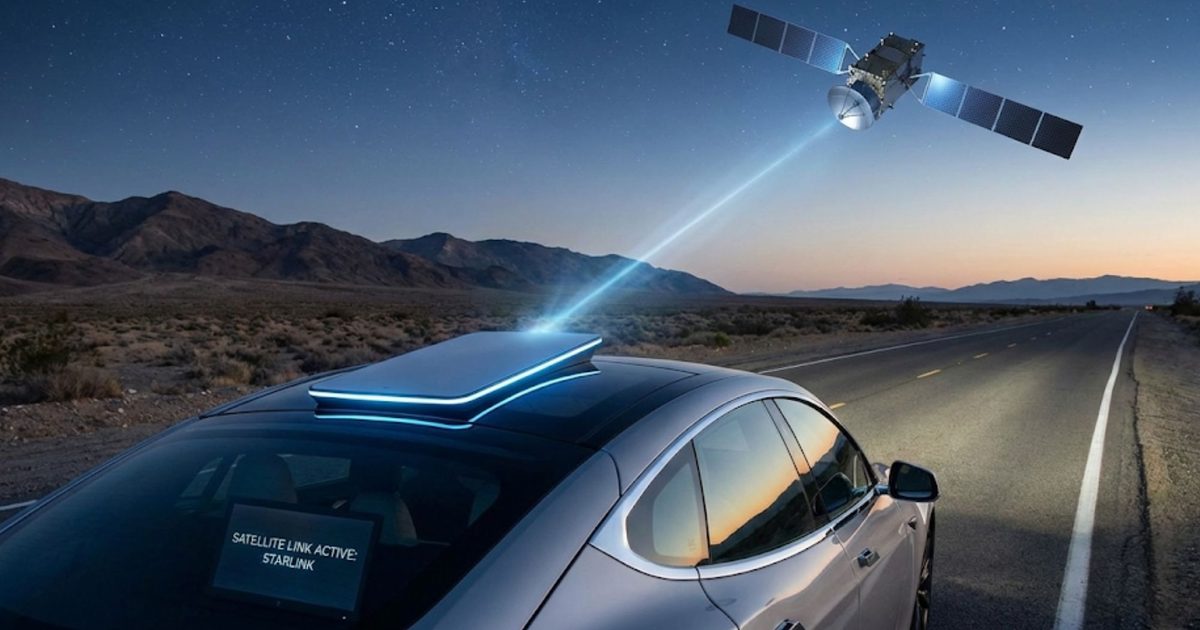

Tesla might be about to solve one of the biggest headaches for road trippers and rural drivers: the dreaded “no service” bar. A newly published patent reveals that the company is rethinking vehicle roof design from the ground up, moving away from traditional glass and metal in favor of materials that let satellite signals pass right through.
A New Roof Design Built for Satellite Connectivity
The patent (Pub. No. U.S. 2025/0368267) describes a vehicle roof made from radio frequency (RF)-transparent polymers. Essentially, Tesla wants to turn the top of your car into a window for data. While most of us don’t think twice about our car’s roof, standard materials like steel or even specialized glass can act like a shield, blocking or weakening the high-frequency signals needed for satellite internet.
To fix this, Tesla is looking at high-strength polymer blends like polycarbonate, ABS, and ASA. These aren’t just “plastic” roofs; these materials are already workhorses in the aerospace world because they are incredibly tough. The patent details a four-layer structure designed to be “RF-transparent” while still being rigid enough to keep the cabin quiet and safe.
Safety is a huge part of the filing. Tesla explicitly mentions that this new design still meets federal crash standards (FMVSS), addressing the obvious concern that a polymer roof might not protect you as well as a traditional one in a rollover. It’s a delicate balancing act – making a roof that’s “invisible” to satellites but “rock-solid” for the passengers inside.
The real endgame here is Starlink.
By integrating satellite connectivity directly into the car’s architecture, Tesla could effectively kill off dead zones. Whether you are driving through a remote mountain pass or camping off-grid, your car would stay online without needing a nearby cell tower.
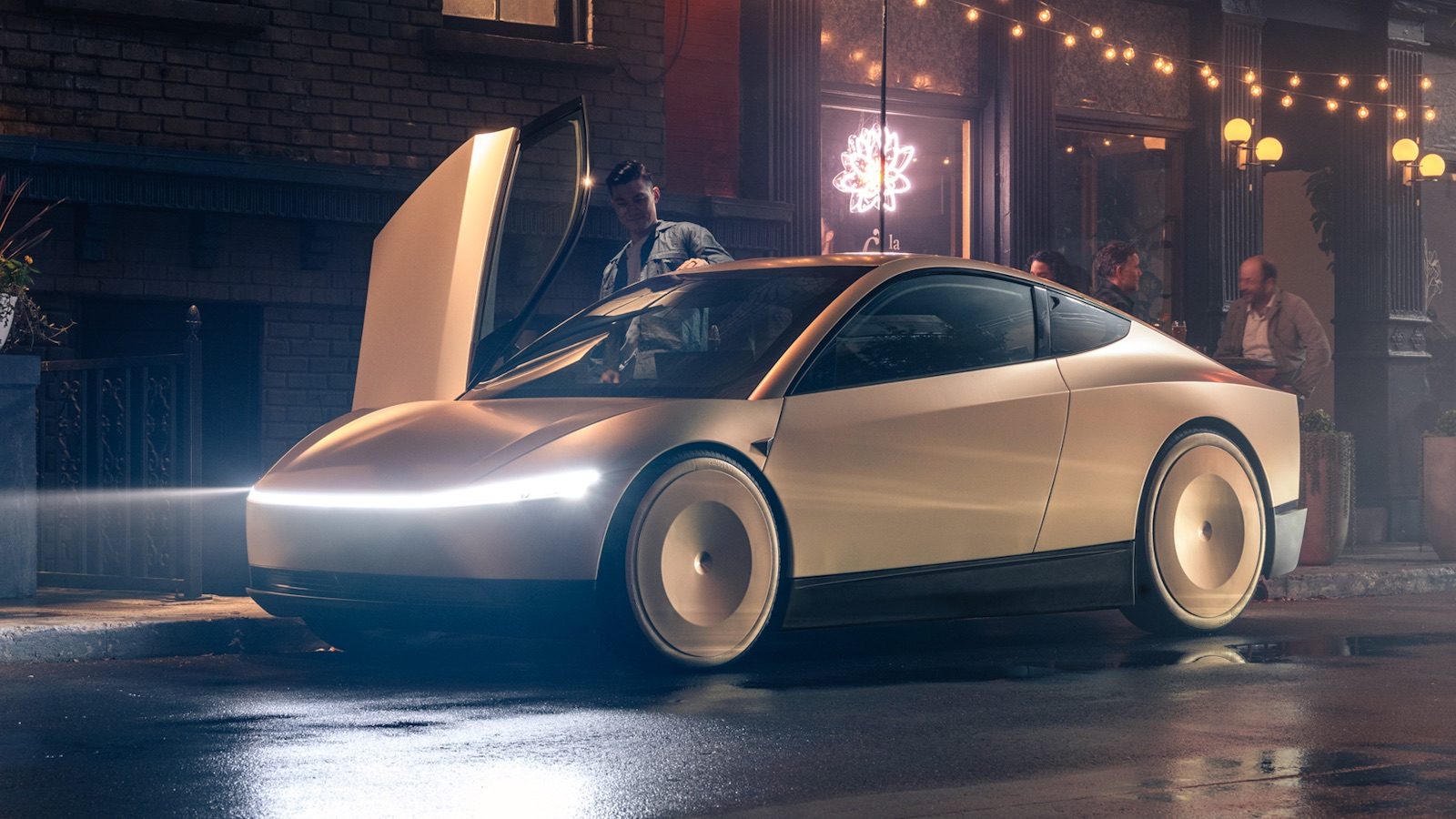
Beyond just letting passengers stream Netflix in the middle of nowhere, this is a strategic move for Tesla’s Robotaxi ambitions. An autonomous fleet needs a constant, unshakeable connection to the mother ship for remote monitoring and software updates. Satellite internet provides that “always-on” fallback that cellular networks just can’t guarantee.
We have already seen some “DIY” Tesla owners sticking Starlink Mini dishes under their glass roofs with mixed results. This patent suggests Tesla is ready to offer a much cleaner, factory-integrated version. While patents don’t always turn into products immediately, this one is a clear sign that Tesla wants its cars to be the most connected machines on the planet – even when there isn’t a cell tower for miles.
Read the full article here