




Did you know that BG3 players exploit children? Are you aware that Qi2 slows older Pixels? If we wrote those misleading headlines, readers would rip us a new one — but Google is experimentally beginning to replace the original headlines on stories it serves with AI nonsense like that.
I read a lot of my bedtime news via Google Discover, aka “swipe right on your Samsung Galaxy or Google Pixel homescreen until you see a news feed appear,” and that’s where these new AI headlines are beginning to show up.
They’re not all bad. For example, “Origami model wins prize” and “Hyundai, Kia gain share” seem fine, even if not remotely as interesting as the original headlines. (“Hyundai and Kia are lapping the competition as US market share reaches a new record” and “14-year-old wins prize for origami that can hold 10,000 times its own weight” sound like they’re actually worth a click!)
But in the seeming attempt to boil down every story to four words or less, Google’s new headline experiment is attaching plenty of misleading and inane headlines to journalists’ work, and with little disclosure that Google’s AI is rewriting them.
The very first one I saw was “Steam Machine price revealed,” which it most certainly was not! Valve won’t reveal that till next year. Ars Technica’s original headline was the far more reasonable “Valve’s Steam Machine looks like a console, but don’t expect it to be priced like one.”
“Microsoft developers using AI”? No shit, Sherlock. (That one was tacked on my colleague Tom Warren’s story about “How Microsoft’s developers are using AI” — Google removed the two words that make a silly headline into a real one!)

I also saw Google try to claim that “AMD GPU tops Nvidia,” as if AMD had announced a new groundbreaking graphics card, when the actual Wccftech story is about how a single German retailer managed to sell more AMD units than Nvidia units within a single week’s span. Wccftech’s headline was relatively responsible, but Google turned it into clickbait.
Then there are the headlines that simply don’t make sense out of context, something real human editors avoid like plague. What does “Schedule 1 farming backup” mean? How about “AI tag debate heats”?

Make no mistake, the problem isn’t just that these AI headlines are bad. It’s that Google is taking away our agency to market our own work, like if we’d written a book and the bookstore decided to replace its cover.
We try hard to craft headlines that invite readers in, ones that responsibly encapsulate the news, ones that help you understand why a story matters right away and get you excited when it’s justified. (Does my headline for this story seem the right amount of excited?) And yet Google seems to think it can just replace these headlines, in a way that might confuse our readers and think we’re the ones generating clickbait, since our publications’ names appear right next to them.
Google does disclose that something about these news items is “Generated with AI, which can make mistakes,” but not what, and readers only see that message if they tap the “See more” button:
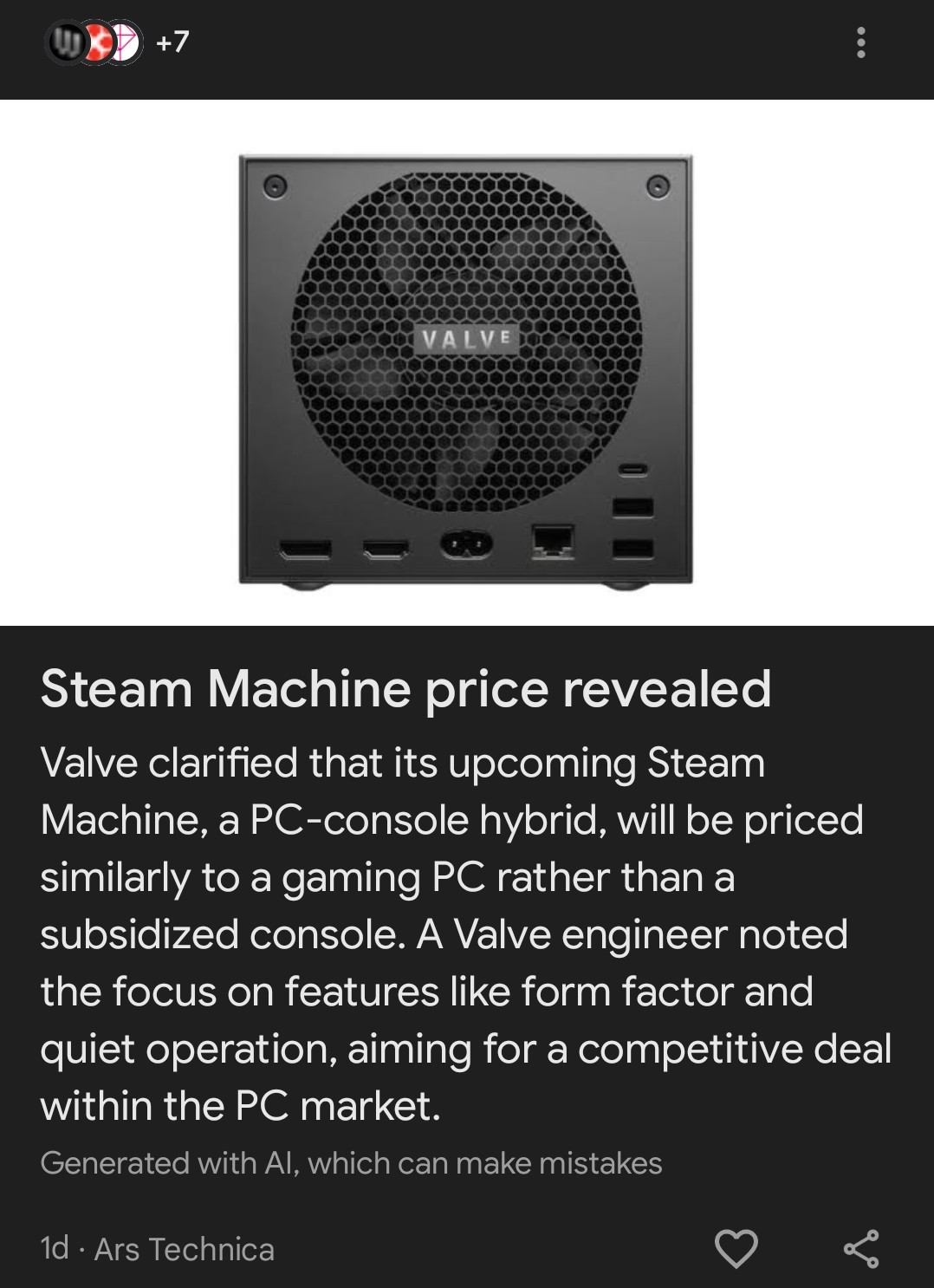
It’s too easy for readers to think we intentionally send our stories to Google Discover with these headlines.
The good news is, this is a Google experiment. If there’s enough backlash, the company probably won’t proceed. “These screenshots show a small UI experiment for a subset of Discover users,” Google spokesperson Mallory Deleon tells The Verge. “We are testing a new design that changes the placement of existing headlines to make topic details easier to digest before they explore links from across the web.”
But the overall trend at Google has been to prioritize its own products at the expense of sending clicks to news websites. While the company swears it isn’t destroying the web with AI search, you’d be hard-pressed to find a news outlet that agrees, and even Google has admitted in court that “the open web is already in rapid decline.”
It’s the reason The Verge now has a subscription: We can’t survive Google Zero without your help.
Read the full article here