



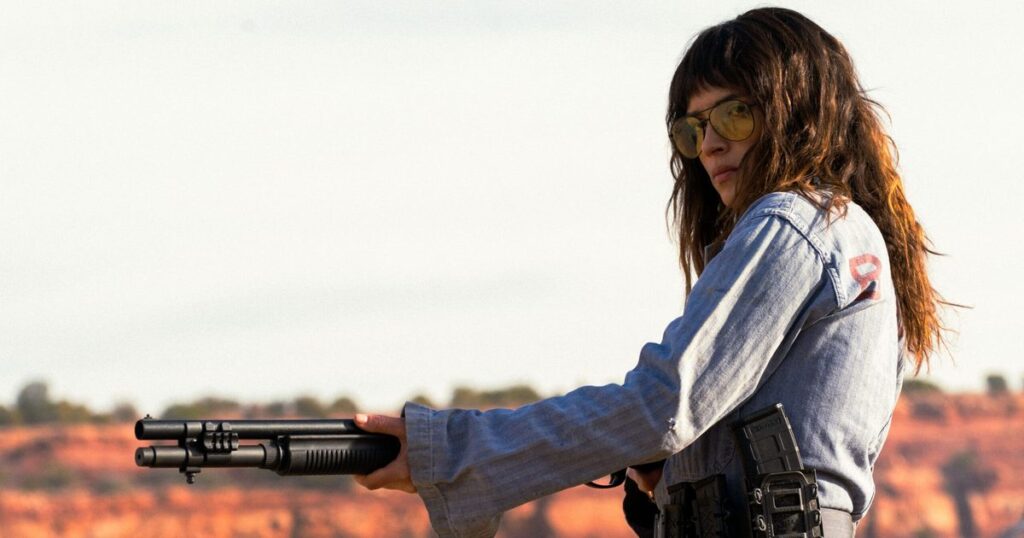

After tackling kaiju blockbusters with the Godzilla and Kong films, director Adam Wingard has returned to his horror roots with his action-packed slasher, Onslaught. This A24 movie follows Celeste (Adria Arjona), a U.S. Army sniper who tries to protect her daughter from three murderous super soldiers who have escaped from a military lab run by Dr. Hans Kammler (Dan Stevens).
Onslaught wears its â80s grindhouse roots like a badge of honor, delivering an over-the-top, blood-soaked extravaganza that pays tribute to the works of filmmaker John Carpenter. Meanwhile, Arjona, just one year before the release of Man of Tomorrow, establishes herself as a bold, hardcore action movie hero.
In an interview with Digital Trends, Wingard breaks down the films that inspired Onslaught, why Arjona and Stevens were perfect for their roles, and how filming this indie picture differed from his previous blockbuster productions.
This transcript has been edited for length and clarity.
Digital Trends: All right, now to get started, tell us, what was your inspiration for Onslaught?
Wingard: Well, the heart of it, it was really becoming apparent I wanted to do a movie that sort of expressed all the unlocked new fears that comes along with that. Iâve been in the franchise IP world for a while, and specifically, Iâd gotten away from doing horror films. And I think that there was a part of me that moved away from horror, not just because I was on this kind of trajectory that I wanted to.
I wanted to really explore doing bigger movies ike the Godzilla films and all that kind of stuff. But I think that I just sort of had become desensitized a little bit that I just wasnât afraid of that much stuff. And so, I think it was the genesis of it really was becoming apparent to a certain degree.
And then, having done so many franchise IP films, I felt like I had all of my choices were based around these are the movies that are available to directâŠAnd so my decision making was less of a personal investment and more like an interest in the subjects that there was in there.
And so, I felt like I suddenly I had a story to tell again and Iâd been away from horror long enough that it was exciting to jump back in and I really wanted to kind of solidify what makes an Adam Wingard movie an Adam Wingard movie. Itâs kind of funny to say your name out loud. Itâs weird. But itâs true.
I felt like Youâre Next and The Guest were two films that represented who I was. And so Iâd always wanted to cap that off as a trilogy, either in a literal sequel way or thematicallyâŠI wanted to do a movie that was like purely my style and also just kind of reminded people or just actually solidified what I do unique as a filmmaker.
Digital Trends: Right. And with Onslaught, you really showcase your unique style, in terms of filmmaking. At the same time, the movie really harkens back to a lot of classic action and slasher movies. What specific films inspired you when you were crafting the film?
Wingard: Why so many in very different ways. But I would say the top ones were the same ones that we ended up putting on our vision board in the production office when we were creating the movie. We had a thing we call a war room, which is just a fancy way of saying a boardroom where you have a bunch of set photos and designs and inspirations and stuff.
And we created this vision board from all the influences we wanted the movie to reflect. And so, those range from Halloween III, The Fog. The Fog was a big reference point in terms of the way we approached the killers. As a matter of fact, the only visual aid that I used when I was pitching the movie to A24 was an image of the poster from The Fog with the ghost pirates silhouetted in front of the fog.
And they had the glowing eyes, and I was like, âThis is what weâre going to do,â but the military version of thisâŠAnd then, of course, thereâs the [James] Cameron Terminator, Terminator 2, Aliens component. Another movie that was really inspirational in the writing phase with Simon [Barrett] was Tremors.
Tremors is a great film for a couple reasons. Itâs a bit of a trailer park movie. But the thing that we imprinted on with Tremors is that itâs a film thatâs got lots of characters, and every single one of them stands out with immediacy. You remember all their faces, all their personalities, and thereâs just this quick shorthand.
And so, we wanted that same type of vibe with this. Where every single character, we want to make an impression. We want to get really interesting actors to play each one. And so when I think about â80s, â90s movies, especially in the so-called B-movie realm, I love the ones that really have characters imprint, even if theyâre the smallest ones.
Digital Trends: Right, and all the characters, like you said, they really left a lasting impression. For the cast, youâve got Adria Arjona leading the filmâŠshe really gave vibes from Kill Bill, Sarah Connor, or Ellen Ripley, [that] sort of thing with her performance and what was going on in the film. What was it like working with her on this film?

Wingard: Well, it was greatâŠwhat was interesting about her and why she rose to the top was that she understood that [Celeste] is a character that you have to lean into the messiness of them and that theyâre kind of a wreck.
And the first conversation I had with her was about how she was like, Iâm not worried about this character being likable for the first half of the movie because thatâs not who she is.â She and I really responded to that because I was like, âThatâs a brave choice for her to not worry about that.â And by the way, because she doesnât worry about that, sheâs just kind of naturally likable anyways, even when she is a mess.
And likability is one of those things where I think some people would dilute the character and not realize that makes them actually more unlikable than just letting them be unhinged. And so, because she was willing to embrace that, and Adria is literally a badass herself, it all just kind of worked.
Digital Trends: Right. And, in terms of the likability, I really felt that we really got a good sense of Adria as a character. Sheâs just going through issues as an Army veteranâŠas sheâs trying to fight off these three super soldiers, and I think the fact that sheâs like a mother trying to protect her child like that also adds another layer of relatability and sympathy to her character. And I think that really makes her that much better.
Wingard: Yeah, I agree. And itâs like you want even the hero of your story to be interesting because sometimes the hero of a movie can be kind of the most boring character because they just need to be righteous or whatever. And sheâs just as much of a character as the rest of [them]. Even [in] the smaller character actor roles, they get to have a little bit more fun in a conventional movie.
Digital Trends: Right. And in terms of character actors, Dan Stevens, he played quite a character in this movie. Even in the relatively small time he had on screen, he was just so memorable as the German scientist behind all those super soldiers. What was it like working with him and bringing that sort of character to life?

Wingard: You know, this is my third collaboration with Dan, and the first two were The Guest and Godzilla x Kong. And in both of those movies, heâs playing kind of like this charming, handsome guy, even though in [The Guest], heâs still the villain; you could say he just exudes charm.
And so I knew going into this â the kind of fun experiment which I donât think I would have been able to do if I hadnât had so many prior collaborations with him â was, âLetâs try to come up with a character thatâs just totally despicable and looks freaky and see what Dan does with that.â
And so we gave him this character whoâs literally as evil as a character as I think weâve ever had in any of our films. And still, I think Dan managed to succeed. Heâs still fun and charming in his own f****d up, weird, evil, mad scientist way.
Digital Trends: Onslaught is a really intense, action-heavy film. Were there any particular challenges trying to do such a film? What was the hardest thing you had to do with the cast and crew?

Wingard: Well, it was a very difficult film, but it was also the smoothest movie Iâve worked on. And I think maybe that just comes with experience and working with good crews. We had the most to do on any given day that Iâve ever had. And in the movie, we had a very tight schedule.
And because we have a lot of action and weâve got helicopters and all this stuff. We had enough money to do it, but we didnât necessarily have enough time. And so, because that was always the biggest factor, we really had to hustle and really be on our A-game.
And fortunately, this was just like the fastest crew Iâve ever worked with, and so that was really the main thing. And it was a very cold shoot. When we wrote the film, it was like, âYeah, weâll set it in the desert. Weâll shoot it in the winter. How bad could that be?â
And then you get out to New Mexico in the winter. And we were shooting in this field that weâd built this trailer park in, and when youâre shooting in an area like that, itâs like you just basically created this random wind tunnel.
So you got these cold weather winds blowing, and itâs just totally insane. So all those things were kind of working against us, but it was never, never really an issue. We were fighting time, but, fortunately, we were able to still get the best results.
And I think the thing that gave me confidence was people like John Carpenter, because, he similarly went into kind of more of a bigger studio mode with The ThingâŠhe kind of hit this point where he said, âYou know whatâs really important to me is having total creative control.â And when you want that as a filmmaker, what youâre really saying is, âOkay, hereâs my movie that I want total creative control. Whatâs the most money that youâll allow me to shoot this with?â
And what that amount is always going to be is, depending on who you are, itâs going to be maybe a decent amount, but itâs always going to be the minimum that itâs going to take to get it done. But I look at his filmsâŠThey Live is a great example where thatâs a very low-budget movie.
And because I think he was able to embrace the limitations, itâs still like one of the best movies ever made. And itâs like maybe in some places itâs not the slickest, but it doesnât matter. And the thesis is completed with what he was going for, and it just totally works.
And so, going into [Onslaught], knowing that this isnât about having all the bells and whistles and having all the time in the world to do it. Itâs about maximizing our time. And as long as we can get the movie that we want across, even if itâs not perfect, itâll be perfect for this movie. And that was sort of the mantra that I had in my head [while] making it.
Onslaught premieres in theaters on September 4.
Read the full article here