

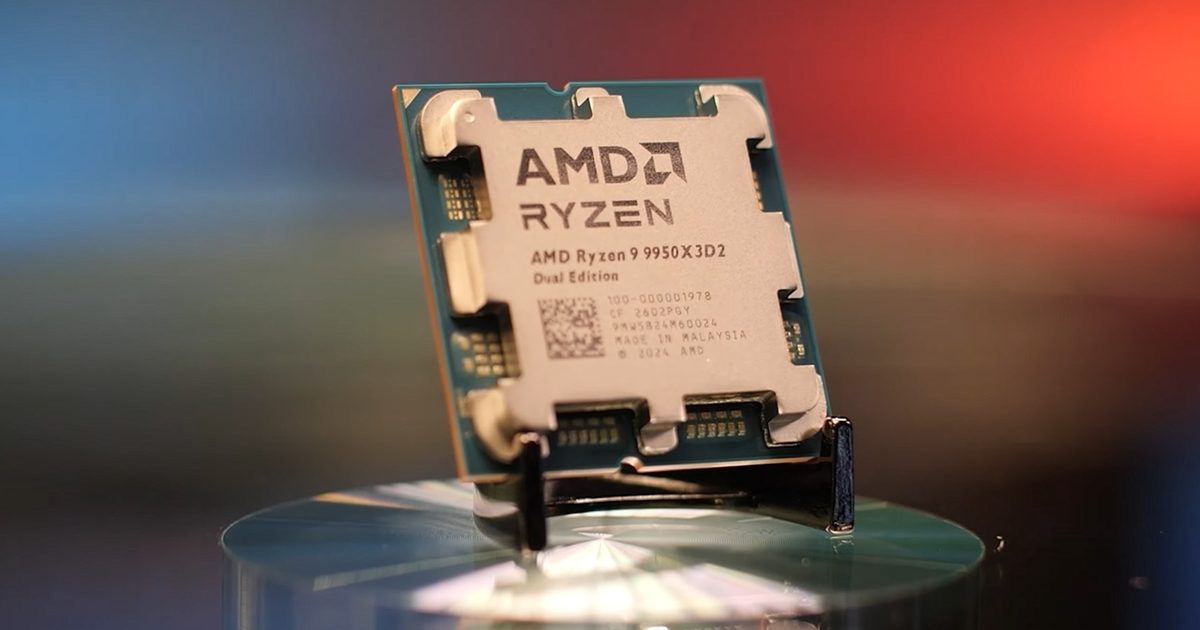

AMD has unveiled what might be its most extreme desktop CPU yet, the Ryzen 9 9950X3D2. And it’s going all-in on one thing: cache.
Building on the existing AMD Ryzen 9 9950X3D, the new chip introduces a dual 3D V-Cache design, meaning both core chiplets (CCDs) now get stacked cache instead of just one. The result? A massive 208MB of total cache, which is one of the highest ever seen on a consumer CPU.
What makes the 9950X3D2 different?
At its core (literally), this is still a 16-core, 32-thread Zen 5 processor, similar to the standard 9950X3D. But the big change is how AMD is handling cache this time. Traditionally, X3D chips only placed the extra 3D V-Cache on one CCD, balancing performance and clock speeds.
The 9950X3D2 flips that approach by putting stacked cache on both CCDs, effectively doubling the available L3 cache to around 192MB, taking the total cache up to 208MB. There’s a trade-off, though, as this comes with a higher 200W TDP, making it one of AMD’s more power-hungry desktop chips.
Why does all this cache matter?
Cache is essentially a shortcut for performance, especially in gaming. By increasing L3 cache, the CPU can access frequently used data faster, reducing memory latency and improving performance in CPU-heavy scenarios like esports titles and large open-world games. With the Ryzen 9 9950X3D2 doubling down on cache across both chiplets, AMD is clearly aiming to squeeze out even more gains, though there’s a point where adding more cache delivers diminishing returns depending on the workload.
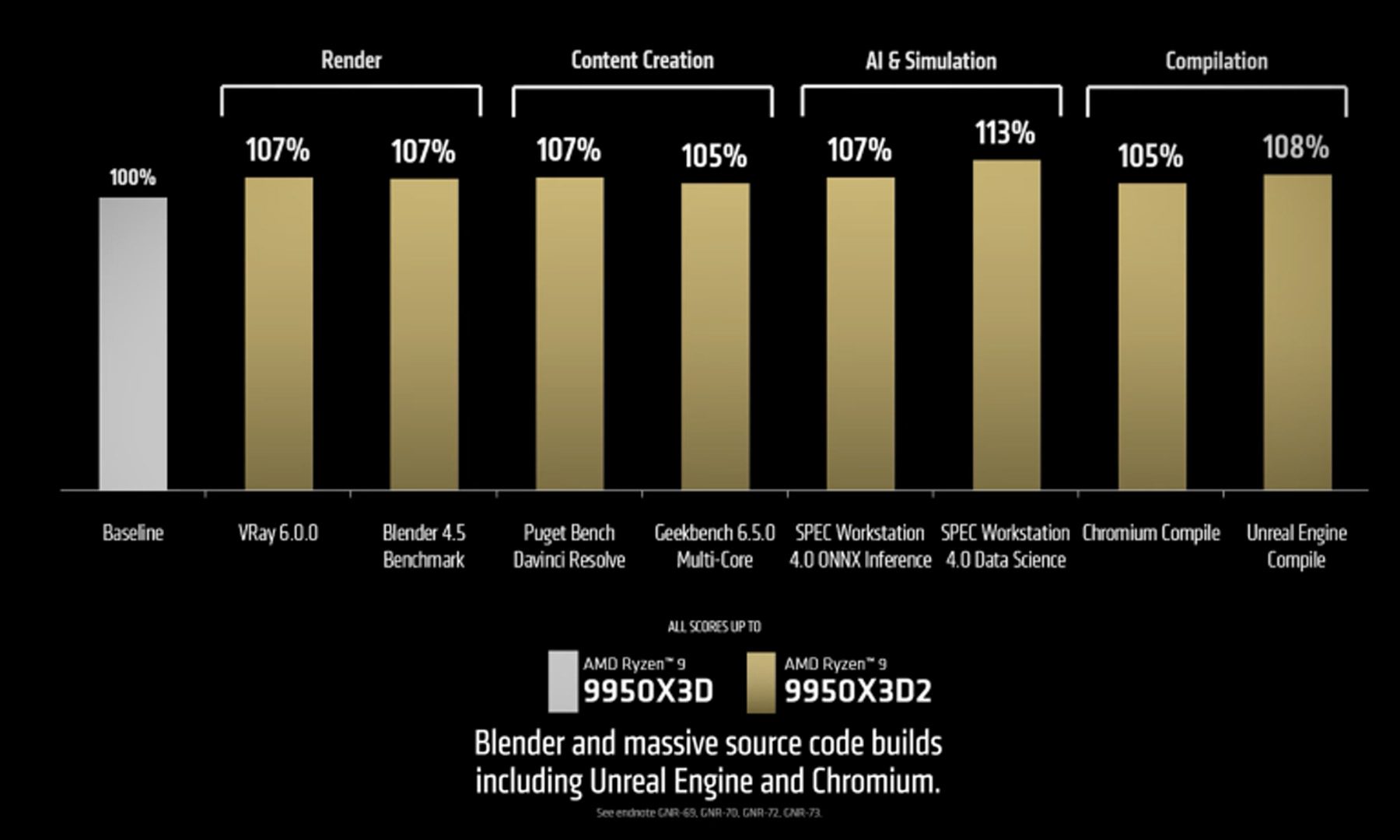
That said, this chip isn’t meant for everyone. It’s designed for enthusiasts, high-end gamers, and power users who want top-tier performance regardless of power draw or cost. With its higher TDP and niche positioning, the 9950X3D2 feels more like a halo product, something that showcases what’s possible rather than something most users actually need.
From a bigger-picture standpoint, this CPU feels like AMD pushing X3D tech to its limits on Zen 5. It’s less about replacing existing chips and more about seeing how far cache-driven performance can go before Zen 6 arrives. AMD hasn’t revealed pricing yet, but the chip is set to launch on April 22nd. If nothing else, it reinforces that AMD is still betting big on cache as its gaming advantage.
Read the full article here