



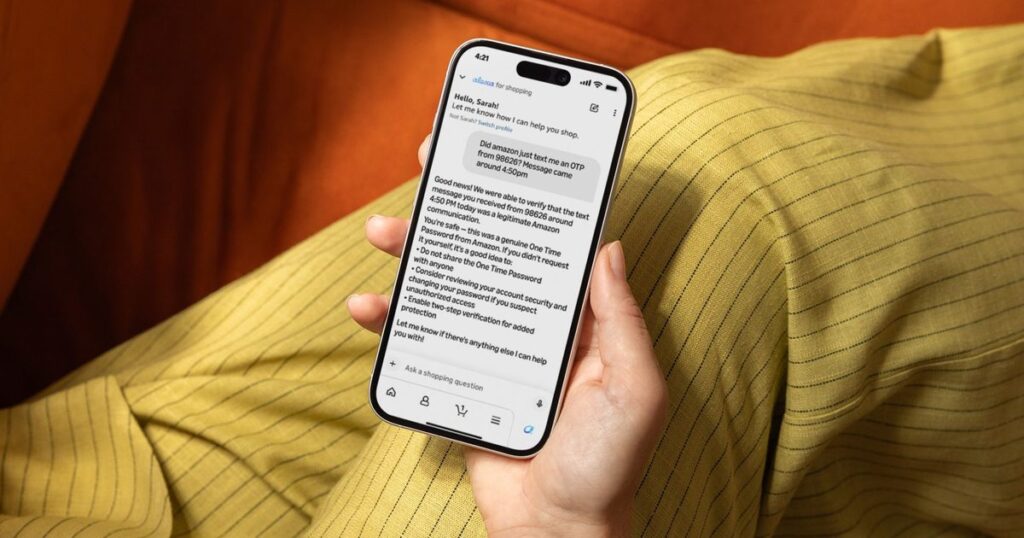

Scam texts and emails pretending to be from Amazon have gotten good enough to fool even careful users. Amazon says it fields questions from 360,000 customers a year who just want to know if a message they received is actually real. Starting today, you can skip the guesswork and just ask Alexa for Shopping.
How Alexa actually checks if a message is real
You can ask Alexa like âdid Amazon send me a text about a delivery problem yesterday,â and include any details you have, such as the senderâs number or email, when it arrived, and what it said. Alexa then compares that against Amazonâs own record of every message the company has ever sent, checking the sender, the content, the timing, and even the formatting.
Amazon says it only confirms a message as genuine when itâs completely certain; otherwise, it tells you honestly that it canât verify. If the message checks out, youâll get confirmation plus some quick security tips. If it doesnât match anything on record, Alexa tells you to check your orders directly in the app and steers you toward Amazonâs actual support team.
This isnât the first tool of its kind either. Amazon already runs a â[email protected]â inbox where anyone can forward a suspicious message for a manual check, and Alexa will likely point you there if it canât resolve something on its own.
Every company should be doing this by now
Itâs a useful feature, and honestly a little surprising that more companies havenât built something like it already. Comparing incoming messages against your own official records seems like an obvious way to fight scams, especially given how often scammers hijack trusted brand names, or even impersonate news websites, to trick people.
That said, this is still an AI system making real security claims, and the honest test will be whether it holds up in practice without confidently confirming something it shouldnât. Amazon rolled out this feature in the US starting today, with plans to expand it to more regions down the line.
Read the full article here