




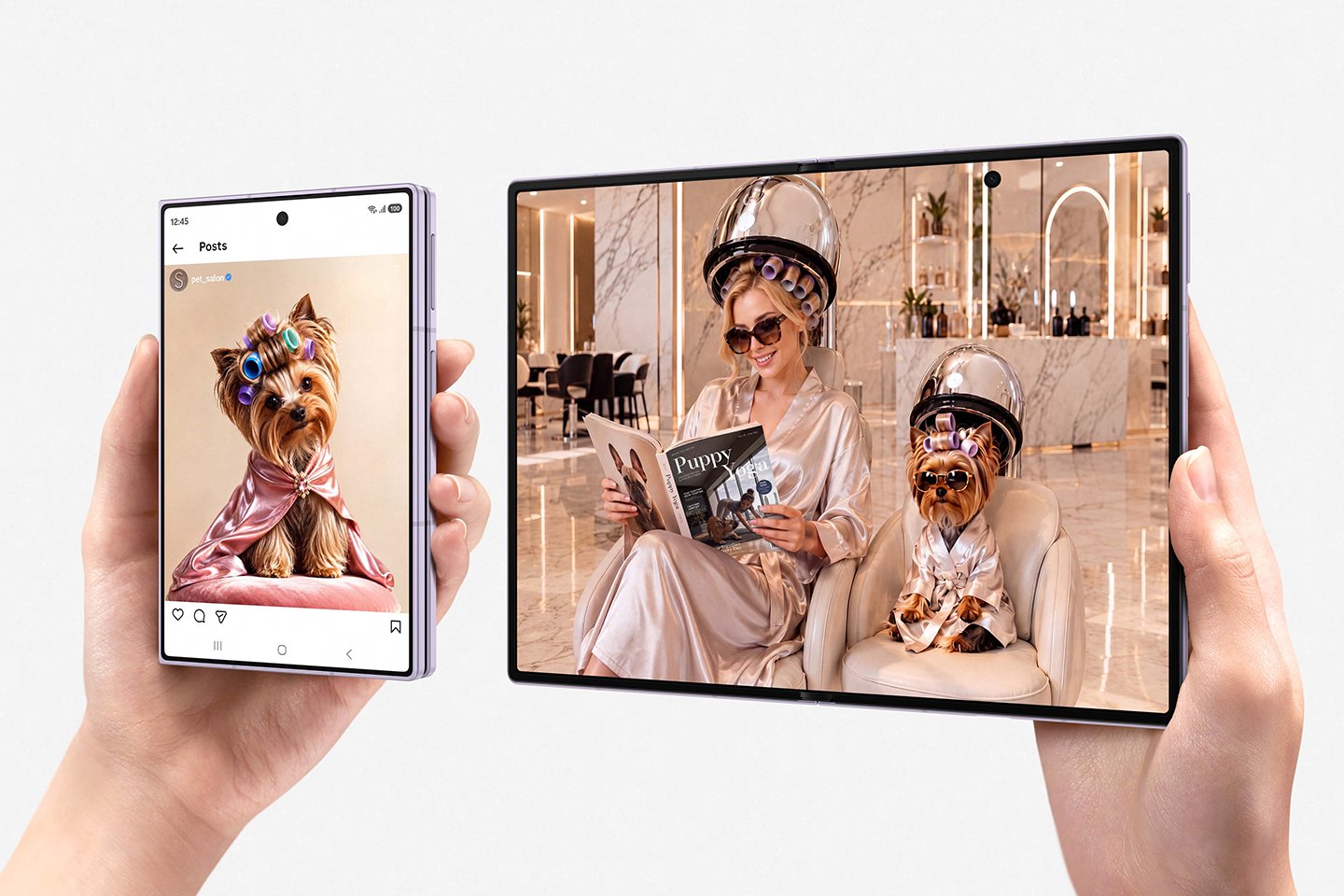

Samsung’s Galaxy Z Fold 8 and Galaxy Z Fold 8 Ultra are set to gain Android’s new tap-to-share Quick Share feature, letting compatible phones start sharing files and contact information by being brought together. Google began rolling the feature out to Pixel 6-series and newer phones on Aug. 12 and says support for Samsung’s newest foldables is coming soon.
The new gesture adds a faster local-sharing option to devices that already run Android 17 and One UI 9. On company-owned phones, it also gives IT teams another data-transfer method to review against existing mobile security and sharing policies.
Tap-to-share is headed to the Fold 8
The new Quick Share capability uses NFC and device proximity to start a transfer after users open the share menu and bring two compatible phones close together. It can be used to send photos, videos, files, and contact information.
Google has not announced a specific rollout date for the Galaxy Z Fold 8, Fold 8 Ultra, or Flip 8. The company has only said Samsung support will arrive soon, so owners should not assume the feature is already available on every device.
The Fold 8 family already ships with Android 17 and One UI 9, as detailed in TechRepublic’s Galaxy Z Fold 8 launch coverage. Quick Share itself is not new to the phones; the change is the tap-to-initiate sharing method.
The feature arrives as Android 17 continues expanding beyond Google’s Pixel lineup. TechRepublic’s Android 17 rollout coverage tracks how other manufacturers are adopting Google’s platform on separate schedules and with their own software layers.
Enterprise controls can restrict sharing
Quick Share already lets users control who can discover their device. Google’s Quick Share documentation says nearby Android devices, Chromebooks, and supported Windows PCs can exchange content through the service.
Organizations using full-device management can block external data transfers through services and hardware including Quick Share, NFC Beam, Bluetooth, external media, and USB storage, according to Android Enterprise documentation. That gives administrators a way to restrict proximity-based sharing when it conflicts with policies governing work data.
The Fold 8 rollout therefore adds a feature that IT teams may want to test before enabling it broadly on managed devices. Organizations using work profiles or fully managed Android deployments should check how their existing EMM policies handle Quick Share and other external transfer methods.
The broader platform is still evolving after Android 17’s stable release, and TechRepublic’s July Pixel update coverage shows how Google is continuing to address software stability issues across supported devices.
Read more: For organizations planning wider Android 17 deployments, Google’s built-in iPhone migration tool also expands the amount of data that can move onto supported Android devices during setup.
Read the full article here