


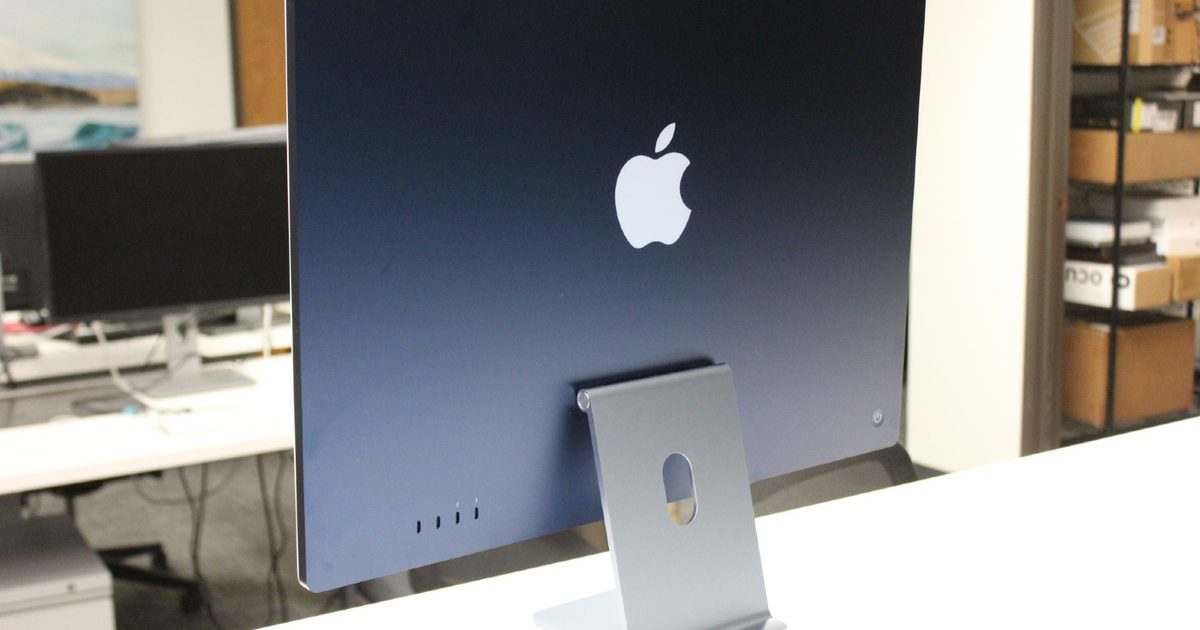

I’ve wanted an OLED iMac for years now. Every time I ask why Apple hasn’t just done it, the answer comes back the same: OLED burn-in. You see, desktop displays sit on for hours at a stretch with static menu bars and docks, which is exactly the kind of scenario OLED panels handle the worst.
A new The Elec report suggests LG Display may have actually solved the burn-in issue. The display manufacturer is building panel tech specifically engineered to make OLED panels durable enough for a machine that runs all day long. Read “one that meets Apple’s durability standards.”
So what’s actually solving the burn-in issue here?
LG’s current four-layer OLED panels, which are already used in high-end monitors, stack light-emitting layers in a blue-green-blue-red pattern. Basically, they use one blue layer. However, the real breakthrough is adding a second blue layer.
To give you some context, pushing too much current through fewer, smaller light-emitting points at high pixel density is exactly what shortens a panel’s usable life and causes visible ghosting or burn-in over time, especially under sustained high brightness.
This is where the second blue layer comes into play, spreading electrical current across more emitters. That means each individual emitter has to work less, which could improve both brightness and the panel’s long-term durability.
Apple reportedly asked both LG and Samsung to make 24-inch panels hitting 600 nits at 218 pixels per inch, which would have been a real upgrade over the current LCD iMac’s 500-nit ceiling at similar sharpness. However, for now, its longevity, not brightness, that appears to be Apple’s number one priority.
When could this actually show up in a real iMac?
Not soon. LG and Samsung, the latter chasing its own QD-OLED approach, are reportedly targeting 2028 to finish development. If the companies stick to that timeline, an actual OLED iMac might not launch until 2029.
Manufacturing at this complexity isn’t cheap either. More emitting layers mean more material and a trickier production process that can hurt yields. For now, it looks like Apple will simply refresh its existing LCD iMac with a new chip later this year and treat the OLED iMac as a long-term product goal.
This reframes Apple’s OLED holdup entirely. It was never really about matching brightness or color. It was about durability under always-on desktop use.
Read the full article here