


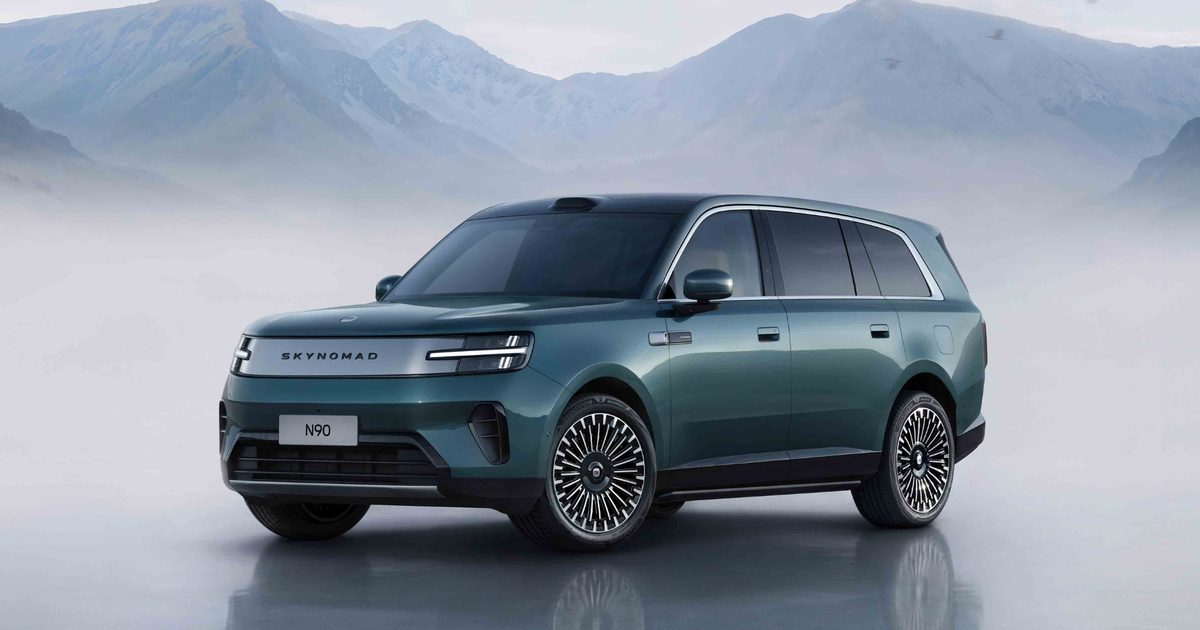

When Xiaomi entered the automotive industry, it did so with the all-electric SU7 sedan, then expanded into SUVs with the YU7. Its next move is taking the company into one of China’s fastest-growing vehicle segments: extended-range electric SUVs (EREVs). Ahead of a technical presentation on July 30, Xiaomi has shared fresh details about its upcoming SkyNomad lineup via its Weibo channel, first spotted by CarNewsChina, revealing the new Kunlun range extender, fuel economy figures and testing progress.
At first glance, the SkyNomad N90’s upright silhouette, squared-off proportions and premium detailing inevitably draw comparisons with the Range Rover. But mechanically, Xiaomi appears to be targeting a very different group of rivals. The company is entering a market currently dominated by Chinese brands such as Li Auto and Huawei-backed Aito, both of which have built successful businesses around extended-range SUVs that combine electric driving with the convenience of a gasoline-powered range extender.
That makes the SkyNomad less of a luxury off-roader and more of a direct competitor to the family-oriented premium SUVs reshaping China’s EV market.
The bet is big on range-extender tech, not just bigger batteries
Unlike the SU7 and YU7, which rely entirely on battery power, the SkyNomad uses Xiaomi’s newly developed Kunlun Range Extender. The system pairs a 1.5-litre turbocharged engine producing 112kW with electric motors, allowing the engine to generate electricity for the battery rather than directly powering the wheels. Xiaomi says the powertrain supports 92-, 95-, and 98-octane gasoline, while delivering a minimum WLTC fuel consumption figure of 5.7 L/100 km once the battery has been depleted.
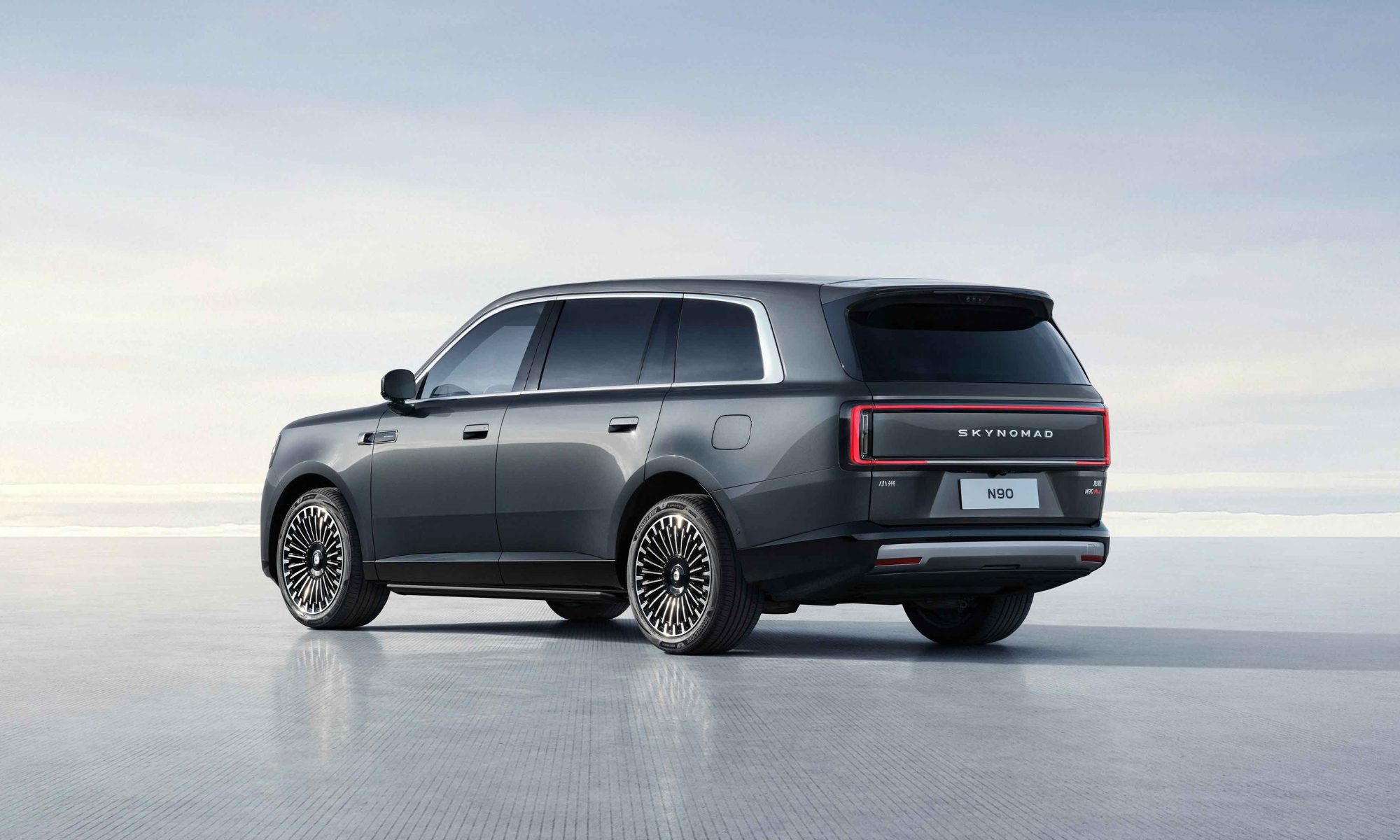
Xiaomi also disclosed additional details about the SkyNomad N90 Max, which has reportedly completed more than 60,000km of road testing across multiple Chinese cities since January. The prototype features dual electric motors, a 76kWh battery pack, and a claimed WLTC electric-only range of 363km to 370km, depending on the configuration. Buyers will reportedly be able to choose between five-seat and 2+2+3 seven-seat layouts, placing the SUV squarely in the premium family segment currently occupied by Li Auto’s L-series models and Aito’s M-series lineup.
The smaller SkyNomad N70 Max will also be offered with single- and dual-motor configurations, alongside 52kWh and 76kWh battery options, with claimed electric driving ranges between 265km and 380km, depending on the variant. In a report by Electrek, Xiaomi is reportedly targeting a starting price of around 200,000 yuan (~$29,400), significantly undercutting rivals like the Li Auto L9 and Aito M9, both priced above 250,000 yuan. Notably, those two brands accounted for seven of China’s top 10 best-selling EREV SUVs last year.
That formula closely mirrors what has made Li Auto one of China’s fastest-growing automakers. Instead of forcing buyers to choose between a conventional petrol SUV and a fully electric vehicle, EREVs offer long electric-only driving for daily commuting while retaining the ability to cover long distances without relying entirely on charging infrastructure. Huawei-backed Aito has also adopted a similar strategy through its collaboration with Seres.
Additionally, the XPeng G7 EREV targets the same premium family SUV segment as Xiaomi’s upcoming SkyNomad, but it arrives with a more mature range-extender package. XPeng claims a class-leading 1,704km combined driving range, enabled by a 55.8kWh battery, a 1.5-litre range extender and an 800V architecture with 5C fast charging that can add around 314km of range in just 12 minutes.
In comparison, Xiaomi’s SkyNomad appears to prioritize larger SUV proportions, flexible seating layouts and long electric-only driving range, but the company has yet to reveal its total combined driving range or charging performance. While XPeng is setting benchmarks for EREV efficiency and range, Xiaomi is betting on premium packaging and its growing automotive ecosystem to challenge established players like Li Auto, Aito and now XPeng.
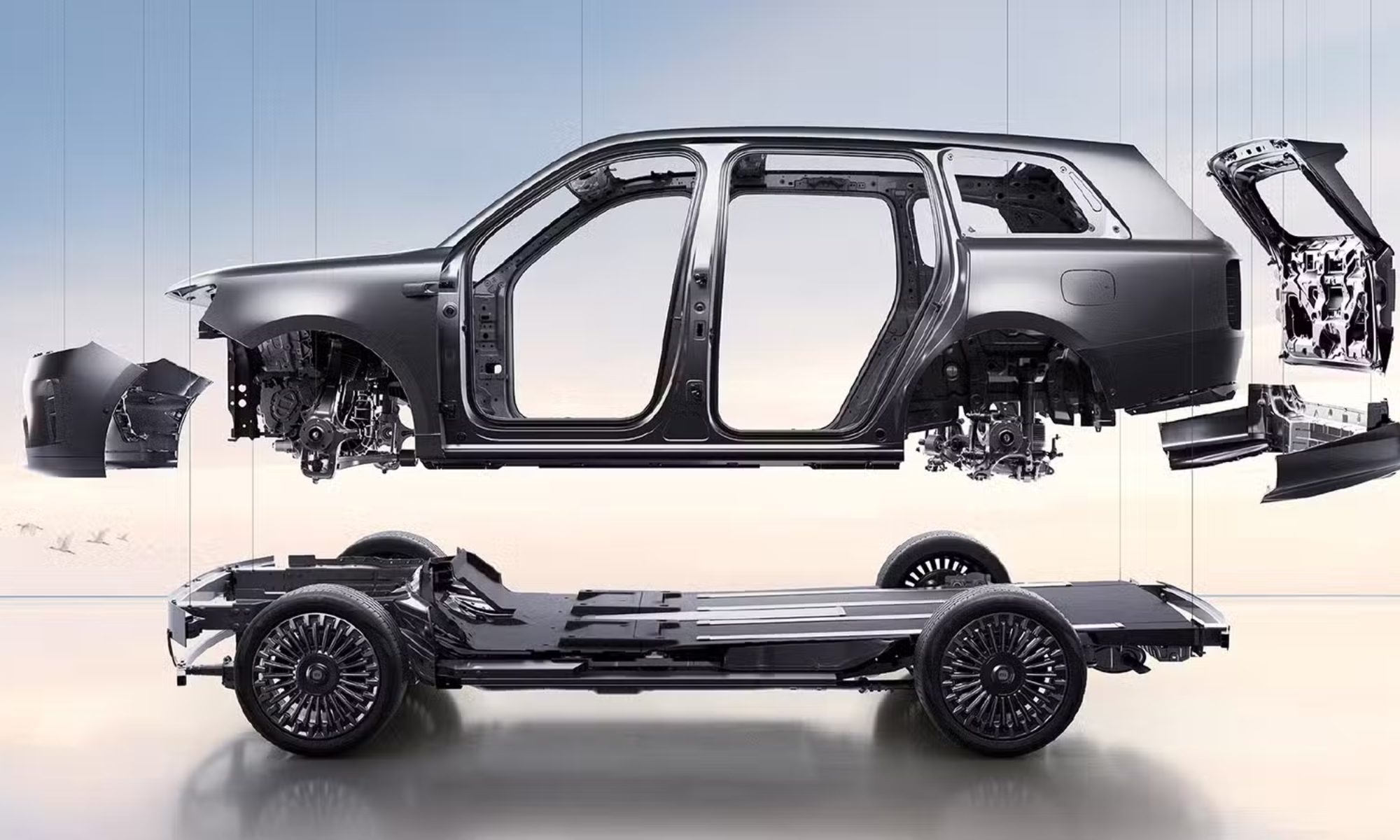
Having said that, Xiaomi’s approach differs from that of premium European SUVs such as the Range Rover, which continue to focus primarily on mild-hybrid, plug-in hybrid, and conventional combustion powertrains rather than dedicated range-extender systems. While the SkyNomad may borrow visual cues associated with luxury SUVs, its engineering philosophy is firmly aligned with China’s rapidly evolving EV market.
The company has also revealed that the range extender and electric drive system will be backed by an eight-year or 160,000km warranty, with scheduled maintenance required only every three years or 30,000km after the initial service.
The American market is catching up
Xiaomi’s timing also reflects a broader shift that extends well beyond China. In the US, automakers are increasingly embracing EREVs after years of betting almost exclusively on battery-electric vehicles. While Chinese buyers can already pick from feature-rich EREV SUVs from Li Auto, Aito, XPeng and soon Xiaomi, US buyers are still waiting for most of those products to reach showrooms. That gap matters because EREVs combine large batteries with compact gasoline generators, delivering electric commuting for everyday use while eliminating long-distance range anxiety.
In contrast, the US is only beginning to embrace the format, with Stellantis, Ford, Scout Motors and Hyundai preparing their own EREV models after years of focusing primarily on battery EVs. That shift comes as hybrid demand continues to surge. Kia’s US hybrid sales rose 152 percent in the second quarter of 2026, while Hyundai recorded a 71 percent increase, signalling that buyers are increasingly looking for something between a conventional hybrid and a full EV. Yet Americans still have few affordable EREV SUVs to choose from today.
For American buyers looking for spacious SUVs packed with modern technology without paying luxury EV prices, China is already demonstrating what that middle ground can look like. For a market that overwhelmingly prefers SUVs, that’s a notable gap. If Chinese manufacturers have demonstrated anything over the past few years, it’s that EREVs can offer the best aspects of electric driving, eliminate most charging anxiety, and still be loaded with technology without carrying the price tag of a premium luxury SUV.
The remaining pieces of the Skynomad puzzle are expected to be revealed during the July 30 Kunlun Architecture event, where the company is expected to outline how the SkyNomad fits into its broader automotive roadmap.
Read the full article here