


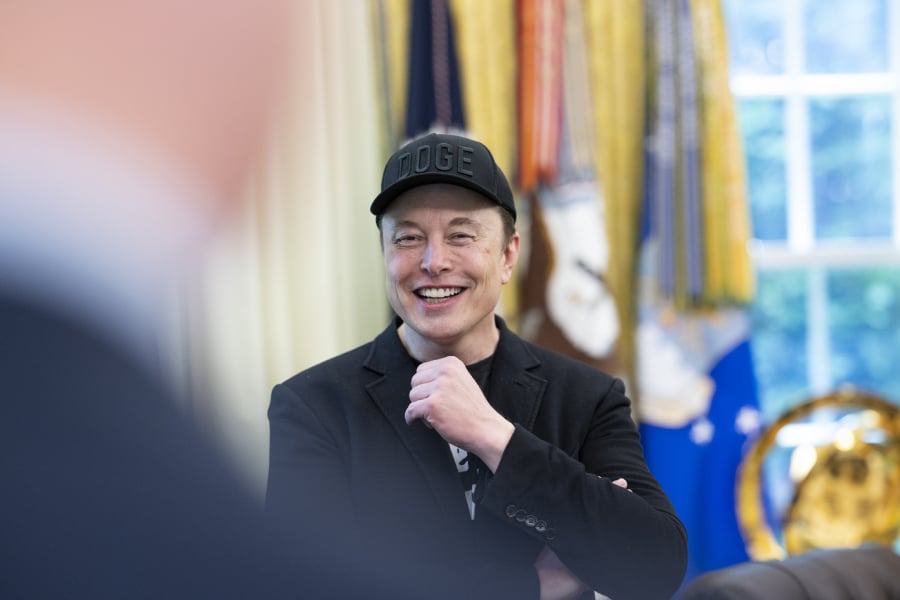

Elon Musk may have found a faster way to keep xAI’s data centers running: buy the company that can bring the power directly to them.
Musk acquired APR Energy, a Jacksonville, Florida-based company that deploys mobile gas and diesel generation systems, according to regulatory filings. The deal appears to be worth at least $1 billion and could help xAI expand its computing capacity without waiting years for new grid connections.
However, Musk has not publicly confirmed how he plans to use the company.
Filings reveal the $1 billion acquisition
The Florida Times-Union reported that a Federal Trade Commission notice dated May 14 listed Musk as the acquiring party and New APR Energy as the acquired entity. Regulators granted early termination of the deal’s antitrust waiting period, allowing the transaction to close without further review.
The same report said the FTC notice did not disclose the purchase price, but a separate Securities and Exchange Commission filing offered a strong clue. Duos Technologies said the sale of its 5% non-voting stake in New APR Energy generated $50.4 million in net proceeds, implying an overall valuation of at least $1 billion.
APR Energy operates modular gas turbines and reciprocating engines that can be transported to locations needing temporary or supplemental electricity. According to the Florida Times-Union, the company has delivered power in more than 35 countries and says it can deploy some projects within 15 to 30 days.
Interesting Engineering noted that APR’s mobile fleet can generate more than one gigawatt of electricity. Its modular systems can also begin operating much faster than permanent power plants, which often take years to approve and construct.
Such a short deployment window could be valuable for xAI.
New substations, transmission lines, utility connections, and permanent generation projects can take years to complete, creating a gap between when a data center is built and when it has enough electricity to operate at full capacity.
Why owning power could help xAI scale faster
Expanding an AI data center requires more than securing GPUs. Operators also need continuous electricity, cooling equipment, networking infrastructure, backup systems, and a location with enough grid capacity to support them all.
APR Energy could give Musk more control over the electricity part of that equation. Mobile turbines could support new data centers, cover temporary shortages, or keep expansion plans moving while permanent utility infrastructure remains under construction.
Interesting Engineering described the purchase as a possible way for xAI to reduce its dependence on local utilities. The publication noted that power availability has become one of the biggest constraints facing AI developers as data center demand grows faster than some grids can keep pace with.
Access to independent generation could also protect xAI from costly delays. Servers and other data center equipment generate little value when idle, so every month spent waiting for electricity can reduce the return on a major infrastructure investment.
APR already markets custom power plants for data centers, hyperscalers, high-density GPUs, and AI workloads. That focus makes xAI a plausible customer, even though neither Musk nor APR has announced where the company’s equipment will be deployed.
More must-read AI coverage
Faster power brings compliance and cost tradeoffs
Rapid deployment does not mean simple deployment. Gas and diesel generation introduce fuel costs, maintenance requirements, emissions controls, air permits, and the possibility of opposition from nearby communities.
Interesting Engineering cited environmental groups that estimated turbines associated with xAI’s operations could emit more than 2,000 tons of smog-forming nitrogen oxides. The publication also reported that xAI officials planned to “copy and paste” the turbine strategy used at its Colossus data center for another facility.
According to Engadget, xAI had faced a Clean Air Act lawsuit over mobile turbines used at its Mississippi data center. The publication also noted that the number of turbines at the facility increased after the lawsuit was filed.
The dispute highlights a central tradeoff.
Temporary generation can bring computing capacity online faster, but it can also create regulatory, environmental, and reputational risks that continue long after installation.
For enterprises planning AI infrastructure, Musk’s purchase shows how power availability can shape a project as much as chip supply or model performance. Grid capacity, fuel prices, permitting, and local environmental rules can influence where a data center is built, how quickly it opens, and whether its operating costs remain sustainable.
Musk has not disclosed how APR Energy will fit into xAI or his other companies.
Even so, the acquisition suggests that controlling electricity generation may become a key advantage for AI companies racing to expand faster than the power grid can accommodate them.
See how Elon Musk built SpaceX through milestones including Falcon 1, reusable rockets, Starlink, Starship, NASA missions, and the company’s landmark 2026 IPO.
Read the full article here