







Ever wondered what a language built entirely by AI would sound like? A team of researchers just made a tool that answers exactly that question. A new paper published in the Proceedings of the Association for Computational Linguistics introduces ConlangCrafter, a tool that uses large language models to build brand new languages complete with their own sounds, grammar, and vocabulary.
Morris Alper, the paper’s lead author and soon-to-be assistant professor at the University of Miami, explained that the goal was to create languages with features you don’t normally find in the ones we already speak.
Alongside co-authors Moran Yanuka, Raja Giryes, and Gašper Beguš, Alper has already used ConlangCrafter to whip up more than 60 languages, and the code is public if you want to try making one yourself.
How does the AI actually build a language?
You can hand ConlangCrafter specific instructions, and it runs with them. The team tried a language with zero consonant sounds, and even one designed for an alien squid-like species that communicates through color and gesture instead of speech.
Once a language takes shape, ConlangCrafter translates sentences into it, checks its own work, and fixes inconsistencies along the way, all while updating a running rulebook of the language’s grammar.
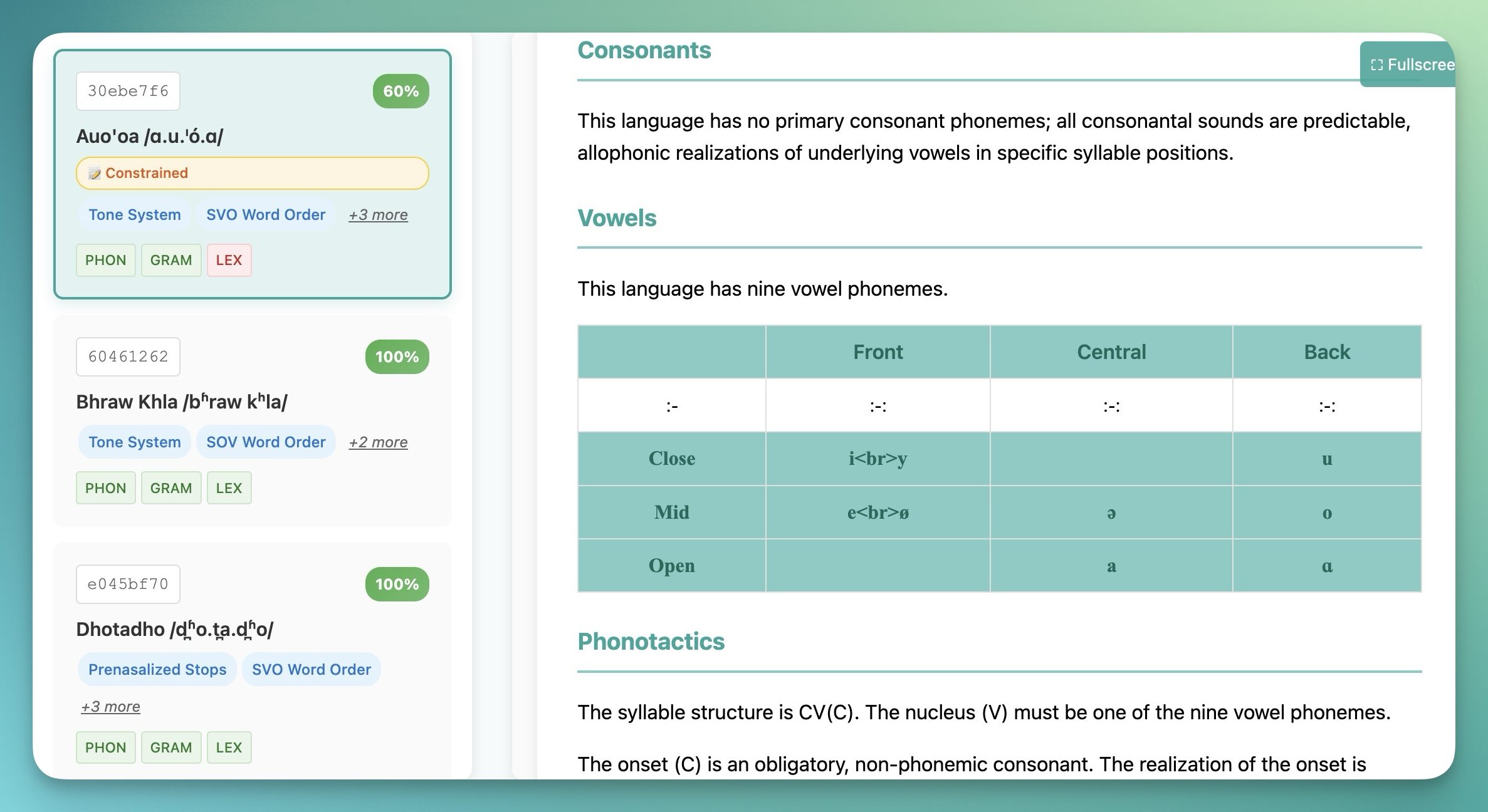
Alper says the trick was to break the massive task into smaller pieces rather than just asking an AI to generate a language and hoping for the best. “We split the problem apart and have the LLMs solve each sub-problem and combine them together,” he said.
Why would anyone need a made-up language?
Beyond being a fun party trick, this could be a real win for writers and filmmakers who need convincing fictional languages, think Game of Thrones or Lord of the Rings. Researchers also see it helping study poorly documented languages and how languages evolve over time.
Read the full article here