




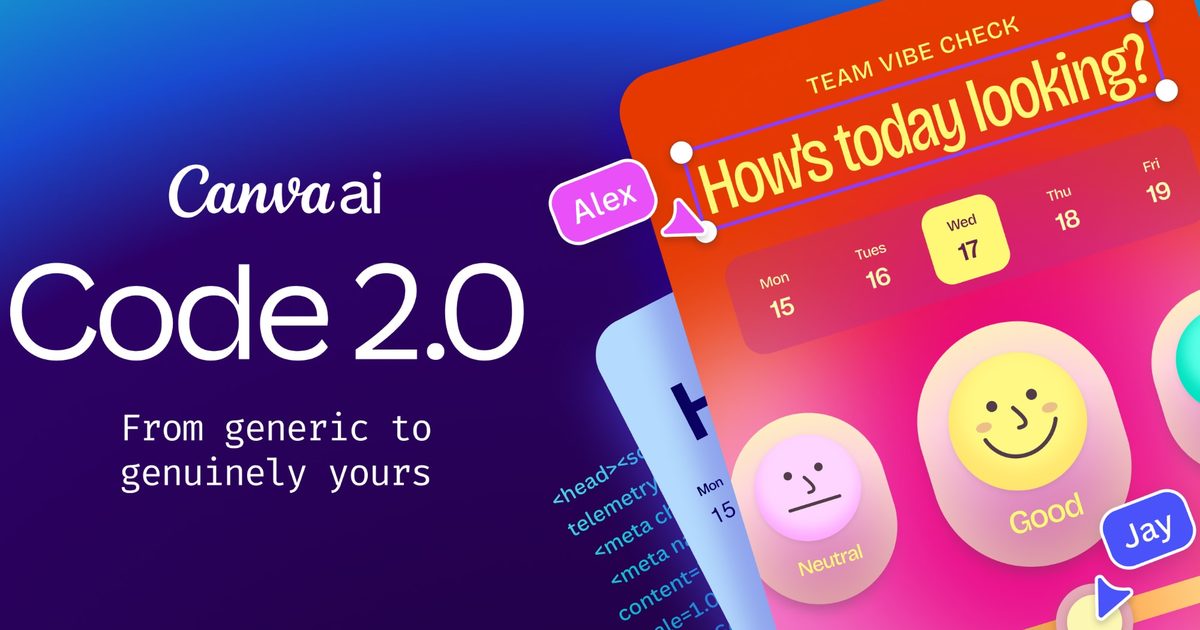

Coding used to be reserved for developers who spent years learning complex languages. That has slowly changed with vibe coding, which lets you build apps and websites using simple, plain-language prompts.
The problem is that most of these tools still feel intimidating for regular folks, as they still need to understand the code to make any meaningful changes. If not, everything you make tends to look the same.
Canva wants to fix that. Today, the company is rolling out Canva Code 2.0 to its entire community, combining AI-powered coding with its design tools, giving users an easy way to customize their apps and websites.
What can you build with it?
You can start from a simple prompt, pick from over 50 new templates, or import your existing HTML if you built something elsewhere. Once you have a starting point, you can create right inside your other Canva projects, whether that’s a page, a whiteboard, or a deck.
The best part is you are not stuck with whatever the AI gives you. You can drag in your own photos, tweak colors and fonts from the familiar toolbar, or click into any section and retype the text yourself. If you would rather chat your way through edits, Canva AI can handle that too.
Why does this matter?
Here’s the thing about most vibe coding tools: most of them generate a working prototype that looks exactly like everything else people are churning out. Canva Code takes a different route by living right inside the editor where your brand kit already sits, so what you make looks like you actually made it.
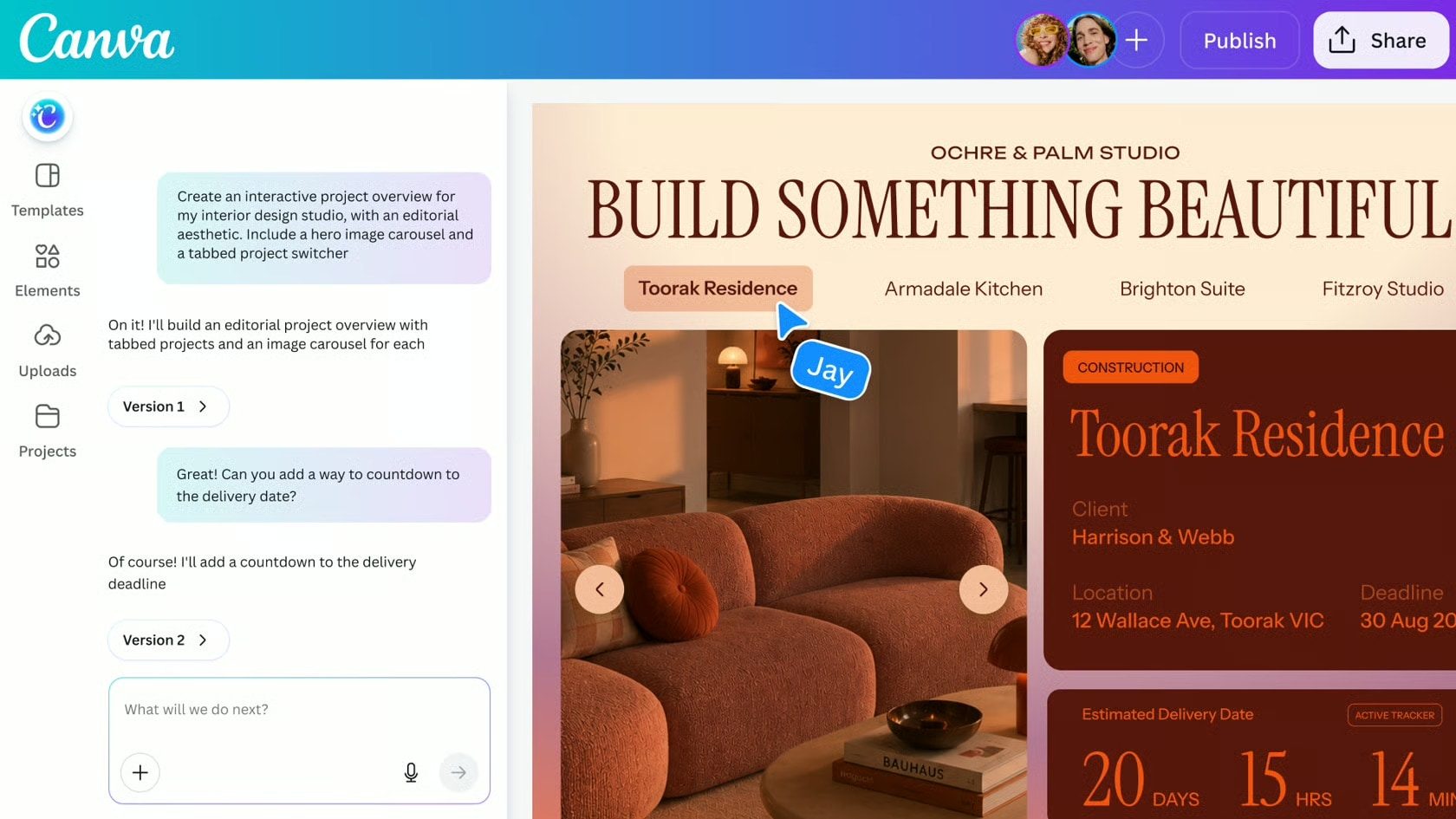
You can also build alongside your team in real time, drop comments straight in the editor, and send your creation off wherever it needs to go when you are done. Grab a custom domain in Canva, go with a free one, or keep it private within your organization.
With Canva Code 2.0, you are not only using vibe coding but also the design tools inside Canva to create something unique for your brand, which most vibe coding tools cannot do. For creators who care as much about how something looks as how it works, that’s a compelling advantage.
Read the full article here