







Four years ago, overlooking a canal in Amsterdam, the smart home industry collectively launched Matter, the one interoperability standard to rule them all. Heralded as the solution to the industry’s struggles, Matter was built on open standards and existing technologies and is the result of years of collaboration between traditional rivals, including Apple, Google, Amazon, and Samsung.
Matter promised an end to walled gardens and ecosystem lock-in. It promised to make a smart home device, like a lock, lightbulb, or sensor, easy to buy and set up. It promised you could choose any brand, use any platform, no expertise required — it would just work.
“Matter long-term won’t be successful until everybody can use it at parity. That’s the goal. And all the companies know that.”
— Tobin Richardson, CSA
It didn’t. Today, Matter is still not there. Adding devices to your smart home is still cumbersome and finicky; sharing them across ecosystems can be unreliable, and some features users expect aren’t part of Matter and still require the manufacturer’s app. But, based on what I saw at the Unify conference in Austin, Texas, last week, Matter is much closer to its promise of a simple, reliable, interoperable smart home.
Following a rocky launch and years of broken promises, the Connectivity Standards Alliance (CSA) designated 2025 as the year to fix Matter — and I have seen significant improvements. This year at Unify, the CSA’s first public-facing event since the Amsterdam launch of Matter, version 1.6 of the spec was announced.
The most significant new feature, Joint Fabric, will let you create a single smart home network that can be controlled by any Matter platform — which is the Matter we thought we were getting all along. The question is, will the platforms adopt it? And that’s a question that has been at the heart of Matter’s struggles to date. It turns out that corralling an industry is not easy.
The mood at the three-day conference was optimistic but realistic. There was widespread recognition that Matter hasn’t done what it set out to do, but that the work is being done to get it there.
I asked Tobin Richardson, the CEO of the CSA, whether he believed Matter had achieved that initial promise that you could buy a device with a Matter logo and it would be easy to set up and use on any platform. “We’re on the path,” he hedged. “In some ways, yes. But in some places, universally and globally, we still have a few more milestones to get there.”
The biggest concern among many of the attendees I spoke to — which included representatives from silicon vendors, manufacturers, and ecosystem companies such as Google, Amazon, and Samsung — is the widening gap between the spec and its implementation by ecosystems. This disconnect has led to more consumer confusion, rather than less.
Developed by the Connectivity Standards Alliance (CSA), whose members include Apple, Amazon, Google, and Samsung (and others), Matter is an open-source, IP-based connectivity software layer for smart home devices. It works over Wi-Fi, ethernet, and the low-power mesh networking protocol Thread. Matter currently supports most of the main device types in the home. These include security cameras, lighting, thermostats, locks, robot vacuums, refrigerators, dishwashers, dryers, ovens, smoke alarms, air quality monitors, EV chargers, and more.
A smart home gadget with the Matter logo can be set up and used with any Matter-compatible ecosystem that supports that device type via a Matter controller and controlled from multiple smart home platforms at the same time with a feature called multi-admin.
Amazon Alexa, Google Home, Samsung SmartThings, and Apple Home are some major smart home platforms supporting Matter, along with hundreds of device manufacturers.
Matter 1.6 launched this month, but Apple, Google, and Amazon are barely at 1.3, which came out two years ago. SmartThings has committed to adopting new specs within six months of release, but Samsung still hasn’t added Matter support to its appliances.
Without platform parity, Matter’s promise simply can’t be fulfilled. George Yianni, head of technology at smart lighting company Philips Hue, summed up the general feeling: “It would be great if, within a year of new features being published in the spec, it was broadly supported by the ecosystems.”
Matter may have mostly solved the initial challenge of getting everything to work together, but it’s still working on getting everyone to work together. “Matter long-term won’t be successful until everybody can use it at parity. That’s the goal. And all the companies know that,” said Richardson. While he concedes there’s a natural tension with competitors like Google, Apple, and Amazon working together, he says they know that the result is a bigger market. “These companies want to make money, but that’s a good thing for Matter,” said Richardson.
Technologist Kevin Ashton, who coined the term Internet of Things and developed WeMo at Belkin, put it best, saying on stage that companies need to “be brave enough to compete on features and benefits rather than trying to build a prison for your customer.”
Ultimately, it is the CSA’s role to make competitors work together. “We create a safe space for them to collaborate,” Jon Harros, head of testing and certification at the CSA, told me. “Collaboration is still painful, but it is collaboration, and it is the way to move the needle forward.” He points to the Interoperability Lab they established and that the platforms are now accepting Matter certification for their Works With badges as evidence.
Six years after Apple, Amazon, and Google issued the first-ever press release with all three company names in the headline, Richardson said the collaboration remains strong. “Yes, there are cracks all the time,” he conceded. “But not in the foundation. In some ways, it is less confrontational now, more congenial over how we’re going to solve this. Early on, there was a real wresting of control.”
Over three days at Unify, I heard from representatives of all the major platforms and manufacturers across the industry, as well as the heads of the groups that manage the major wireless protocols: Thread, Wi-Fi, Zigbee, and Bluetooth. The universal message was that, by building on open standards and collaborating to find solutions, the smart home industry is moving toward a stronger future. And despite the slower-than-expected adoption from Google, Apple, and Amazon, I was repeatedly assured that the sheer resources these companies continue to pour into Matter is evidence that they’re in it for the long term.
One concrete example I was given: Earlier this year, Ikea, an early member of Matter, rolled out an entire line of new Matter-over-Thread smart home products. It was the first large-scale, real-world deployment of Matter-over-Thread to a broader consumer audience, and it quickly ran into serious problems. Customers either couldn’t connect to the devices or they were dropping offline, and while not all buyers were affected, it was a big enough problem that the industry took notice.
“Collaboration is still painful, but it is collaboration, and it is the way to move the needle forward.”
— Jon Harros, CSA
At the conference, engineers from several of the major ecosystems told me that they all gathered with Ikea for a weeklong troubleshooting session, working from 7AM to 10:30PM each day — even going to the local Best Buy to buy five of every Thread border router and tracking down ISP router manufacturers on LinkedIn to alert them to bugs they’d found that were impacting the devices’ ability to connect to users’ networks. They tell me the efforts unearthed numerous potential problems and led Ikea to roll out several fixes.
This type of collaboration feels unprecedented for any industry and is a strong indicator of the investment in the standard. It’s clear that the engineers and product teams at these companies are dedicated to Matter’s success. But I still have concerns about the continued investment of their management.
Apple’s slow-and-steady approach seems the most solid. Google has certainly shown renewed interest in the smart home, propelled by Gemini. But I see Amazon as the biggest concern for Matter. The company’s stance seems more on the side of “we support everything” than “we believe Matter is the best solution.” It has also begun moving further toward its own proprietary Sidewalk protocol since Ring founder Jamie Siminoff’s return to the company.
A lot hinges on Matter’s perceived success in the market. Several companies appear to be circling the standard, not fully committing until it becomes the default, ready to retreat if they’re not forced by market pressures to adopt it. But by the numbers, Matter is looking strong.
As a new standard, it has achieved a lot in a relatively short time. It now covers most smart home device types, including, finally, security cameras, and has certified over 1,200 unique certified products. The CSA has 940 member companies, with 300 actively working on the standard and more arriving. ADT just joined the board of directors, bringing another large, legacy company deeper into the fold.
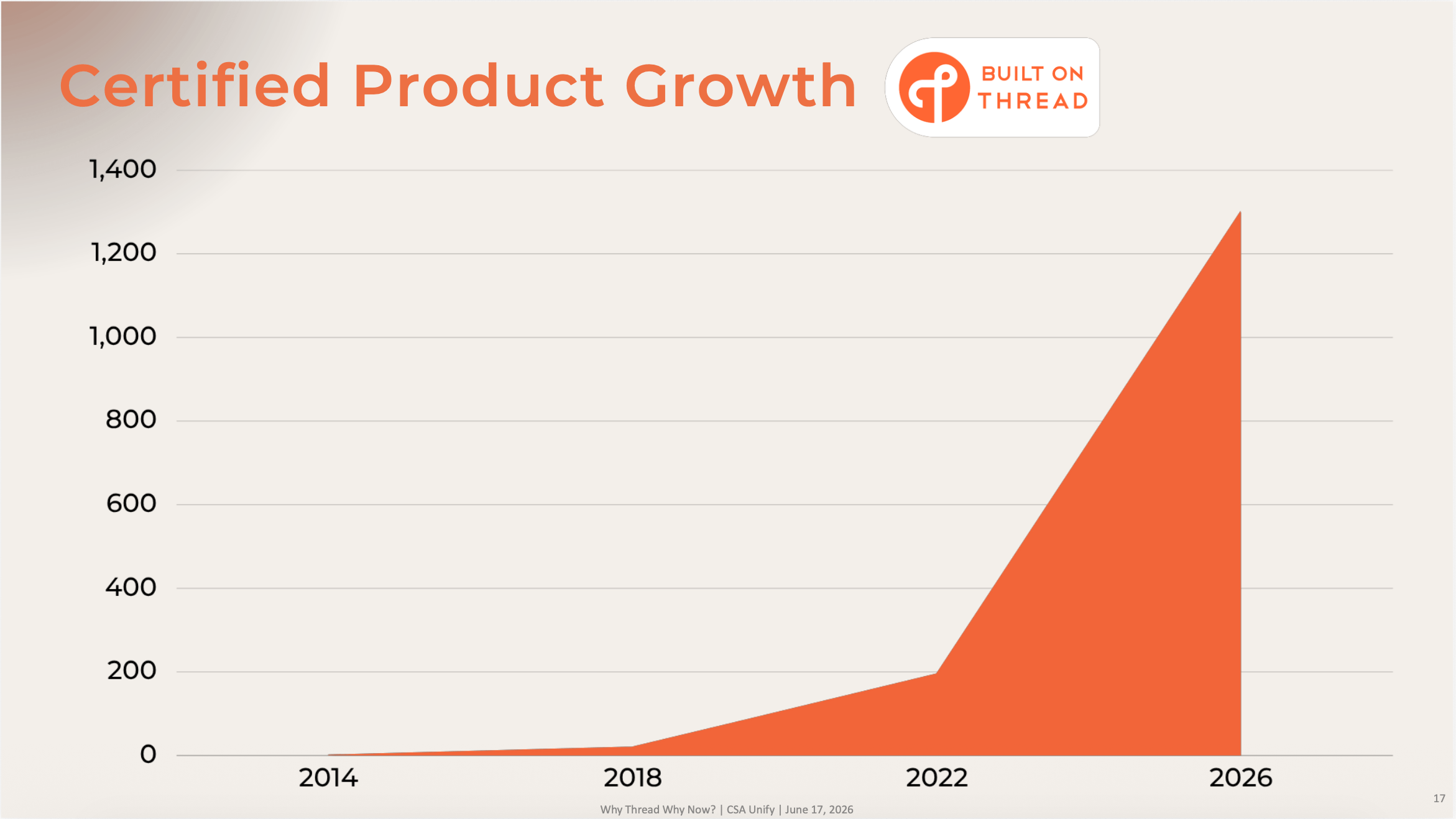
Similarly, Thread, one of Matter’s two wireless connectivity protocols, has also seen a huge uptick in interest, including a 27 percent increase in membership over the last two years and over 1,000 certified devices, with 151 arriving just this year. There are now 71 Thread-certified components, meaning silicon providers are building solutions for manufacturers, creating a strong foundation for new companies looking to use Matter in their products.
My biggest takeaway from Unify is that despite the problems the standard has faced, it’s not in danger of failing. Despite some outliers and cautious approaches, the industry coalesced around Matter four years ago, and that coalition remains strong.
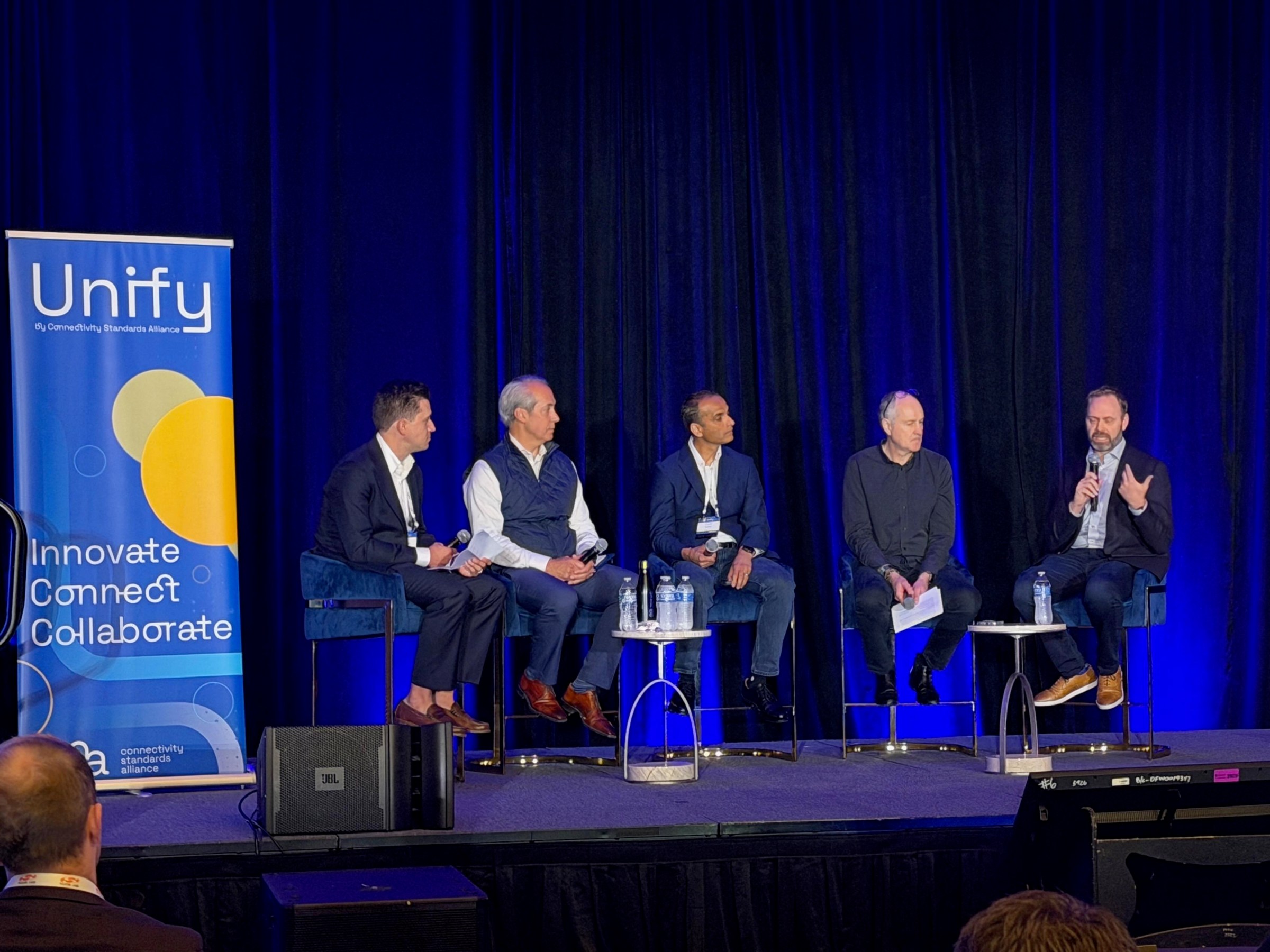
That doesn’t mean Matter where it needs to be, however. Along with faster platform adoption and a need for more devices in the newly supported device types (cameras in particular), it still needs to deliver on its initial promise of simplicity. As I said at the panel I hosted at the conference, for me, success will be when I can feel confident that when I hand my 80-year-old father a Matter lightbulb, he can get it set up and working with no help from me.
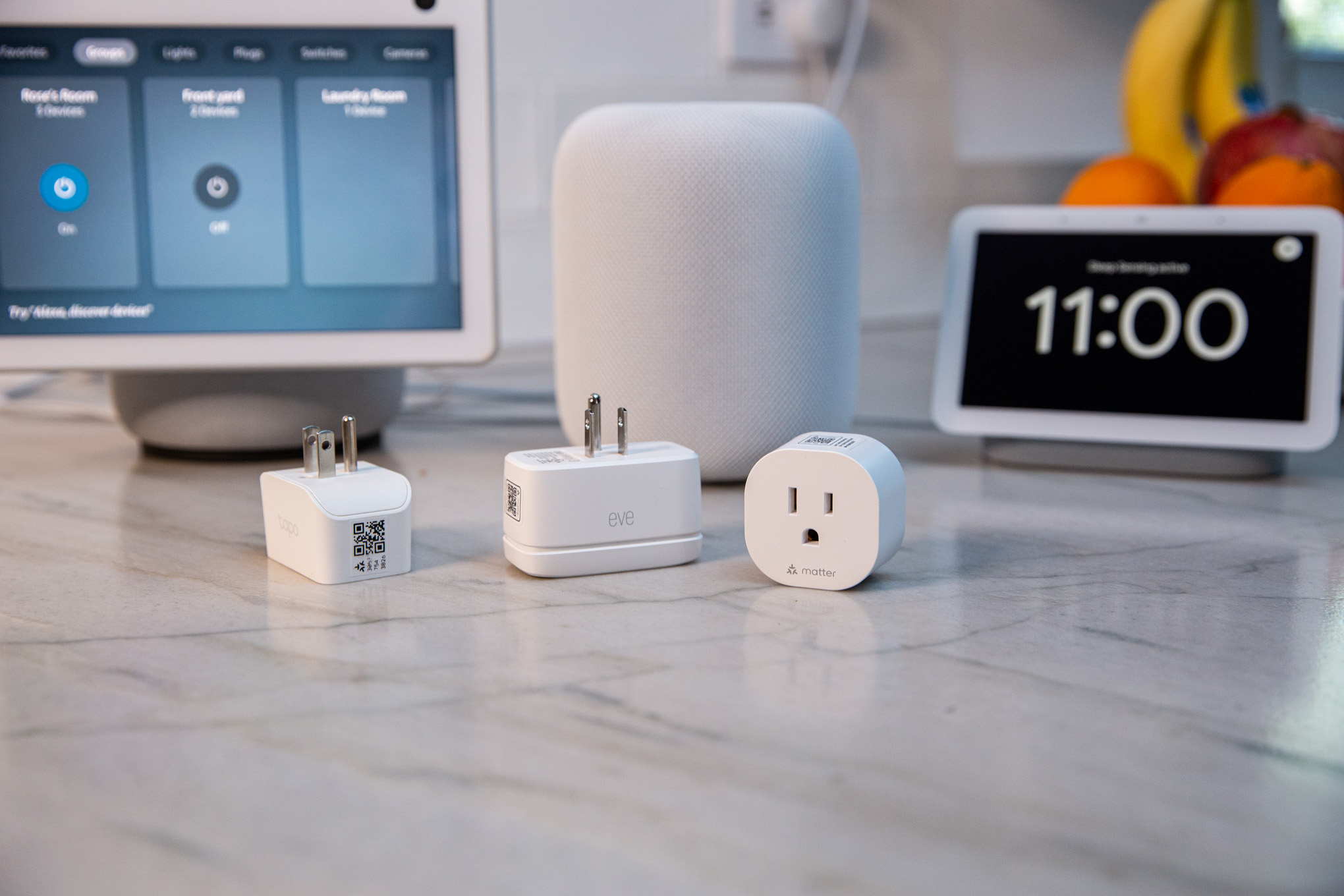
For manufacturers, the roadblocks to that simplicity are still too many. Yianni at Philips Hue told me that while he believes Matter has landed as the “definitive smart home interoperability mechanism,” it’s still confusing and complicated for his users.
In particular, this comes back to the slow adoption of the spec by ecosystems. The initial experience Matter delivered for Hue users was worse than what they could offer without it. “Matter launched too early, but a lot of those teething problems have been solved, with a lot of hard work from many companies,” he said.
“Most consumers just assume things will work.”
— George Yianni, Philips Hue
The challenge now is bringing those solutions to people’s homes. Yianni said he’s most excited for the just-announced Joint Fabric. “Now we actually have the possibility to have a single Thread network and a Matter fabric for the home, like we have a Wi-Fi network. That’s how everyone assumed it would work.” However, as everyone has learned, just because it’s in the spec doesn’t mean it will be implemented.
Additionally, Yianni feels that communication to consumers about what Matter is has been disappointing. Too much has been placed on device manufacturers, and the ecosystems still push their users to look for the Works With badges. “The badges are a crutch,” he said, arguing that most regular customers aren’t looking for them. “Most consumers just assume things will work.”
He and others I spoke to believe it’s worth the investment by all the ecosystems and the CSA to make this much simpler for people looking to buy smart devices, and to reinforce that the Matter logo is all you need to look for if you want to know whether a device will work with your smart home. “Because today it’s just confusing,” he said.
It should be so ubiquitous that the idea of a smart home device without Matter is as absurd as a wireless router without Wi-Fi.
John Bartucci, of Fortune Brands, the owner of Yale and Moen, pointed out during a panel that retailers also rely on the badges. “Retailers want products that won’t get returned; correct badging is how consumers trust it’ll work at home.” Austin Stewart of Schlage Locks agrees that talking with customers and retailers is still “a Works With story.” For their customers, the Apple Home badge means this lock works with the Apple Home app, “and that’s the experience you get,” he said. As Matter grows and becomes more ubiquitous, that story may change. He compared it to Wi-Fi, a term so common that his grandmother knows it, but today, Matter is not there yet. “It’s the experience that we’re delivering, not necessarily the technology,” he said.
Ultimately, the Matter logo needs to become synonymous with smart home connectivity, in the same way Bluetooth is synonymous with wireless audio and Wi-Fi with wireless internet. “Today, if you go buy some new headphones, you don’t look for the Bluetooth logo; it should be the same for Matter with smart home,” said Yianni. It should be so ubiquitous that the idea of a smart home device without Matter is as absurd as a wireless router without Wi-Fi.
That brings us back to the core concept of Matter: trust. The standard promised that I could just hand my father a smart lightbulb and trust that I would never get the call asking why he’s sitting in the dark. We’re not there yet. But, given the momentum at Unify and the evidence I saw of continued investment by many manufacturers and ecosystems, Matter feels closer to fulfilling its promise than it’s ever been.
Read the full article here