



Alibaba Cloud is adding more capacity in Japan as enterprise AI workloads turn regional cloud infrastructure into a procurement issue.
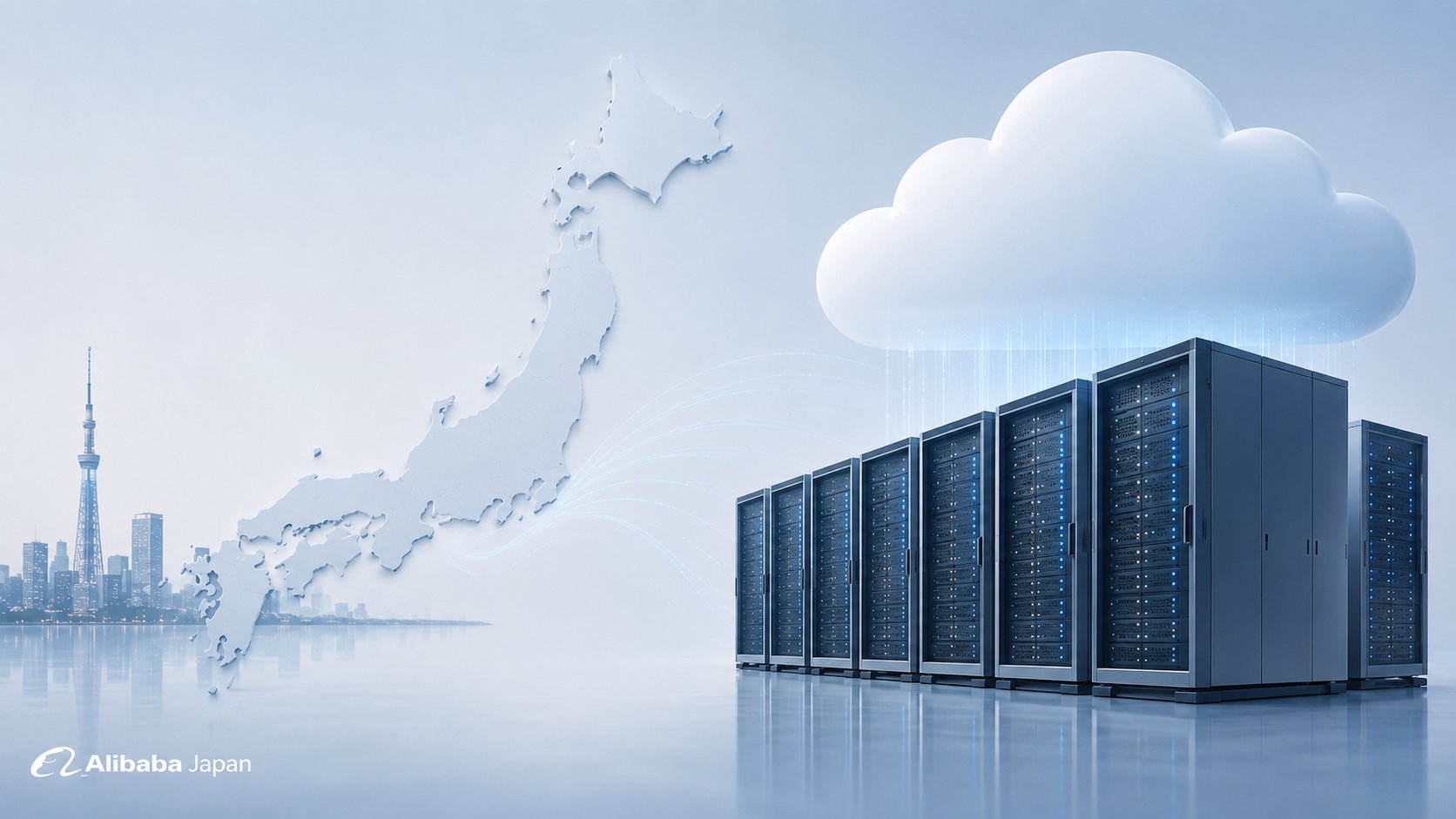
The company announced on June 18, 2026, that it launched its fifth data center in Japan, expanding its Tokyo region to five facilities and making Model Studio, its enterprise AI development platform, available locally. Alibaba said the facility targets customers in retail, gaming, entertainment, and manufacturing, giving APAC cloud buyers another option to assess for AI access, latency, resilience, and data-handling requirements.
Alibaba ties Japan cloud capacity to AI services
The Tokyo site follows Alibaba Cloud’s fourth Japan facility, which opened in March 2026. Alibaba said the new data center supports cloud services including elastic computing, storage, containerization, networking, security, databases, and developer tools.
Alibaba said the launch brings its global network to 105 availability zones across 32 regions, while adding Japan-region access to Model Studio and Qwen3.7-Plus. Across APAC, AI data center planning is increasingly tied to power availability, grid resilience, and where cloud providers can add capacity fastest.
Model Studio anchors the AI side of the rollout. Through the Japan-region environment, businesses and developers can access Qwen3.7-Plus and third-party large language models for online inferencing, according to Alibaba.
The platform’s command-line interface supports text chat, image and video generation and editing, and speech synthesis and recognition. Alibaba also said its HappyHorse video generation models and Qwen3.5-Omni multimodal model will become available in Japan, though it did not give a specific release date.
Alibaba also launched AI-native data and analytics services in Japan, including tools for analytics, data management, database operations, data ingestion, and data warehouse development.
Takeshi Kurita, Alibaba Cloud’s general manager for Japan and South Korea, said the company is seeing “unprecedented demand” from Japanese enterprises interested in agentic AI, according to Data Center Dynamics. The demand claim is Alibaba’s, not an independent market measure.
The procurement questions behind the launch
The five data centers may strengthen Alibaba Cloud’s availability and continuity pitch in Japan, but enterprise buyers still need a full procurement review.
The most important questions are contractual. Alibaba’s announcement describes Japan-region availability, but it does not spell out several procurement-critical details. Those include data residency guarantees, inferencing traffic routing, recovery targets, and Japan-region compliance certifications. For regulated buyers, model access and infrastructure control are becoming part of the same vendor-risk review, not separate AI policy questions.
The AI roadmap also needs scrutiny. Qwen3.7-Plus and third-party LLM access are available now through the Japan-region environment, according to Alibaba. HappyHorse and Qwen3.5-Omni are described as coming soon, while broader Model Studio capabilities such as fine-tuning and batch processing should be confirmed against current product documentation before teams design production workflows around them.
For IT leaders in Japan and across APAC, the bigger signal is that cloud infrastructure and AI platform strategy are now being sold together. Alibaba Cloud is not only adding capacity in Tokyo; it is using local infrastructure to support AI model access, agent development, and data tooling for specific verticals, a pattern also visible in Reliance’s AI infrastructure push in India.
For CIOs, cloud architects, data teams, and AI engineering leaders, local AI access is useful only if availability, compliance, data handling, and roadmap claims hold up in procurement.
Also read: Google’s SpaceX compute deal shows how AI capacity planning is moving beyond standard cloud regions and into private infrastructure agreements.
Read the full article here