




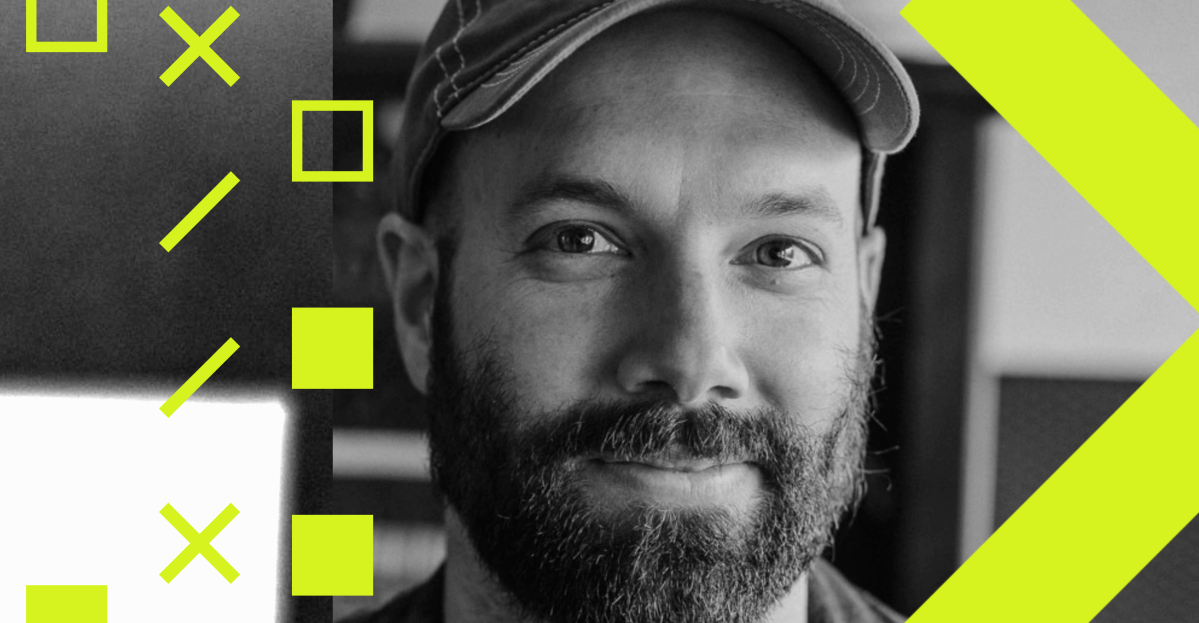

Today, I’m talking with Jack Conte, the CEO of Patreon. Jack last joined me on the show almost exactly five years ago, in the summer of 2021, and a lot has changed on the internet and in the creator landscape since then, so I was very excited to talk to him again, especially since his ideas about what Patreon is and how it should work have changed dramatically as big social media platforms have gotten more closed off and more flooded by AI slop.
In fact, you’ll hear Jack say that he now thinks of Patreon as an “index of small business media companies,” a major change in perspective that’s led him to make Patreon a more direct competitor to social platforms like Instagram and TikTok.
Verge subscribers, don’t forget you get exclusive access to ad-free Decoder wherever you get your podcasts. Head here. Not a subscriber? You can sign up here.
This is a huge change. In fact, the last time we talked, Jack was adamantly opposed to building any kind of discovery features into Patreon. But then Patreon built those features — to help people discover content from new creators. Jack’s reasoning for that change will be very familiar if you’ve been listening to our media conversations here on Decoder: Jack says if Patreon didn’t build its own audience platform, then everyone would be at the mercy of Meta and Google to find audiences — and customers.
You’ll hear Jack say that the current way platforms treat creators is “disgusting,” and you’ll hear him convincingly argue that big tech companies are going to just keep taking everyone’s work however they want, and writers and musicians and artists of every kind will be left holding the bag.
But you’ll also hear Jack argue that this leaves a really big opportunity for a company like Patreon, which connects creators directly with audiences. In a world full of cheap and easy slop, Patreon’s plan is to build demand from real people who want to connect in deep and important ways with real artists.
There’s way more in this one — Jack came fired up for the Decoder questions, and we spent some real time talking about his approach to how meetings feel, something you just won’t hear from many other CEOs. This was a pretty refreshing conversation; I think you’ll really like it.
Okay: Patreon CEO Jack Conte. Here we go.
This interview has been lightly edited for length and clarity.
Jack Conte, you’re the cofounder and CEO of Patreon. Welcome back to Decoder.
Thanks, Nilay. Good to be here again.
It’s good to see you again. It has been five years since you were last on the show. I can’t believe it.
A lot has changed. The creator economy has changed. The idea that everything is a TikTok clip has now totally upended the culture. Patreon itself has changed. Maybe we’ve all changed. Really, the true creator economy is the friends we’ve made along the way.
How has your idea of Patreon changed over the last five years? I feel like there has been a lot of change. How would you describe Patreon today in 2026?
You know what’s so funny, Nilay? I think my answer to that is probably similar to your answer around the media industry. At the end of the day, Patreon is essentially an index of small business media companies. That’s what we are. We help those small business media companies thrive, get paid, and reach their fans. And so, when they’re hurting, we feel that burn as a business, and we feel that burn for them as our customers.
The biggest shift over the last five years is really what happened up-funnel — what happened with TikTok, YouTube, Facebook, and Instagram. The shift is really one main thing:the move away from follower-based paradigms and true subscriptions into an interest-driven distribution system.
There are so many problems with that, so many problems. It’s hard to even outline all of them. There are societal-level problems around mass polarization, addiction, loneliness, and all the things that I think a lot of consumers are feeling. And then there’s a bunch of problems on the creator side as well, because when you move away from a follower paradigm, you ruin the creator’s deterministic line of reach to their fans.
If a creator can’t reach their fans, then not only can a creator not build a true community around their work, but they also can’t build a business around their work. The biggest shift in the creator economy, that I think has been the most impactful for creators and for Patreon as a business, is this shift of the internet away from follower-based paradigms and into interest-based paradigms.
It’s very similar to Google Zero. It’s the same concept. It’s when the platforms stop sending traffic to the people who have spent a decade-plus building their followings, building their communities, using those platforms as their top of funnel.
It starts to become very clear to everybody that these people were never our users, they were never our community members, they were never our fans. They were Facebook’s users. And Facebook has made that loud and clear to creators, to the media industry, and to publishers. That has created a whole set of very important product launches and problems that Patreon has had to solve over the last five years, which has been the center point for our strategy.
I love it. We’re in it. We’re in the heart of it. My criticism of the media industry over the last five years is that these platforms have just been looking us in the eye and saying, “We’re going to kill you.” It hasn’t been subtle in any way, shape, or form. They’ve just been very clear that these are their audiences, and they can remix attention in ways that serve them.
They’ve basically even said that to marketers who pay the bills for them, their advertisers. Meta, in particular, is like, “We’re going to kill you too. We will just make the ads.” Mark Zuckerberg has sat on stages and said, “Look, my vision is that you just show up with some money, and we deliver you some customers, and everything in the middle is AI.”
I don’t know if that’s going to work out or not, but they’ve been pretty blunt that these are truly their audiences, and they will do with them what they will, and anybody who gets in their way is probably going to die.
It feels like, in the publishing company media world where I live, , approximately zero has been done to address this. It’s like this industry has just decided to die, and maybe now they’re all saying Google Zero, and maybe the future of The Verge’s revenue is that I just charge licensing fees for it.
You’re saying in the small business world, this is equally the same problem, as the platforms go from follower-based to interest-based graphs. Is there a concerted effort beyond Patreon to do something about it in the smaller creator world?
I wish there was something systemic or organized, but honestly, it’s very hard to fight the network effect. At the end of the day, that is what’s happening. And honestly, the only reason creators are still using these fucking platforms is because that is the only place where you can grow your audience. It is not the software that is valuable about those companies, although, in many cases, the software is good. They have built a bunch of features that are useful for media hosting, uploading, and reaching people.It is more the fact that that’s where the foot traffic is. That consolidation of traffic and of attention is one of the core problems.
That’s also one of the reasons I was so excited about adding [Flipboard CEO] Mike McCue to our board, and about what he’s doing with Surf. At the end of the day, it would be amazing. The only way to truly systemically address this is if the people own the network effect instead of the platform. Ultimately, that’s what Mike is trying to address with Surf, and that’s one of the reasons I’m excited about Bluesky.
There does seem to be this early-stage effort to build an ecosystem around the open social web. That’s not on our road map right now, but it is something I’m following very closely and very excited about. Because at the end of the day, I think it’s probably one of three main things that needs to change to stop something like this from happening again.
If you look back at the last 20 years, essentially, I think it’s fair to say social media is a failed experiment that has failed humanity and been really bad for humans. I’m not saying there aren’t some good things about it. We’ve all been connected up. We’ve been given multiple pipelines to reach people. There are now millions of channels, instead of three channels. People who didn’t used to have voices now have voices. There are some really wonderful things about it, but I would argue that those things are attributes of the internet, not of the current platforms.
The internet is beautiful. The internet is important. Connecting people and giving people a way to reach each other, and speak, and make media, and distribute that media, that’s awesome. But the systems and subsystems that we’re using layered on top of the internet, like social media, those systems are a bad implementation of those principles that have had a really harmful effect on humans at a scale that is hard to even comprehend.
Something needs to change. When we look at the next 20 years of human collaboration and media distribution, I think we need to do some deep thinking. What are the architectural elements of these two decades of failed experimentation that have had such a bad effect on us, and what do we need to do differently next time to make sure it doesn’t happen again?
There’s a bunch of ideas in there. I want to come back to a lot of them. In particular, federation and Mike McCue, who’s the CEO of Flipboard, which runs a platform called Surf. Surf is like a feed builder and browser for Threads and Bluesky and Mastodon, all the open social networks. There’s a lot there that I want to come back to, particularly in this idea of the architecture of social networks.
I was talking to Hank Green a couple weeks ago, and he said, “It feels like the end of one internet, and we need to think of it as the beginning of another.” That would be great. I would love to live fully in that zone. The problem is, we have to contend with the end of the internet that we have today — the end of the platform era, if it is truly the end of the platform era.
Tell me about Patreon right now in this moment. Maybe we see our way through the other side, but Patreon has to operate today. How is Patreon organized today?
We should spend some time getting into this because it’s a really important point. The irony of all this is that in order for Patreon as a business and on behalf of our creators to fight this — in order to give our creators the audience growth and the reach that they need, and the ability to continue to grow and continue to grow on the platform — we have had to build discovery systems into our platform. I actually don’t remember if I talked about this the last time I was on the show.
You were opposed to it the last time you were on the show. You did not want to do that.
Exactly, and that’s the irony. Now we have had to do that, because what we’ve learned is, if we don’t provide our own top of funnel for creators, then we’re just relying on Facebook to be the top of funnel, and that is not a good business strategy for creators or for Patreon.
Essentially, the stage that we’re in as a company now, as for the last few years, is that we’ve been building a bunch of media tools, distribution tools, and hosting tools. We’ve built native video, we built chat, we built discovery, we built short-posting tools, we built a feed. We have built all these new ways for creators to essentially start providing the growth for themselves, start providing a top of funnel for themselves, and for Patreon to have a top of funnel for our creators as well. That’s the irony of all this.
Now, that is the right strategy for us, given where the business is, where our creators are, and the current media landscape. That was not our strategy six years ago. That’s something that we’ve implemented over the last four to five years, and we’ve implemented it out of necessity.
The main reason is because I don’t want to wait for the platforms. They’re looking us in the eye, and they’re saying, “We’re going to kill you all.” And I believe them, and I don’t want to wait for them to do it. I want to prep way ahead of time. The good news is, a lot of this work has actually worked.
For example, one of the things we’ve built since we last talked is free memberships. What is a free membership? It’s a follow. It’s a line of deterministic reach to people who choose to follow you. You get the email address associated with the account that signs up for you, and then when you make a post to your followers, it triggers emails, and you also see those posts in the feed that get ranked above other posts to make sure that your followers actually see your posts. That is very different from how other feeds work.
That product has been an amazing success. I think now we have 185 million free memberships on the platform, and that’s up like 2x year-over-year since last year. So, clearly there’s a lot of fan-side demand and a lot of creator demand for a better follower system that is true to the actual word “follower.”
We built native chats, which is also something we didn’t have before. We were relying on creators to have Facebook groups and communities on Instagram and we were saying, “Hey, we’re the payments architecture.” That’s different now. Now, we have native chats on the platform.
lLast year, I think we had something like 35 million chat messages sent back and forth, and 110 million hours of video have been watched on Patreon. We were previously relying on Facebook and Instagram and YouTube for a lot of these tools and a lot of these experiences. We can no longer rely on them to do those things, and our creators can no longer rely on them to do those things. They need a way to reach people deterministically on the platform.
We’ve invested heavily in a lot of those communication and media-hosting tools, and they’ve been very well received, which is why we’re seeing that kind of adoption on the platform. It is very different from where we were six years ago, but necessity is the mother of invention. This is the place that we’re in as an ecosystem, this is where the internet is, and this is exactly what Patreon needs to be doing right now to help creators succeed.
You’re describing a lot of change. Again, five years ago, when we talked, you were very focused on payments and being the payment rails. People would basically show up and be like, “I have a lot of Twitter followers and I need to monetize them,” and Patreon would be there. That’s over. I think we all understand that that’s over. Twitter itself is over. It’s called X now. It’s the everything app. I don’t know if you’re familiar with it.
[Laughs] No, that’s interesting.
It’s everything, I’m told. You don’t make all your credit card payments through X?
You’re describing a very different company. That means you obviously have had to restructure and refactor the company. How many people work at Patreon? How have you organized them today?
There are hundreds of people that work at Patreon now.Technically, by manager, we’re organized by function. We’re a functionally organized company. The people who report to me run functions, which, ironically, comes with all kinds of dysfunction. To solve for that, the way that we’re actually organized is by objective.
When you look at how we talk and what the company works on, it’s working on objectives. Teams are cross-functional and collaborative, and all the work ladders up into those objectives. When we run an all-hands meeting, which I did this morning, or when we celebrate work that’s happening, or when we do company planning, all of that is not thought of in the silo of a function. It’s thought of cross-functionally under any given objective. And that helps solve some of the problems associated with sort of organizing functionally, but not all of them.
That’s been one of the biggest changes over the last maybe five years is organizing by objective. That has been the most transformational for Patreon. Because if you don’t do that, then you have a marketing function with one set of goals, and an engineering team with a different set of goals, and that’s totally dysfunctional.
You’re describing kind of the classic Google-style “objectives and key results” framework, or is it something different than that?
We do use some of that framework. It’s not a perfect copy of objectives and key results. We have company-level objectives, and those have very clear key results associated with them, but I would say our system is different.
Let me give you an example. One of our objectives is to improve core experiences on Patreon. Our product is very wide. We’ve made this shift from being a membership platform and bottom-of-funnel payments processing suite to being this top-of-funnel network and community and media product.
When you do that, everything breaks — everything. You have to rebuild the entire product from the ground up, like architecturally, all the systems, with new infrastructure. And literally everything breaks: navigation, you have to build new privacy policies, you have to build everything. So part of our work is chipping away at all those things one by one.
Making the core experiences fit into the current vision and product that we want is a really important objective for us. We have 10 fixes every quarter that we chip away at, and by the end of the quarter, we want to have shipped eight of them. There are tons of cross-functional teams that are working on that across the company. It’s a little different from OKRs, but the spirit of it is the same.
The other question I ask everybody on Decoder is about decisions. You’re describing a very big decision. You’re describing an existential change to the nature of Patreon, and what your relationship to consumers should be. In many ways, you turned into a social network, which is a thing you’ve been fighting against.
Tell me about your framework for making decisions, and explain how you brought it to bear on that choice.
Sure. But before that, I have to combat the social network idea. I don’t call it that internally. I don’t say we’re building a social media app. That’s effectively, in my opinion, like saying, “Hey, we’re building better cigarettes.” Nobody wants better cigarettes.
I mean, some people really want better cigarettes.
Fair enough. But I don’t want to make better cigarettes. That’s not how I want to roll into my grave. I don’t want to do that.
Also, I think, spiritually, it’s important, because if we go out and say, “Hey, we’re a social media app, what are we going to do?,” then our teams are going to look at what happens on Instagram and what happens on Facebook and we’re going to copypasta a bunch of features and it’s not going to make sense for our systems.
Our optimization function is really different for everything in the product. Our algorithms that provide creators with discovery and distribution are not optimizing for watch time. Actually, Nilay, I don’t know what session time is on Patreon. If you were to ask me questions like, “What’s the average session time for users, for creators?” I don’t know. We don’t track it. We don’t A/B test against it. That is not what we’re doing. It’s not our optimization function.
So, grouping us into social media is just not true. We’re trying to build a fundamentally different system with different bones. Instead of looking at things like session time, we’re looking at deterministic reach. Are you able to build long-term relationships with the people that follow you? Are you able to reach those people? Are you getting connected pieces of media, as opposed to unconnected pieces of media? Are we giving creators and fans agency in their experience, or are we hacking their limbic systems, which is what it feels like on social media right now? I feel like I’m a lab rat. Are we optimizing for creator payments, which the platforms are not optimizing for?
There are going to be some primitives that look like social media, but at the end of the day, the bones are different, and it’s really important, at least for me, to acknowledge that. Let me answer your second question around decisions, though.
I was very bad at making decisions, and I don’t want to say I’ve figured it out, because I think that’s a kind of thing we’re always learning. But there have been a lot of little things that I’ve learned that I’d love to share.
I hear a lot of heuristics that sound really great for decision making. There’s like, “Listen, decide, communicate.” There’s all these simple things. That’s not what’s been effective for me in making better decisions. Let me just give you a bunch of really tactical, specific things that have helped me make better decisions over time.
The first is, when we start a meeting where we’re supposed to make a decision, one thing I like to ask is, “Hey, does anybody have a strong opinion? Off the bat, are there any strong opinions in the room? Does anybody disagree with the recommendation?” Sometimes the answer is no, but sometimes somebody right out of the gate says like, “Yeah, I really disagree with the recommendation, and here’s why.” You just saved yourself half an hour of fluffy discussion at the top of a meeting. You cut right to the chase.
If you really press somebody with, “Why do you disagree?,” you hear three or four maybe genuinely good points, and then we can debate the merits of those good points. The whole room gets informed as you’re making a decision like that. I like to put some pressure at the beginning of the meeting to cut right to the chase.
The second thing is I no longer trust the framing of the decision. Sometimes the decision will come to the group and it’ll be, “Okay, here’s path A, here’s path B. Let’s choose.” What I’ve found is, more often than not, it’s not actually path A or path B, and sometimes it’s not even a decision. There’s literally just four or five action items that we can discover as a group, and march through those things, and solve the underlying problem that the decision was attempting to solve. It’s just having a discussion where we get clear on what the next steps are. Sometimes it seems like half of path A and half of path B, but actually, it’s a more bespoke solution that is a better solution to a complex problem.
Another thing is really great pre-reads. Man, you can spend 45 minutes just context-sharing. I feel very strongly about this. Meetings are not for information transfer. They are for debate and discussion. If we find ourselves spending 45 minutes in a meeting literally sharing context with each other, that’s wasted time, and we’re going to make bad decisions if people have information asymmetry. No wonder one person thinks we should take path A and another person thinks we should take path B. That’s because we don’t have shared context. Getting everybody to have shared context is huge, and pre-reads are a great way to do that.
Okay, let me give you a couple more. Naming that there should be a decision-maker. Oh my God, I’m still learning how to be better at this. Sometimes I find myself in a meeting where we’re all just arguing with each other, and then it’s like, “Hey, who is the decision-maker here? Who’s actually making this?” Having clarity around who the DRI is for that decision can be really helpful.
That stands for directly responsible individual.
And then let me give you one more. About halfway through a meeting, if I find myself starting to be swayed in one direction or another, I just name that, and I say, “Hey, team, here’s what I’m thinking so far. Here’s where I think we should go based on the conversation we’ve had, based on what I know. If you think that’s wrong, tell me why.”
What often happens at that moment is that someone brings up three or four really good points for risks of taking that path that we hadn’t named before, and saying we’re going to go in this direction is what surfaces those extra risks and that extra click down in the debate, because it starts to become visceral if people feel like, “Oh, we are going in that direction.”
Then we can spend the next 30 minutes talking through those items and realizing things like, “Okay, do we want to build mitigation plans for those risks, or do we want to choose path B instead?” Just telling the team where I’m thinking and where I’m leaning in real time has created a little bit of pressure to get the real conversation out, and to identify more problems with the path as we go.
I have a bunch more lessons that I’ve learned over the years, which I’d be happy to share, but honestly, I keep these lessons like at the top of a doc when I’m having a meeting, so that I can just remind myself like, “Hey, do these things in a meeting to help drive it to conclusion.” And it’s been really helpful for me to just do that.
This is great. I have a Decoder book coming out, and we’re going to give you a whole chapter.
What I like about this, what I’m curious about, is there’s a lot of Amazon in there. DRIs are a very Amazon kind of idea, that there needs to be a decision-maker, and you need to identify them. And then there’s what I would describe as you paying attention to the emotional tenor of a meeting and making sure that’s driving it forward.
Is that just because you’re in a band and you understand the creative process? Because most of the executives I talk to think about this, I would say, mechanistically. “We’re going to go from here to here to here, and these are the steps.” You’re very much describing how it feels to be in a meeting and controlling that feeling.
There are benefits of that, and there are drawbacks. I’m a creator. I’m a YouTuber. My background is not as an engineer. I didn’t come from product management. I came from literally making music videos on YouTube. I think it’s fair to say that my job for a long time was transferring my emotions to other people. That’s how I made my living, right? That’s the job of an artist: Can you make somebody feel something that you’ve felt? Can you communicate that feeling to somebody?
I’m very aware of that in a meeting, and I think that can be really helpful because you can add a little bit of pressure and push a conversation forward. It can also be dangerous because I can over-rotate on feelings sometimes. I’m not in the Elon camp that empathy is the curse of all humanity. I’m very opposed to that philosophy. I do not agree with that by any stretch of the imagination. But I do have to be careful that I’m not over-rotating on feelings. I think that the desire to make everybody happy can really drag things down sometimes, so I have to constantly be aware of that tendency in myself.
Put this all into practice for me. You described, instead of needing path A or path B, we’re going to drill down and find just the action items, and actually the decision is already made, and we just need to move forward. I’m curious for a real example of that, and then I want the bigger picture of, “Oh, I need to drastically change what Patreon is.”
lLet me answer your second question first, and along the way, I’m sure I’ll think of a specific example.
For the bigger decision around this adjustment to Patreon strategy, the truth is, there is some element of top-down decision-making associated with a change like that, and there is some element of emergent strategy that comes from the organization. It’s necessary to embrace and even put some kindling against it to get it to be more holistic and full-bodied.
It started in 2020 probably, with bringing in more of a consumer product leader, who was thinking more about consumer experiences and less of a SaaS-focused organization. So less of the kind of B2B2C go-to-market motions, and more of the consumer product motions and talent and teams and company structures.
That was a big shift in and of itself, just bringing in that leadership, and honestly, just a lot of learning for me, because this is my first job. I’ve literally never worked at another company before. In some ways, I don’t see the water, I don’t see the air around me. There was a lot of learning for me like, “Okay, how does this look different?”
Then as we were doing that, teams were suggesting things that we wanted to do differently, and a lot of that is coming bottom-up. Before, we were against native video. But then it was like, “Okay, but if we’re going to have discovery for creators, we need to have free accessible media on the platform.” You can’t have identity-based discovery. We’ve run those tests, they don’t work. If you land on a creator’s page, and there’s no free accessible media, you’re not going to pay that creator. You have no reason to. You don’t know who that person is. You have never fallen in love with their work. You need a way to fall in love with their work, which means you need free accessible media on the platform.
That was an emergent piece of the strategy that came from the organization. It wasn’t just like, “Ah, let’s turn on discovery, and put different creator profiles in front of everybody’s page.” We tried that and we tested that. It didn’t lead to conversion. The organization learned. We had systems to make sure that bubbles up to PMs and product leaders and to me and to the executive team. Then you keep chipping away at that flywheel, and over a period of two years, you start to home in on precisely what the right strategy is. There’s some amount of top-down push that comes, and there’s some amount of bottom-up strategic emergence that comes from the organization.
Let me ask you about just building a product in that kind of environment, when it’s the age of AI and you sit right in the middle of a totally polarized debate.
On the one hand, every software engineer and product manager I know is either the most excited they’ve ever been or experiencing a full existential crisis about the ease of developing software, of making new features, of making new products, of tokenmaxxing. Then in creator world, the audiences hate it, and they don’t want the slop, and every platform is overrun with slop, even though the audiences don’t want the slop, and something very bad is happening.
How are you bridging that divide? Because it’s obvious that the future of software companies looks AI-enabled in some way, I’m not sure which way it is, but it’s obvious that it’s some way. And then it is far from obvious that the future of creator media has any AI in it at all, because the audiences are rejecting it so thoroughly.
This has been really challenging, especially in the modern environment of the internet. But I’ll tell you what I did. I just said what I really thought, and I spent a long, long time putting together my full thoughts. The end product is 45 minutes of me talking through these issues. And then I posted that. It is self-conflicting, and I’m holding two opposing beliefs at the same time, and I’m terrified, and I’m excited, and I’m really pissed at how all this has been rolled out and how little agency creators have gotten through this process.
Also, I find the technology magical. As an independent creator, I’ve always been interested in new technologies that help me accomplish my goals. I remember when the first digital audio workstations (DAWs) came out in the late ‘90s and 2000s, and tools like Pro Tools where I learned I could record and I could make a record at my house, in my bedroom, and that led to the emergence of Pomplamoose, which was my band. I was obsessed with that.
Now, there were a lot of analog recording engineers at the time who hated the idea of a DAW. They thought it sounded cold, it wasn’t warm, it wasn’t analog gear. You’re not respecting the technology of recording, the skill set, the craft of recording. The same thing happened with YouTube and distribution systems when we started uploading to the internet. There was this whole backlash around that not being the real way to do music.
The real way to do music is to sign a record deal and go on tour, and Pomplamoose didn’t do that. We just distributed our own music through YouTube and sold MP3s on iTunes, and made enough money to buy a house, literally, off of MP3 sales. So, there’s always been this piece of me that embraces new technology.
The truth is that I am holding all of these ideas in my head at once, and I myself feel very conflicted about it. At the end of the day, though, here’s what I think is happening. The algorithms and social media platforms are so good at polarizing humanity, sorting and filtering us into one of two camps on basically every issue, whether it’s politics or news or technology or anything. The algorithms just push everybody into one of two camps, and they push us so far apart. That is absolutely happening now with AI.
I’m not saying there aren’t serious drawbacks and concerns, and that I’m not seriously angry about it. I am, but I think it is such an important time for artists to have an open conversation around these technologies right now. Everything is changing for people, and this is going to be a transformative shift for artists, for employees, for humans. I think we’re at this place where boycotting AI is like boycotting the internet. That’s not a good strategy.
I don’t like what Instagram has done. I disagree with a lot of their decisions. I still have an Instagram page. I still post and reach my community. I don’t like what Apple has done, especially to Patreon creators over the last year. I really disagree with those decisions. I don’t think they’re fair for creative people. I think they’re hurtful for creative people. And here I am on my iPhone. I don’t like what my federal government is doing right now, on so many dimensions, and I still pay my taxes, and I still live in the United States.
Sure, I get it. I mean, I understand this sort of “yet you live in society” argument, and I find it very frustrating too. I used to read Guitar World when I was a kid, and I’d read the angry screeds from analog recording engineers about Logic being cold. Fine, but I had a cassette four-track at that time, and I was like, “This thing sucks. I would much rather use my computer to record my music.” It was just very obvious.
But Logic hadn’t stolen all of the music in the world to make Logic. And in fact, it was very obvious that the people behind Pro Tools and Logic and whatever else had a deep and meaningful appreciation for the music industry, and they were trying to make tools for musicians.
The internet and social media have huge stacks of problems, and maybe they need to be addressed in different ways, but the value exchange of Instagram, I think, is reasonably clear to people. You run a lawn-mowing business, you can go find some customers on Instagram, and you’re good to go. Or if you just want to post dance videos on TikTok and reach an audience, maybe that’s the easiest thing that’s ever been in world history to do. The value exchange for AI, I think, is so much more diffused that people hate it.
But you’re a musician. I know tons of musicians who are like, “Look, AI is everywhere. Suno is everywhere in the music industry.” We just had Harvey Mason Jr. on the show, he runs the Recording Academy. He’s like, “It’s everywhere, and our line to give you a Grammy Award is you have to be mostly human.” That is as fuzzy of a line as can possibly exist.
You’re saying you’re sitting in it. I think I have the exact same kind of conundrum as you do. I love new technology. We have an audience of people who love new technology. We’re going to post this clip on the internet, and people are going to tell you, “Of course, it’s clear that you should hate it.” That makes no sense to me, because those same people are probably using it in some way.
But you’re sitting in it, and you run a software company that services the needs of creatives who hate it. There’s no doubt in my mind that the software company side should be in full embrace of AI, and maybe the creative services part of the company, which is what the software makes, should not. Can you smash those together, or are you just trying to keep those far apart?
No, no, no. You nailed it, and this is the core of our approach. But actually, before I even get into that, let me just say that what ultimately is happening to creative people right now is disgusting.
Every 10 years, there’s this techno-legal cycle where tech companies build some type of new technology, and it breaks the current systems. It usually uses creator work without consent, compensation, or credit. And then the tech companies claim that, “Well, it’s this new technology, and it’s either fair use, or copyright doesn’t apply because it’s transformative in some capacity.” This was the Google Books case, this was the YouTube case, where Viacom sued YouTube for $1 billion.
Then there’s industry mayhem around that, and that’s where we are now. We’re in the industry mayhem part of this cycle. We should be there. There should be a lot of lawsuits. In my opinion, there should be regulation to prevent this type of thing from happening with regard to AI. What’s essentially happened is these models have Borg’d the entirety of the free creative web from all these creative people, without paying them, without letting them opt out, and without even giving them credit. That is bad, not only for those creators, but it’s bad for society. The reason copyright exists, the reason IP law exists, is to create a societal-level incentive around novelty creation. That is the purpose of those laws. That comes from the Constitution.
Congress was given the power to promote the sciences and the arts. They wrote in “the arts” because it’s important to promote and to protect people who invent within the arts. It’s important for those rights holders to have rights. That’s why they’re called rights holders. So it’s fucking crazy to me that these models are allowed to just use all the work, and then claim transformation, and then have a fair use case, and get around it. All that is terrible.
I think your question is like, “Jack, how do you reconcile that with being a software CEO?” I’ll tell you, it’s a very practical approach. If Patreon does not fully embrace these tools as a product and engineering company — and we are ultimately a product and engineering company — and use them to give the power back to creators, we, as a company, will be dead in three years.
Look at what happened with the mobile shift. These platform shifts are material. They have a massive impact on the people who are playing in these ecosystems. And if the companies don’t keep up with these new technologies, they will die. Patreon is much more useful to creators if we are alive, if we are shipping more valuable products at a faster clip that are higher quality. So, we 100 percent are embracing these tools internally.
I’ve told our creators that we are embracing these tools internally. We are using LLMs to write more features. Our engineers are using LLMs when they code. We’re using LLMs to organize the team. We’re using Notion agents to crawl through pages, our own internal documents, and create summaries and help teammates understand who to talk to for which sorts of problems. We must embrace those tools. That is not a choice that we have, because I want us to be a powerful product company that fights on behalf of creative people.
So, what we have done with our product strategy and how we’ve… I don’t know if you want to say resolved the tension, but this is how we’ve thought of it. There are a lot of companies that are going to market loud and proud with, “Now we’re an AI company.” Creators don’t want us to be an AI company, and they don’t need us to be an AI company. We don’t need to build a whole bunch of forward-facing features for creators. If you look at what a feed on Instagram looks like now versus two years ago, it looks pretty much the same. There aren’t a whole bunch of changes because of AI. There’s a consumption experience, and there’s a community experience.
In many ways, Patreon is similar. There are some experiences that are different, and the way we think about where to use AI is to imagine a bullseye diagram. At the center of the bullseye is creators making their creative work. What creators have told us is, “Patreon, get the fuck out of the way. Let me make my work. Don’t give me script ideas. Don’t build me an agent that helps me come up with a video thing. Don’t title my post for me. Let me do the making. Get out of my way.” So, we get out of their way on creators making things.
And then one rung out from that bullseye is the packaging of that material. Now, creators, to us, have been a bit more open to using AI to package their works. What does that mean? Like automated chapter markers and things like that, or cutting long-form podcast episodes into clips. One rung out from that is marketing, so helping a creator with automated email flows and things like that. And then one rung out from that is business management, and creators have even more openness to using AI tools to help them manage their business.
The best quote we heard from our user research interviews was, “Hey, I have a million ideas for new videos. I don’t need AI to help me make more videos. I need AI to help me do my taxes and clean my toilet.” And that is our product strategy. Our product strategy is to help creators do their taxes and clean their toilet using AI, but we’re not going out and saying, “We’re Patreon.ai now, and everything is going to be an AI feature.”
I’ve explained all this to our creators in this very long 45-minute video, and I think for the most part, creators understand that Patreon has to keep up and use these tools internally. And also, it’s important for us to be an advocate right now for creative people and fight on their behalf, so that they’re not forgotten about through this new techno-legal cycle that we’re going through.
You published that video. It was a little bit ago, not so long ago. You’ve sat with some feedback. Did you change anything about your strategy? Did anything about the feedback to that video shift your thinking?
Yes. One of the things that came up in that process and a lot of the comments was around, “Okay, but Patreon, how are you going to prevent the platform from being overrun with slop? What are you doing from a policy and trust and safety standpoint to make sure that Patreon just doesn’t get clogged up like other platforms are getting clogged up?”
That was amazing feedback. We had already started thinking about that, but we accelerated those work streams. Actually, I have a meeting next week with a team that has a draft proposal for that. That’s a really hard problem, right? Actually, YouTube made an announcement about that this week, but the problem there is like, what do you label, or do you label?
How do you even detect it?
And how do you detect it? And if you can detect it now, what makes you think you can detect it a year from now? There’s no canonical system. There’s no API you can call and say with certainty whether something is AI-generated or not. That doesn’t exist. And even if it does, somebody’s going to build a tool that breaks that.
Our poor reporter Jess Weatherbed, her beat is AI labeling systems, and she’s like, “What are we doing?” She’s been on the show, and she’s like, “We keep pretending that these are going to work because we have to, but there’s no evidence that they ever will.”
Then there’s the reverse, which is, “Okay, maybe you label human-generated work.” I remember growing up in the ‘80s and ‘90s, when manufacturing shifted to Asia, and there were all these “Made in the USA” stickers, and that became sort of a hallmark of, “Hey, you should buy this thing loud and proud. You’re voting with your dollars here.”
I can imagine some type of future where something is labeled as human-generated, and that’s a loud-and-proud moment for people. So, that’s another way to solve the problem. Actually, Howtown, cohosted by Joss Fong who used to be at Vox, made an amazing video about this, just like flipping the labeling game on its head by labeling human-made work. There are a bunch of different ways to solve it. We’re thinking through all those problems, and that was a result of feedback that we got from the community as we rolled out some of this thinking.
You have platform competitors who are a little more wide open, with lots of similar features. In particular, I’m thinking of Substack, whose approach to moderation is famously laid out in the show as, “Screw it, do Nazis on Substack.” That’s just their vibe. I assume they’re going to allow tons of slop. There’s already a ton of slop on Substack.
They have the same core set of features, and I realize you don’t want to be called social media, but the features, if you just list them in a bullet-point chart, are all the same. You have a Twitter-like function, you’ve got podcasts, they’re pushing into videos, you’ve got follow features.
Substack’s promise to everyone is, “We’ll take 10 percent of your revenue, but we will deliver you the next new follower.” And they do it in all kinds of ways. I would even describe a lot of ways to do it as just straight-up dark patterns. You subscribe to one newsletter, oops, you’re subscribed to nine more. And some creators have gotten pretty antsy about this, and a bunch of big publications have left, like The Ankler just left, and now they’re on Ben Thompson’s platform, which I believe is called Passport.
You’re sitting in that same zone, right? Is your promise, “We will help you get the next new subscriber” in the same way as Substack, or is it, “People are going to download this app, and we will just surface stuff until you show up”? Substack very clearly makes the promise that they will deliver the next new subscriber to you. Are you making the same promise?
We don’t frame it quite like that, but we absolutely are going out and telling creators now, “Hey, we’re helping you get discovered. We are helping you find and grow your community.” That is a big piece of our value proposition now, and we’re talking about it loud and proud. We are now sending 1.5 million new followers to creators on Patreon per month from our own systems, and 750,000 free followers are becoming paid followers per month on those systems.
One of the big differences between us when we last talked and us now is that audience growth was previously not in our set of value propositions that we talked about, but it must be now. This is the whole point around being your own top of funnel for your own creators. If you rely on Google to do that, if you rely on YouTube for the audience growth, and you provide no audience growth, you are a bottom-of-funnel company that will be Google Zero’d. You just are. Lesson learned the hard way. We don’t want to wait for that.
That said, I think there are good ways to do that, and I think there are bad ways to do that. I’ll go back to Elon’s takeover of Twitter. You wrote that amazing article on how, with social media platforms, the product is the policy. The product is trust and safety. It is content policy, which I think Elon learned the hard way. Now, we see it. SpaceX filed their S-1, and we got to see their revenue cut in half since the purchase. I think he learned very clearly that content policy, trust and safety, is the product.
That’s a big piece of what we do, and that is a big differentiator for us versus Substack. We don’t allow Nazis. We don’t allow that. We have much more thoughtful moderation. There are some people who think that your content policy should be the First Amendment. That’s not how we think about it. There are things on Patreon that we think are good for the mission. There are things on Patreon that are not good for the mission.
I’m very proud of our content policy. I wrote the first version of it in 2013. It was 40 pages, with the help of an outside consultant, and we’ve iterated on that policy over the years, and I think we’ve done a really good job of enforcing it. I’d say one of the biggest differences between Substack and Patreon is our content policy. It’s not a “by the way,” it’s a main feature for us. And a lot of creators have left Substack and come to Patreon because of our content policy.
It’s time now to talk about the sexiest topic of all, which is your relationship to payment processors. This is what all the kids have been waiting for.
As you go up to the top of the funnel, you have a more direct relationship with consumers. The pressure to moderate more increases, and it increases from a number of different directions.
I think when you are just the payment processor for a bunch of creators, you could get away with a lot more. In particular, you could get away with adult content, you could get away with people selling nudes. Patreon has a long history here. Now, you’re it. You’re an app icon on people’s home screens, with a direct relationship with consumers that you’re trying to pass on to creators. Payment processors like Stripe, Visa, and MasterCard can look right at you and say, “Don’t do this,” and you’ve had to comply. Talk me through that.
This is pretty controversial. A lot of adult creators make their living on Patreon, or did make their living on Patreon, and it seemed like you had no choice but to agree. I’m curious if you thought there was an ability to push back, or if there’s another way forward.
There was not a way to push back in the early days. I think we’re far enough down the road now. I sent many 3AM emails to CEOs, begging for them to reconsider.
And that’s like the CEOs of Stripe?
Of payment partners and processors. Actually, never Stripe, but other payment processors. And that was a real challenge for us, Nilay. If they’re threatening to not be a partner to us anymore, then it’s not just that one creator’s income that’s at stake. It’s the $10 billion that we’ve processed on behalf of creators since the company was founded. We’re processing over $2 billion a year now. That’s a lot of income that we need to be a rock for those creators, and make sure that that income is protected for them. And so, these issues are really serious.
So, we did a couple things. One, over the years, we worked very closely with payment processors to understand their content policies and their constraints, and make sure that our content policy was acceptable to them. We co-iterated on those policies together, and we also continue to co-iterate on them because culture changes.
Content policy is a living, breathing thing. It has to change as culture changes, it has to change as the internet changes. Now, there’s nonconsensual, AI-generated nudity. That was not a thing that platforms and payment processors had to worry about four years ago. Now, you have to worry about it, and you need a clear policy around it. So, one is, we worked with those partners to make sure that we had parallel content policies.
The second thing that we did is we built a hot-swappable payments architecture, so that, as the company got bigger, we could just unplug one processor, and plug in a different one. And what that did is, it gave Patreon a little bit of leverage—not a little bit, a lot of leverage, in those conversations. Because we’re processing billions of dollars annually, and those processors want that volume. If we can hold back volume from them because we’re not happy with their content policy decisions, that helps us. That helps us fight on behalf of our creators and have the right content policy that we want for us. It gives us some negotiating leverage in those conversations.
Now, sometimes it’s not even the processors themselves, it’s the banks behind those processors, or the acquiring banks behind them. This stuff goes all the way up the chain. I wish it didn’t work this way, but this is how it works. So, we’ve had to both be more collaborative, and also build some systems that give us more agency like this swappable payments architecture, to solve that problem over time.
Now, we’re at the point, over the last few years, we haven’t had any P0 payments processing issues because we’ve done so much work on that, and we learned the hard way over the first chapter of the business, but that was a big problem like in the early years.
Do you have adult content on Patreon right now?
Yeah, we do. We have an 18-plus category. We don’t have porn, and our content policy does not allow porn. There are people who say you can’t define porn. That’s not true. You can define it, and we have. And we’ve done that in a lot more—
What’s your definition of porn?
There’s way more detail than I’m going to elaborate on live on a podcast.
But we have detailed that. Pedantically, like in legalese, because the point of content policy is you want 10 humans to be able to look at a policy and look at a piece of media, and then have nine of them make the same decision. That’s how we try to write our policies in terms of level of detail. So we do have that level of detail baked in, and we know “this is pornography, this is not pornography.”
One of the things we want to allow for is that we’re an arts platform. We have to have free human expression in some capacity. So, we allow nudity. There are marijuana creators, and there are people who talk about whiskey, there’s all kinds of stuff. I want that stuff on Patreon. I want artists on Patreon. I want people who push the edge. I want people who expand the Overton window. I want people who are out there. I don’t want people who are just in the center of the bell curve. I want the people who are on the edges. Those are the people who push society forward.
In some ways, we have a liberal content policy, and that’s important to me on some dimensions. I want all those things. We’ve built policies to allow for those things, and now we have the payments architecture to support it as well.
I’m just personally required to have to say this every time: Justice Potter Stewart, who came up with, “I know it when I see it,” regretted it for the rest of his life. And even at the end, he was like, “I really wish I hadn’t said that,” because it is possible. You don’t have to be that subjective.
Let me ask you about the other payment processor conflict that seems omnipresent in the history of Patreon. You mentioned it already, which is Apple. We live in a world where Apple is constantly in some sort of legal fight that’s on or off with Epic, or the European Union, or whoever else it is, about the 30 percent fee. They’ve pushed you into forcing creators to be on monthly subscriptions, as opposed to some of the other plans you’ve had. You’ve changed some of your payment terms. I think everyone’s flat fee is 10 percent now, as opposed to 8 percent or 12 percent, which you had before.
This all seems like just a big swirl to me of the same problems with Apple. Describe your current relationship with Apple, and if you think anything else is about to change.
I don’t think anything else is about to change. I hope not.
Are your creators still paying the Apple tax?
Yes. I disagree with that decision. I think that’s bad for creative small businesses. I don’t think it’s creator-first. I told App Store employees at Apple that to their faces. I tried to be polite, but also tried to advocate as best I could on behalf of creators. We have been advocating for that for years and years and years. Apple was very, very clear with us that the in-app payments system that they built was nonnegotiable.
We had these legacy billing models, that the billing structures did not work with IAP, and Apple was not going to support them. They were not going to build new features into IAP that would make those legacy billing structures work. And as a result of having to adopt that, we have to basically deprecate those legacy billing structures. That’s very painful for our creators.
There are two problems here. One is, creators have to pay the 30 percent tax for memberships that come in through the iOS app natively.
Are you allowed to kick people to the web now? Is that one of the outcomes of the Epic litigation, that you can just tell people it’s cheaper on the web?
Yes. And so, we did that, and we built that. After that Epic ruling, I think within like 48 hours, we had a new build submitted to the App Store where we built that flow. Apple, at first, was okay with it, and we pushed back this initial deadline that we had around our legacy billing model deprecation, and then it didn’t hold. They got in touch with us later, and were very clear again., I’ve had a tumultuous relationship with them over the years. When things come to a head, I’m personally in the room with them, talking about these issues with them.
They did extend the deadline for us. They gave us I think until the end of this year, as opposed to a shorter time period, which I thought would be really catastrophic for creators, because they have all these workflows and business models that they need to uphold.
Oh God, look, even as I’m talking about this, I am so upset, honestly, I’m just so upset at this. They have such a stronghold on the system, and they’re able to throw their weight around, and now, here I am talking shit about Apple, live on a podcast, and maybe that’s going to bite us. But, man, it was hard working with them. And at the end of the day, I disagree with their decisions, and I wish they had given creators more leeway.
Can you kick people to the web still, did they hold that update when you shipped it? Were they weird about it? I’ve heard that they did not like it when other platforms shipped those.
Yeah, they didn’t. And that’s what I just talked through. They wrote us back, and that’s when we had to change the deadline or reinstate the deadline for the deprecation.
But the kick to the web is still there, and that flow still works?
What we did is we gave our creators a way to up the price. Because we wanted our creators to have income continuity. A 30 percent hit on your revenue is unacceptable. So, we built a system that allows creators to charge an increased amount for memberships on iOS, such that the net impact to them is flat.
Now, what that ultimately does is pass the extra fee on to the fan, which is also a bad experience. But we pride ourselves on being a creator-first company, and so we told our creators, “Hey, we’re building the system. You can pass the fee onto your fans.” And a lot of them are doing that now. And then they just tell their fans, “Hey, if you want this without the extra fee, you can go become a member on the web.”
That basically allowed creators to preserve their income, but it’s still a drag. It still passes the end fee onto the consumer, and then the fan ends up paying more, and there’s problems associated with that. It was not a good experience.
I want to end by talking about how you might push back against platforms. We’ve talked a lot about different kinds of platforms, and the different kinds of pressures they can impose on a creator and things you’re building to help creators take some control back.
The last piece of that is one you mentioned at the very top of the show — that maybe there are new kinds of networks to be built, where creators own their audiences, they own their follow graphs, where users feel more in control, where you can pick your own algorithm.
Bluesky is run by very idealistic people who seem to think that picking your own algorithm will solve the whole problem in the end, and maybe to the detriment of all other product improvements, they’re laser-focused on that. Threads exists. It runs an ActivityPub. No one has yet interoperated with ActivityPub such that it makes any sense for Threads, but they keep doing it.
Mike McCue built Surf and with it you can browse Bluesky and Threads and Mastodon, all the open social networks. You have Quips, which is a social-ish product. They make social-ish objects on Patreon. You said you’re not federating yet, but you could. What do you see as the benefit of going to interoperate with those networks? Is it just bigger distribution? Is it bringing more content onto the Patreon platform? How should this work?
It’s creators owning their audiences. That’s the benefit. When we launched in 2013, I think we were the first platform that gave creators the email addresses of their fans when they signed up. And we did that despite advice that we got when we were raising money. People were saying, “Hey, this reduces switching costs. Why would you give them emails? Then they can just email their fans and tell them to go to some other platform.”
Our whole point was, “Yeah, that’s exactly why you should do it.” Because that lights a fire under our ass, to build a product that’s valuable enough to keep creators, and to keep their trust. That was part of version one of Patreon. It’s been in the product since. Sometimes I like to say Patreon was the original Web3 before Web3. We were trying to do things, and we had the spirit of building things, in a decentralized way using protocols.
You’ve got to be careful of that, because that definitely sounds like you were doing crypto scams.
I was robbing you blind before any of these NFTs ever showed up.
No, but seriously, the spirit of it was emails based on a protocol, and there’s something really beautiful about that. And so, we want to make sure that we can pull that into Patreon as much as possible.
The benefit is creators having confidence that the platform isn’t going to fuck them. Even if the platform changes, or enshittifies, or does something that is abusive to their users, they can then take their audience elsewhere and use some different front end to interact with their network. That is ultimately the benefit.
That’s a signal that the company believes that power is shifting away from institutions and towards individuals, which I believe. I believe that companies that embrace that, over the long run, are going to be the companies that empower that movement, and are chosen by people, and used by people. And the companies that fight that, ultimately, I think will lose.
It sends a very powerful signal to the market that we want to treat people well, and that we want you to own your data. We want you to own your social graph. We want you to own your relationships, not us. You can hold us accountable for building a great experience, because if we don’t, you can just choose somebody else.
I feel like I could do a full hour on that with you, because I’m very curious if there are products to be built with these technologies that aren’t just signaling, and there have yet to really be any.
The existing platforms built on these technologies actually still appear to be closed, right? Threads is maybe the most algorithmic of them all, even though it’s built on open technology. I’m very curious if it is all just signaling, or if the actual accountability mechanism of “you can leave” exists.
I think it’s really early right now for that technology. It’s not in mainstream consumer consciousness yet. Mike McCue talks about this, but the only way that we think about it is the fact that we own our phone numbers. You can change providers and keep your phone number. So, in that sense, you own this unique identifier that you can carry across different networks, but people don’t think of the internet like that yet.
I think eventually people will think of the internet like that. Again, this isn’t on our road map. I’m not saying this is something we’re going to go do next quarter, but it is something I think about. I would say it’s one of three things that humanity ultimately needs to do differently for the next two decades of networks. It’s three things.
I think that the first is the business model and the optimization functions of the platforms. Are you optimizing for watch time? Are you optimizing for things that are actually in concert with human flourishing?
The second thing is, does the platform own the network effect, or do the people own the network? Do you own your own data? Do you have access to that data, or are you blocked into a walled garden?
And then the third thing is governance. Governance that keeps platforms focused on the mission and the customer in a way that I think they’re not right now. Case in point is Twitter. There needs to be more structural integrity around governance systems for companies over the next phase, that pushes them to do right by users and the people that make the product what it is.
There’s a guy named Eric Ries who wrote this book Incorruptible who’s talking a lot about these new types of governance systems, and the book is amazing. His thinking is amazing. I think it’s actually a very big idea, one of the best ideas in the field of economics that I’ve heard since I’ve been alive, and could potentially change the way companies are organized and structured. That’s the third leg of the stool: governance that is robust and allows a company to be true over a long period of time.
If you do those three things — like different business model and different optimization functions, the people own the network instead of the platforms, and then the right governance to keep the platform true to its mission and customers over the long run — that, I think, is a pretty good bet for the next two decades of networks. I think that will do a better job than the last two.
Well, Jack, I can’t think of a better place to end it. It also sounds like we’ve got to go talk to Eric Ries for the next episode of Decoder.
Oh my God, you’ve got to get him on. Seriously, this book is, I think, world-changing. I really do.
Jack, we’ve got to leave it there. You have to come back sooner than five years, because it feels like a lot of things are coming to an end, and the new internet is being born and I want to catch up with you on it. Thank you so much for being on Decoder.
Thanks, Nilay. I appreciate it.
Questions or comments? Hit us up at [email protected]. We really do read every email!
Decoder with Nilay Patel
A podcast from The Verge about big ideas and other problems.
SUBSCRIBE NOW!
Read the full article here