




Here is something that will make you think twice before typing a long, detailed prompt to ChatGPT or Gemini. Every word you type costs energy, and a lot more than you would think.
A recent report by the United Nations University Institute for Water, Environment and Health paints a pretty alarming picture of AI’s environmental footprint. The numbers are staggering and will make you pause next time you want to make a request to your favorite AI chatbot.
According to the report, ChatGPT alone processes around 2.5 billion prompts every single day, and at a conservative 0.42 Wh per prompt, that adds up to roughly 383 GWh of electricity per year. That is enough to meet the annual electricity needs of nearly 3 million people in Sub-Saharan Africa.
Does the length of your prompt actually matter?
The report says that the length of your prompt directly impacts how much energy AI chatbots use. The report highlights something called “concise mode,” which is basically the idea that shorter prompts use less energy because AI inference energy scales with the number of tokens processed.
If a concise mode reduced tokens by just 30% for everyday interactions, cutting per-query energy by roughly 25%, it would save somewhere between 87 and 98 GWh of electricity per year. To put that in perspective, that is the annual residential electricity use of up to 756,000 people.
The same logic applies to the type of AI task you pick. A typical ChatGPT-style text query uses about 200 times more energy than basic spam filtering. Generating a single AI image requires 2.9 Wh, which is 60 times more demanding than a short text answer. Video generation is even worse, with complex clips drawing over 415 Wh each.
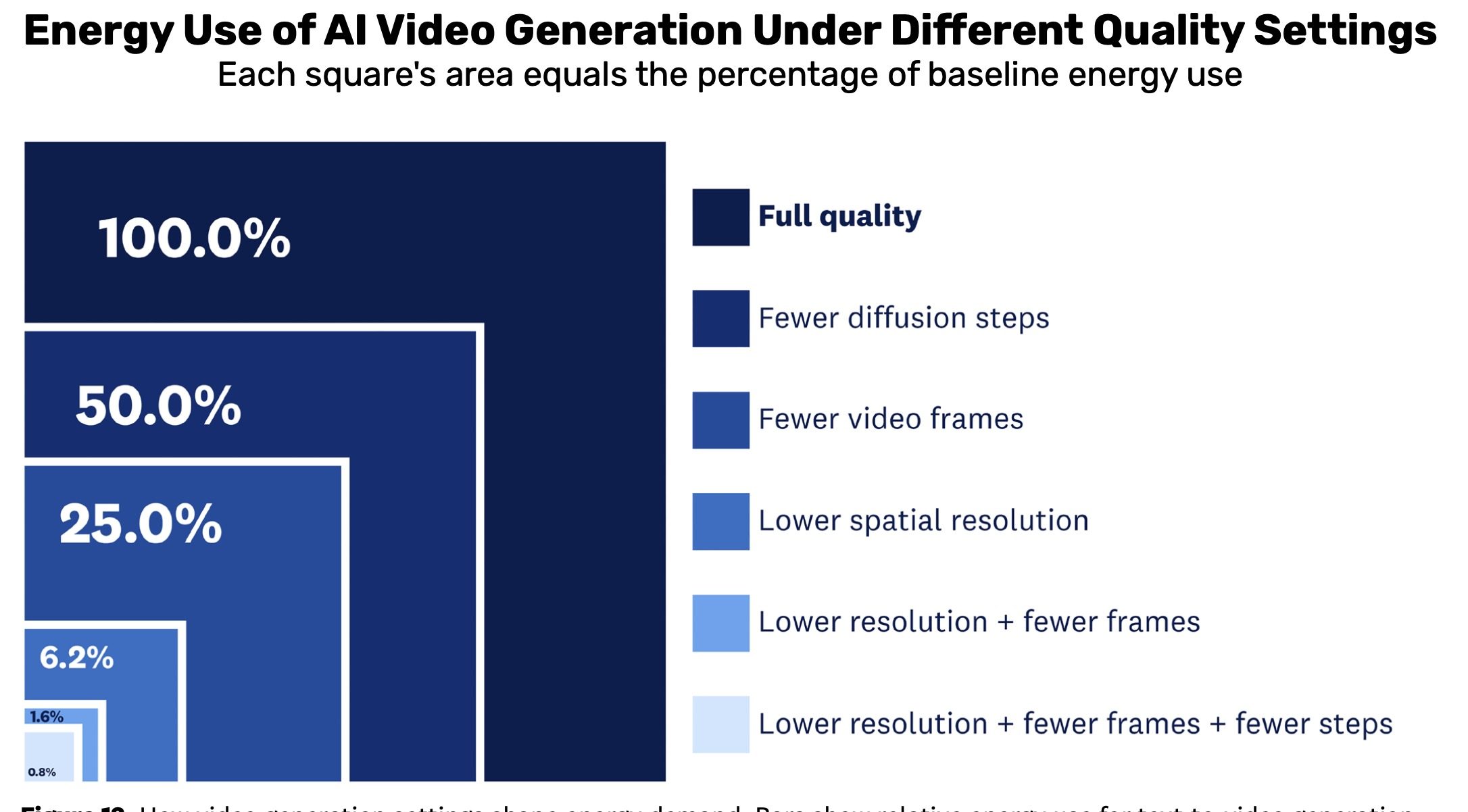
To think that AI slop videos that are not only ruining our video streaming websites, but also using such high amounts of electricity, is something I find hard to digest.
What can you do about it?
You do not need to stop using AI if it’s helping you in every day tasks or work. But you should stop using it to generate silly memes or brainrot content.
Also, the next time you are asking ChatGPT something simple, keep it short. Skip the pleasantries, get to the point, and choose a lighter model when the task does not require serious computer power. Small habits at scale add up to a surprisingly big difference.
Read the full article here