

Nvidia has Washington’s permission to sell advanced AI chips to China. That does not mean China is ready to take them.
The US has approved export licenses allowing about 10 Chinese companies, including Alibaba, Tencent, ByteDance, and JD.com, to buy Nvidia’s H200 AI chips, according to Reuters. But the chips have not shipped yet, leaving one of the most closely watched AI trade deals caught between US security rules and Beijing’s distrust.
The approvals mark one of the biggest openings for advanced AI chip sales to China since Washington tightened semiconductor export controls in recent years. But despite the approvals, not a single chip has been delivered so far, Reuters reported, citing sources familiar with the matter.
Jensen Huang joins Trump’s Beijing Trip
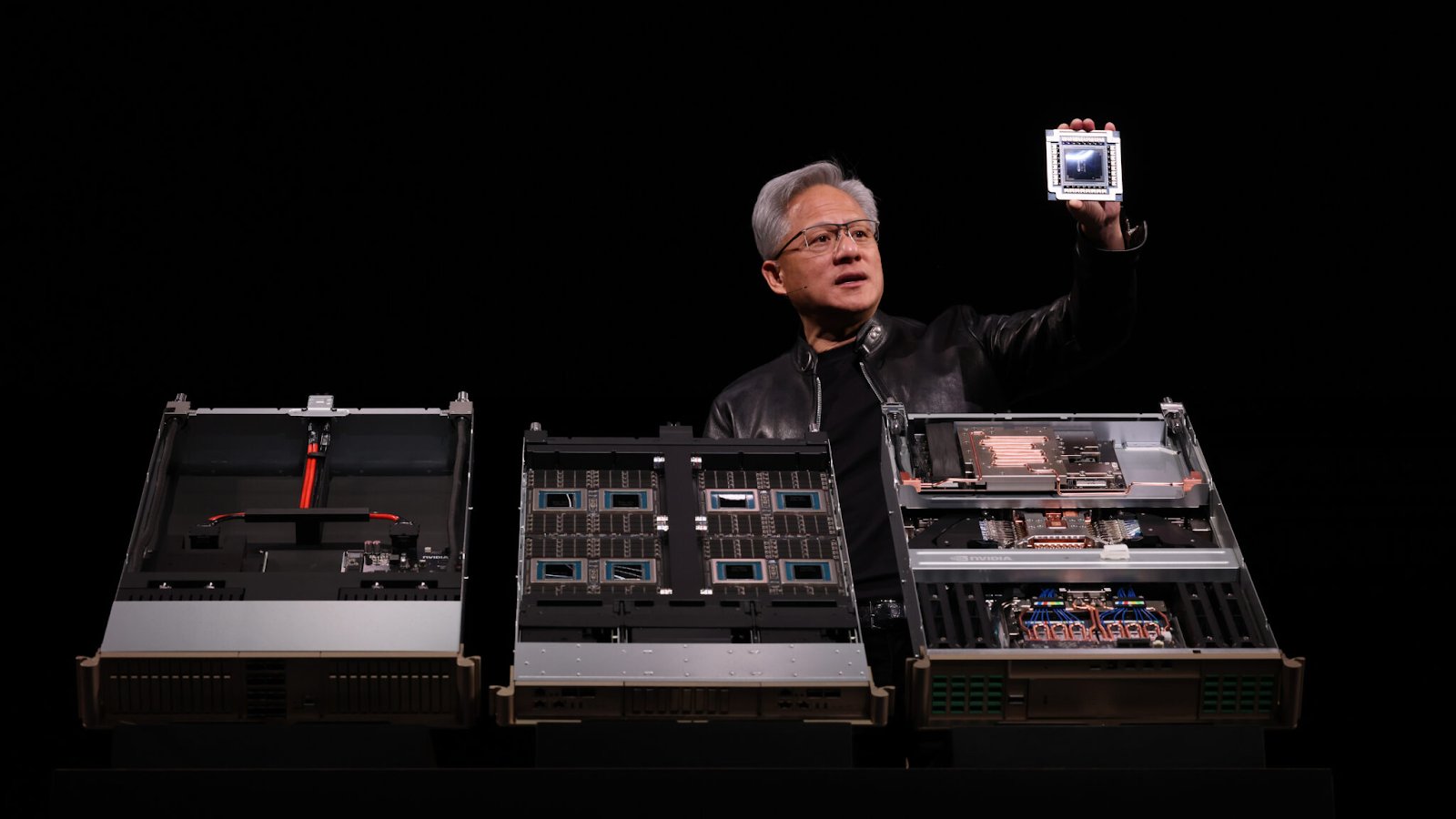
The stalled sales now hang over Nvidia CEO Jensen Huang as he joins President Donald Trump on a high-profile trip to Beijing for talks with Chinese President Xi Jinping.
Reuters reported that Huang was not originally expected to be part of the White House delegation but joined after receiving an invitation from Trump. The president reportedly picked him up in Alaska while traveling to the summit. The trip has fueled speculation that Nvidia is seeking a breakthrough that could finally unlock the delayed H200 sales.
Caught in a double bind
The primary obstacle preventing the H200 from shipping is a complex, conflicting web of regulatory demands imposed by Washington and Beijing alike.
On the American side, regulations enacted in January require Chinese buyers to explicitly demonstrate they have implemented “sufficient security procedures” and to guarantee the chips will not be diverted to military applications. Nvidia itself is also required to certify that it maintains sufficient inventory within the United States before shipping anything abroad.
Furthermore, the Trump administration negotiated a highly unusual financial workaround. Because US law prevents the direct imposition of export fees, the structure requires that the chips physically pass through US territory so the federal government can collect a 25% cut of sales revenue.
This specific logistical detour has triggered deep anxiety within the Chinese government. According to sources speaking to Reuters, officials in Beijing are deeply uneasy over potential tampering or hidden vulnerabilities introduced while the hardware sits on US soil.
The view from Washington
While corporate executives scramble to unlock the deadlock in Beijing, political hardliners in Washington are celebrating the ongoing delays. Many China hawks reject the administration’s baseline theory that allowing limited commercial chip sales will successfully prevent Chinese tech firms from narrowing the technological gap with the West.
The domestic political friction highlights the tightrope the current administration is walking by introducing a case-by-case review framework for the H200, rather than maintaining a blanket ban.
Expressing the deep skepticism held by many national security analysts regarding the current strategy, Chris McGuire, a senior fellow for China and emerging technologies at the Council on Foreign Relations, said, per Reuters:
“Any deal that allows Nvidia to sell more chips to China means fewer Nvidia chips for U.S. firms, and a smaller U.S. lead in AI over China. It is remarkable that President Trump keeps getting convinced to put Nvidia’s interest ahead of America’s.”
For Nvidia, the approval is only half a victory. Until Beijing accepts the licensing terms and the unusual US routing arrangement, the H200 deal remains less a shipment than a test of whether any “limited” AI chip trade can survive the distrust now built into US-China tech policy.
For a deeper look at Nvidia’s broader AI ambitions beyond the China chip standoff, including the company’s biggest announcements from GTC 2026, check out TechRepublic’s full recap.
Read the full article here