



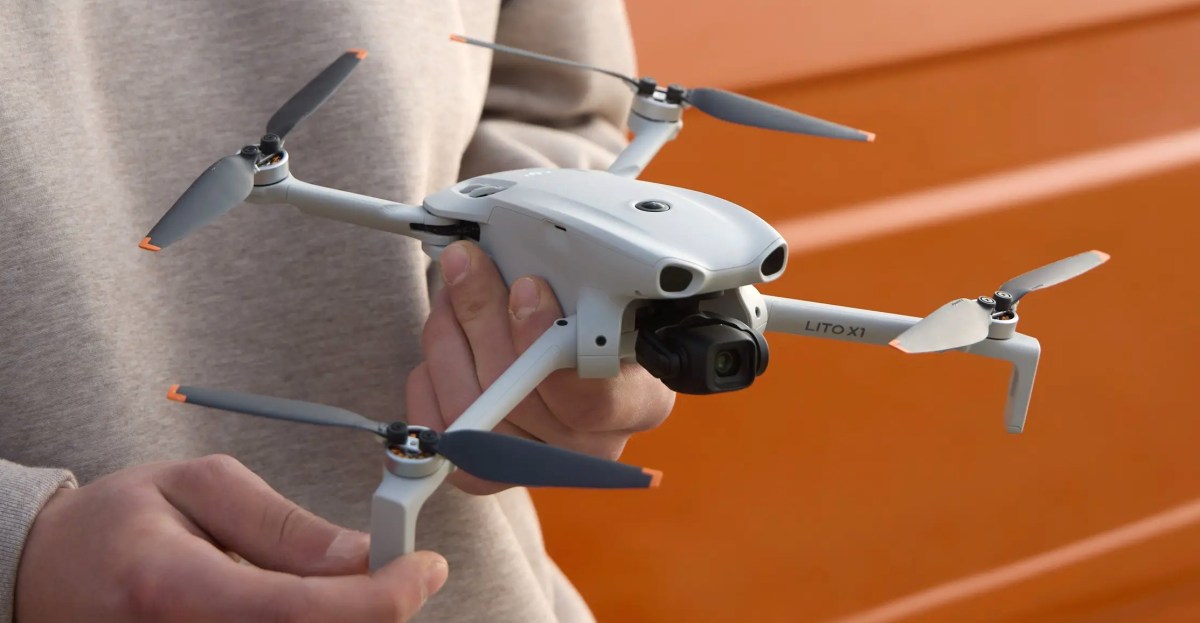

Both models come with DJI’s screenless RC-N3 controller that uses a smartphone as its display, but you can’t pilot either drone using your phone like you can with the DJI Neo. The Lito 1 and X1 are also compatible with alternate DJI controllers including the RC 2 which is included as part of the X1’s €579 Fly More bundle that also adds additional batteries.
A lack of permanent prop guards makes the Lito 1 and X1 more portable when folded, but it also means the drones are primarily designed to be flown outdoors. They have a top speed of around 27mph, that can be boosted to up to 40mph. Both feature sensors on the top and bottom to help them autonomously avoid obstacles around them in flight, but the X1 adds a forward-facing LIDAR sensor for more precision, particularly when flying in low light conditions.
The Lito X1’s 48-megapixel 1/2-inch sensor is larger than the 40-megapixel 1/1.3-inch sensor in the Lito 1, and while both drones can capture 4K video at up to 100fps in slow-mo mode, the X1 adds the ability to capture footage in 10-bit D-LogM for more flexibility in post production afterwards. Further differentiating the more expensive Lito X1 is 42GB of built-in storage, while the Lito 1 is limited to microSD cards.
Read the full article here