





What do Taco Bell and a K-12 school district in northern Indiana have in common?
While I’m sure the MSD Washington Township school district cafeteria system serves solid tacos, too, the commonality is not in food service.
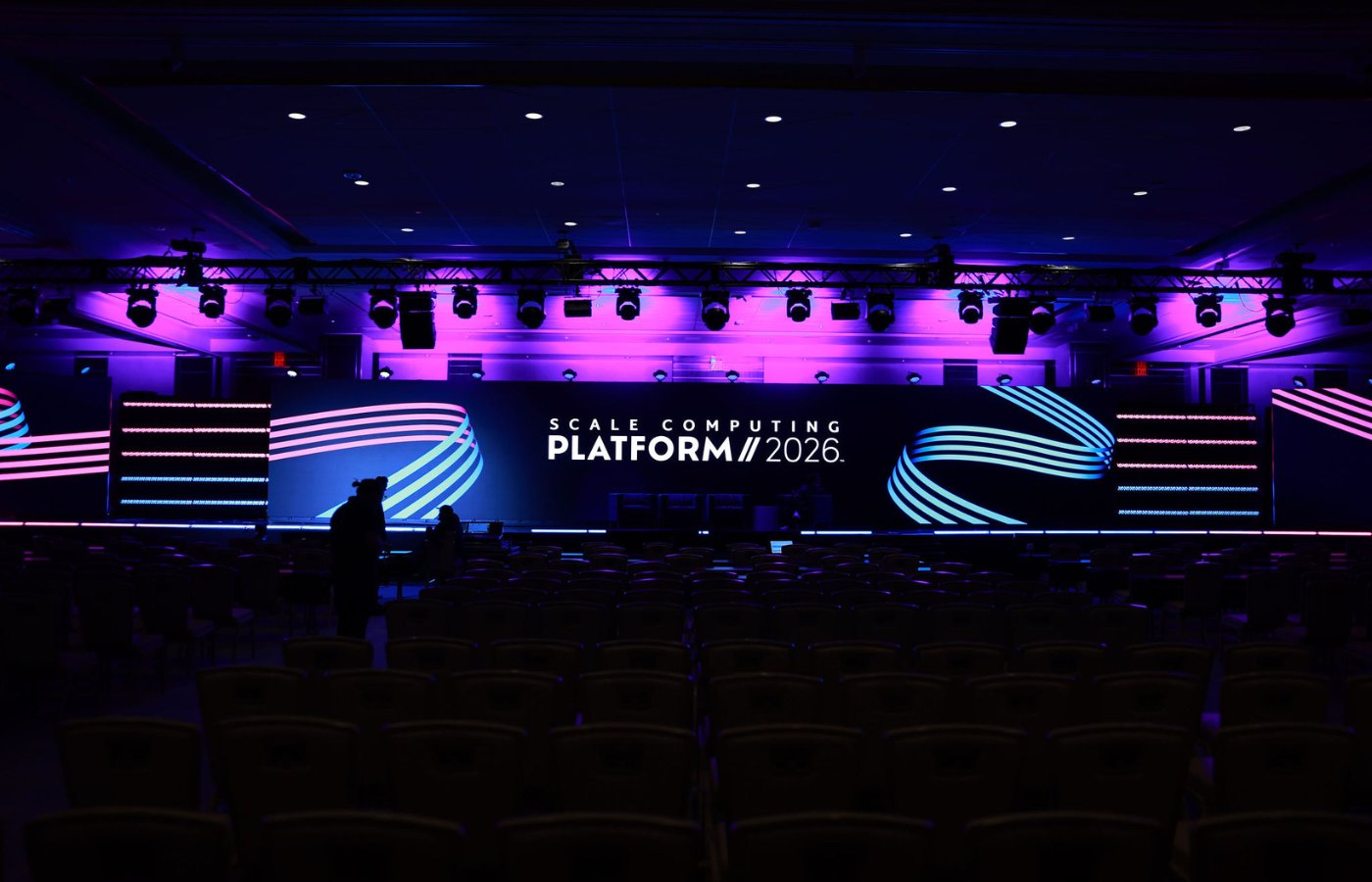
At its Platform//2026 user conference, Scale Computing used two very different customer stories to make the same point: edge infrastructure has to be simple, resilient, and easy to manage.
Taco Bell and K-12 IT teams share the same edge challenge
Both Taco Bell and the MSD Washington Township school district face the same fundamental problem: how to operate complex, distributed environments where technology must always function without dominating time, cost, or attention.
That’s where Scale Computing comes in. The edge computing leader serves as the enabler that makes innovation possible, whether that’s supporting digital classrooms or chalupa delivery.
By letting Scale Computing experts handle the foundation, Taco Bell frees internal teams to focus on customer-facing applications and global expansion.
Similarly, through its partnership with Five Star Technology Solutions, MSD Washington Township uses Scale to eliminate infrastructure complexity and allow a four-person IT team to support an entire distributed system, while still having time to pursue AI and data initiatives.
How Scale Computing is enabling Taco Bell to live más
Taco Bell is just about everywhere, operating across dozens of international markets. This creates major challenges in standardizing and managing technology across diverse environments.
Daniel Fragoso, an international digital and technology leader at Taco Bell, spoke at the Scale Computing Platform//2026 Summit and discussed how restaurant technology has evolved from simple, on-prem systems to complex, omnichannel, real-time digital ecosystems driven by changing consumer expectations.
“When you [look back] to 2017 to 2023, you can really tell things changed,” Fragoso explained. “Consumers started telling us they want to order how they want, where they want, and get that food whenever they want. That completely changed how we had to think about our technology and how we connected everything in the restaurant.”
Edge computing brings Taco Bell systems a new level of flexibility
By re-architecting its systems with edge computing and middleware, Taco Bell can enable flexibility, scalability, and innovation. This transformation was guided by a combination of business needs and technology decisions.
“We had to change the architecture vision. We went from point-to-point integration to introducing middleware at the edge to offer flexibility and solve business problems,” said Fragoso.
“Having [edge infrastructure] was the key to really unlock innovation at Taco Bell and remove the burden from team members. We had to understand where the business problems were, where the friction was in the consumer journey, and what value the finance team was looking for. That’s what drove the architecture we built.”
K-12 school districts are emerging as edge infrastructure use cases
Another commonality between a K-12 school district and Taco Bell is that both may offer products covered in Doritos seasoning.
For K-12 districts, that product is students. Their enterprise goal is to produce 21st-century learners and graduates.
“IT has moved from a service to a foundational utility for schools,” said Nathan Davidson, VP of Partnerships, Five Star Technology Solutions at Scale Computing’s Platform//2026 Summit. “A K-12 school district is actually very similar to a convenience store or a restaurant chain – we’re managing distributed environments and producing a product.”
Davidson spoke with Channel Insider about its work with school districts in 2025 for an episode of Channel Insider: Partner POV with Katie Bavoso.
School IT teams need resilience without added management overhead
Downtime in schools disrupts learning and operations, underscoring the importance of resilience.
School IT teams can be small in numbers, which makes automation and simplified infrastructure extremely helpful in keeping the infrastructure functional.
For example, the MSD Washington Township school district has 4 IT staff members supporting 18 total sites, none of whom are dedicated solely to infrastructure. But by switching to Scale Computing, Five Star Technology has helped the district eliminate legacy complexity and reduce operational burden.
“They were running a legacy VMware environment that required specialized expertise and added cost,” Davidson explained. “By moving to Scale Computing, they eliminated management overhead, simplified operations, and reduced that complexity tax.”
Davidson adds that K-12 environments are emerging as key edge computing use cases and that “the problems are shared with other industries, and the solutions are parallel.” As he said, “schools must run like resilient, secure, and innovative enterprises.”
Scale Computing positions edge simplicity as the common solution
Both Taco Bell and the MSD Washington Township school district operate in highly distributed environments where multiple sites must run independently, downtime is unacceptable, and user experience is critical.
Both enterprises faced a shared set of problems: legacy infrastructure complexity, scalability challenges, and the need for real-time, reliable systems.
The shared solution between the two came via partnering with Scale, providing them with:
- A simplified infrastructure
- High reliability and uptime
- Centralized visibility and control
- Edge capabilities – including offline operation
Together, the presentations underscored Scale Computing’s core pitch to edge-heavy organizations: infrastructure should stay out of the way.
Whether the environment is a global restaurant footprint or a distributed school district, the value proposition is the same: less operational overhead, stronger resilience, and a platform that supports growth without adding management burden.
Read the full article here